



What's Happening?
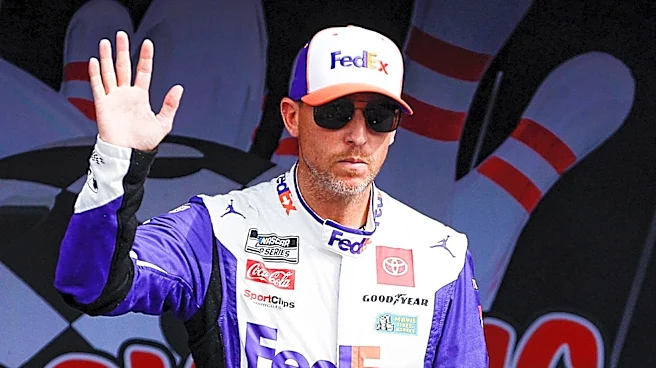
NASCAR driver Denny Hamlin reportedly lost over 15 pounds due to excessive sweating during the nearly four-hour-long Enjoy Illinois 300 race at World Wide Technology Raceway. Despite finishing ninth, Hamlin maintained his 9-point lead in the NASCAR Cup
Series standings. Post-race interviews showed Hamlin visibly affected, dripping with sweat and with a hoarse voice. He later revealed on his 'Actions Detrimental' podcast that he was still eight pounds down a day after the race, estimating a total loss of 15 to 16 pounds of sweat. Hamlin attributed the significant weight loss to intense humidity, a stomach problem, and an electrolyte overload, noting that his face looked "ill" during post-race media appearances. This physical toll occurred even as he navigated a chaotic race featuring 18 caution flags.
Why It's Important?
This incident highlights the extreme physical demands placed on NASCAR drivers, particularly during extended races in challenging environmental conditions like high humidity. The reported weight loss of over 15 pounds in a single race underscores the need for rigorous physical conditioning, hydration strategies, and in-car climate control systems in professional motorsports. For Denny Hamlin, a leading contender for the NASCAR Cup Series championship, maintaining peak physical condition is crucial for consistent performance throughout the grueling season. Such an event could prompt further examination of driver safety and comfort measures within NASCAR, potentially leading to advancements in cooling systems, driver suits, or hydration protocols to mitigate the health risks associated with extreme heat and exertion. The incident also brings attention to the less visible aspects of a driver's struggle, beyond just car performance, impacting their ability to perform optimally.
What's Next?
Following the physically demanding Enjoy Illinois 300, Denny Hamlin is set to compete in the Bass Pro Shops Night Race at Bristol Motor Speedway in Tennessee. Given the recent toll on his body, his recovery and preparation for this upcoming race will be critical. Teams and drivers may review their hydration and cooling strategies to prevent similar occurrences, especially as the season progresses and races continue to present varying environmental challenges. The incident could also spark discussions within NASCAR regarding driver welfare and the implementation of enhanced measures to monitor and support drivers' physical health during races. Hamlin's ability to rebound quickly and maintain his performance will be closely watched as he aims for his first NASCAR Cup Series championship, particularly with Kyle Larson closing the points gap.
Beyond the Headlines
The extreme physical exertion experienced by Denny Hamlin, leading to significant weight loss, sheds light on the often-underestimated athletic requirements of NASCAR drivers. Beyond the skill of driving at high speeds, drivers endure prolonged periods in hot, confined spaces, battling G-forces and mental fatigue. This incident could serve as a catalyst for broader conversations about the 'athlete' status of race car drivers and the scientific approaches to their training, nutrition, and in-race support. It also touches upon the ethical considerations of pushing human limits in sports, prompting questions about how governing bodies balance competitive intensity with driver health and safety. The public's perception of racing as merely a mechanical sport might shift, recognizing the profound physiological challenges faced by those behind the wheel.