





What's Happening?
Filmmaker Andrew Thomas Huang has shared insights into how puppetry, particularly from The Jim Henson Company, profoundly influenced his artistic journey from a young age. Huang recounted an experience at nine years old where puppeteers from Henson taught
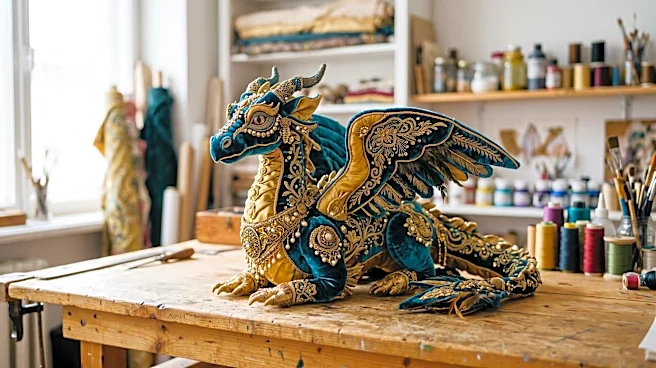
him to build puppets, sparking an obsession that led him to aspire to be a puppeteer. He noted the absence of formal puppetry schools, highlighting the diverse backgrounds of those in the field. Huang also discussed his early career trajectory, moving from digital animation and visual effects to eventually directing after a short film went viral on YouTube in 2006. This led to early recognition from industry figures like J.J. Abrams. He later gained further acclaim after another experimental film went viral in 2012, attracting the attention of artists such as Björk and Thom Yorke. Huang emphasized his deliberate rejection of minimalism in his work, describing it as a 'patriarchal idea' that stifles fun, preferring instead soft, tactile, and pliable aesthetics inspired by maximalist filmmakers like Terry Gilliam.
Why It's Important?
Huang's perspective offers a significant commentary on artistic development and the evolution of visual culture. His early immersion in puppetry underscores the lasting impact of tactile, imaginative play on creative expression, suggesting that foundational experiences can shape an artist's entire career. His rejection of minimalism in favor of maximalist, textural aesthetics challenges prevailing artistic norms and highlights a desire for richer, more complex visual experiences in an era often dominated by sleek, simplified designs. This stance could influence emerging artists to explore less conventional paths and embrace diverse influences. Furthermore, his journey from viral online content to collaborations with renowned musicians illustrates the changing landscape of artistic discovery and career progression in the digital age, where independent creators can gain significant traction outside traditional industry gatekeepers. His work also touches on themes of identity and self-expression, particularly as a shy, queer individual of Asian descent, finding a voice through the proxy of puppetry.
What's Next?
Huang is increasingly focusing on live performances and puppetry as a response to the challenges and frustrations of filmmaking, including financing issues and the perceived devaluation of images in the digital age. He views live shows as a more potent medium for awakening audiences, drawing a direct line back to his childhood experiences with puppetry. This shift suggests a potential move towards more immersive and interactive artistic experiences from Huang, possibly exploring new forms of storytelling that prioritize physical presence and direct engagement over purely cinematic presentations. He also expressed interest in working outside North America and the 'Anglo sphere' to find environments less influenced by capitalism, indicating a future direction that might involve international collaborations and explorations of diverse cultural contexts for his art. This could lead to innovative projects that blend traditional performance art with contemporary themes, pushing the boundaries of his established visual style.
Beyond the Headlines
Huang's pivot towards live performance and puppetry, coupled with his critique of minimalism, reflects a broader artistic movement seeking authenticity and tangible connection in an increasingly digital and often superficial world. His view that 'images are being stripped of their meaning' resonates with concerns about the proliferation of AI-generated content and the erosion of trust in visual media. By returning to the physical, handcrafted nature of puppetry and live performance, Huang is engaging in a form of artistic resistance, emphasizing the unique power of human presence and tactile creation. This approach also highlights the therapeutic and self-exploratory aspects of art, as he describes puppetry as a way of 'hiding while revealing yourself.' His desire to work outside Western capitalist structures suggests a search for more profound, less commodified forms of artistic expression, potentially fostering a deeper engagement with global artistic traditions and alternative creative economies. This could inspire a re-evaluation of what constitutes 'valuable' art in the contemporary landscape.