
What's Happening?
Varda Space Industries, a company focused on commercial space infrastructure and in-orbit manufacturing, is seeking a Principal Avionics Hardware Development Engineer. This role, based in El Segundo, California,
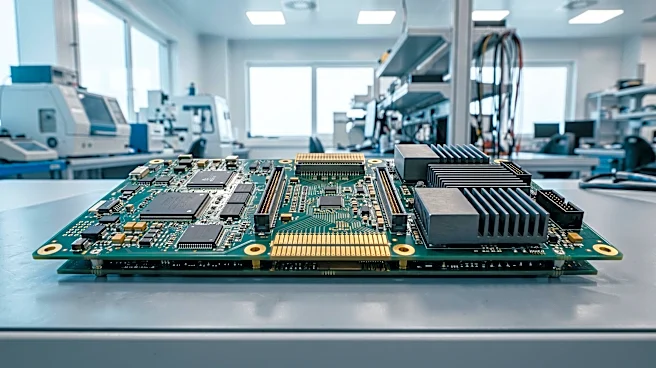
is critical for designing and architecting flight-critical electrical hardware for Varda's satellite buses, reentry vehicles, and customer payloads. Examples of hardware include flight computers, satellite power systems, and sensors for navigation and pharmaceutical manufacturing monitoring. The engineer will be responsible for PCB-level electronics design, from schematic capture to layout, validation, and manufacturing test. Varda, founded in January 2021 by Will Bruey and Delian Asparouhov, is backed by investors including Lux Capital, Khosla Ventures, and Founders Fund. The company aims to produce products in space that can only be manufactured in microgravity, such as life-saving pharmaceuticals and advanced fiber optics.
Why It's Important?
The recruitment of a Principal Avionics Hardware Development Engineer by Varda Space Industries, a company supported by Lux Capital, underscores the significant investment and technical demands of the burgeoning commercial space sector. This position is vital for developing the sophisticated electronics required for in-space manufacturing and reliable reentry capabilities, which are foundational to Varda's mission of expanding the orbital economy. The emphasis on high-reliability hardware for space applications highlights the stringent engineering standards and the critical nature of these components for mission success. The ability to attract top-tier engineering talent is crucial for companies like Varda to innovate and compete in this rapidly evolving industry, potentially leading to breakthroughs in materials science, pharmaceuticals, and other high-value products that can only be created in space.
What's Next?
The successful hiring of a Principal Avionics Hardware Development Engineer will directly contribute to the advancement of Varda's W-Series vehicles and its in-space manufacturing capabilities. This engineer will play a key role in defining subsystem requirements, designing complex electronics systems, and ensuring their qualification for space environments. As Varda continues to develop its technology and expand its team, it is expected to accelerate the production and deployment of its orbital manufacturing platforms. Future steps will likely involve rigorous testing and validation of new hardware, integration with existing systems, and ultimately, the commercialization of space-manufactured products. The progress of Varda and similar companies will be a strong indicator of the viability and growth trajectory of the commercial space industry.
Beyond the Headlines
The specialized demand for avionics hardware engineers in companies like Varda Space Industries, supported by venture capital firms such as Lux Capital, reflects a broader trend of private sector-led innovation in space. This shift from primarily government-funded space programs to commercial ventures is creating new economic opportunities and technological frontiers. The development of robust and reliable avionics is not just about manufacturing in space; it's about establishing the foundational infrastructure for a sustainable orbital economy. This includes addressing challenges related to radiation hardening, thermal management, and long-duration reliability in extreme environments. The long-term implications extend to the potential for space-based resource extraction, advanced scientific research, and even future human settlements, all of which depend on the sophisticated hardware being developed today.