
What's Happening?
Louisiana's workforce is anticipated to surpass 2 million jobs by the end of 2026, marking a historic milestone for the state on an annual-average basis. This projection comes from economist Dr. Loren
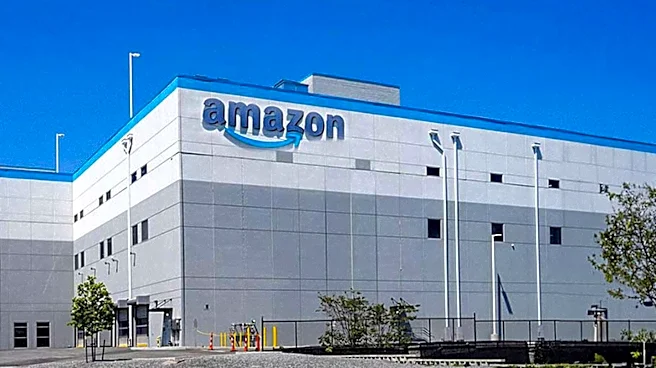
Scott, who forecasts an addition of 55,000 new jobs statewide over 2027-28, representing a 2.7% growth rate. The Shreveport-Bossier region is expected to contribute significantly to this growth, with 4,800 new jobs projected over the next two years. Key drivers for this regional growth include new Amazon data centers, an $18 billion investment bringing 750 jobs, and the continued expansion of the Port of Caddo-Bossier, which is projected to grow to 2,392 employees by 2028 with $80 million in planned capital expansion. Additionally, SLB (formerly Schlumberger) is doubling its footprint with a $30 million investment, adding 600 jobs.
Why It's Important?
This projected job growth in Louisiana signifies a robust economic recovery and expansion for the state, with significant implications for its residents and various industries. Reaching the 2 million-employment mark for the first time indicates a strengthening labor market, which can lead to increased consumer spending, higher tax revenues, and improved quality of life. The concentration of job creation in sectors like technology (Amazon data centers) and logistics (Port of Caddo-Bossier) suggests a diversification of the state's economy beyond traditional industries. This diversification can make the state more resilient to economic downturns. For individuals, it means more employment opportunities, potentially higher wages, and greater economic stability. For businesses, it signals a growing market and a more skilled workforce, encouraging further investment and development within the state.
What's Next?
Louisiana is expected to continue on a faster growth path through 2027-28, with the state projected to add 55,000 new jobs. The Shreveport-Bossier region alone anticipates 2,500 new jobs in 2027 and 2,300 in 2028, with at least 1,650 of these being permanent, non-construction positions. The Haynesville Shale natural gas play is also poised for a revival, with Morgan Stanley projecting a 41% output surge by 2027 due to its proximity to new LNG export terminals on the Gulf Coast. This will further contribute to job creation and economic activity. While lower taxes and deregulation are seen as 'accelerators' for national GDP growth, tariffs are identified as a 'brake,' with 92% of 2025 tariff costs passed on to U.S. buyers. This suggests that future economic performance will be influenced by ongoing trade policies and their impact on consumer costs and business operations.
Beyond the Headlines
The economic resurgence in Louisiana, particularly in the Shreveport-Bossier region, highlights a broader trend of regional economic development driven by strategic investments in technology and infrastructure. The significant investments by Amazon in data centers and the expansion of the Port of Caddo-Bossier are not just creating jobs but are also transforming the economic landscape of the area, attracting further investment and fostering a more diverse industrial base. The revival of the Haynesville Shale natural gas play, linked to new LNG export terminals, underscores the critical role of energy infrastructure in regional economic growth and its connection to global energy markets. This localized growth, however, exists within a national economic context where factors like tariffs can impose hidden costs on consumers and businesses, illustrating the complex interplay between local development and national economic policies. The long-term sustainability of this growth will depend on continued strategic investments and favorable policy environments.