






What's Happening?
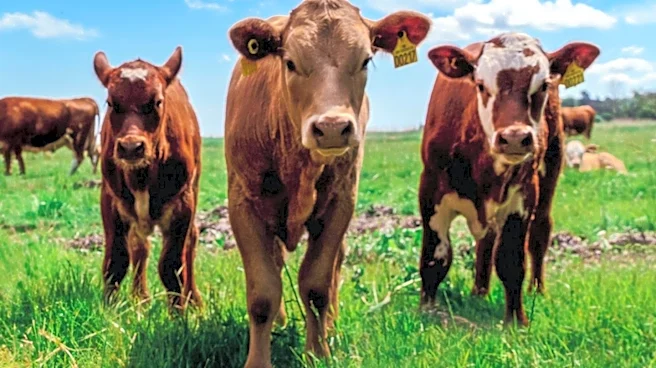
The U.S. cattle herd is projected to undergo a cautious rebuilding phase after experiencing reductions. According to the Food and Agricultural Policy Research Institute (FAPRI) at the University of Missouri, the beef cow herd is expected to bottom out
at 27.6 million head in 2026 and 2027. Following this, it is anticipated to expand to 29.9 million by 2031, with total cattle and calves increasing from 86.2 million to 91.8 million head. Beef production is forecast to reach its lowest point at 25.1 billion pounds in 2026 and 2027 before recovering to 28.3 billion pounds by 2031. This rebuilding process is influenced by factors such as the reopening of the Mexican border to feeder cattle. Despite record calf prices making beef-on-dairy breeding a significant revenue stream for some dairies, FAPRI notes that cattle support is expected to gradually weaken. Oklahoma City feeder steer prices are projected to peak at $425.38 per hundredweight in 2027 before declining to $356.10, and the boxed beef cutout is expected to top out near $388 in the same year.
Why It's Important?
The slow and cautious rebuilding of the U.S. cattle herd has significant implications for the beef industry and consumers. The projected decline in beef production until 2027 suggests that beef prices are likely to remain elevated for an extended period, impacting household budgets and the food service sector. The anticipated weakening of cattle price support, despite historically high returns, indicates a shift in market dynamics that could affect ranchers' profitability in the long term. The reliance on a reopened Mexican border for live cattle trade highlights the importance of international trade policies in stabilizing the U.S. beef supply chain. Furthermore, the FAPRI report's assumption of a cautious rebuilding cycle reflects ranchers' reluctance to rapidly expand herds, possibly due to past market volatility and the substantial time and capital investment required. This cautious approach could prolong the period of higher beef prices and potentially influence consumer purchasing habits, leading to increased demand for alternative protein sources.
What's Next?
The U.S. cattle herd is expected to continue its rebuilding trajectory, with the beef cow herd gradually expanding after 2027. This expansion is contingent on a cautious approach by ranchers and the continued reopening of the Mexican border for live cattle trade. As the herd rebuilds, FAPRI anticipates a gradual reduction in the exceptional cattle-price support that has underpinned livestock receipts. This suggests that while cattle returns may remain historically high for a few more years, the trend after 2027 is projected to be downward. The market will likely see a stabilization of trade policies and a slow return to pre-reduction supply levels. Consumers can expect beef prices to remain high until the herd is fully restored, a process that typically takes about five years. The industry will also be watching for any changes in macro and trade assumptions, such as energy prices and international conflicts, which could alter the cost side of production and impact the pace of recovery.
Beyond the Headlines
The cautious approach to herd rebuilding by U.S. ranchers reflects a deeper concern within the agricultural sector regarding market stability and long-term profitability. The memory of past market crashes likely contributes to this reluctance, highlighting the inherent risks and uncertainties faced by livestock producers. The FAPRI report's projection of gradually fading support for cattle, even with higher receipts, underscores a potential shift in the economic landscape for ranchers. This could lead to increased pressure on producers to find efficiencies and diversify revenue streams, such as through beef-on-dairy breeding. The prolonged period of high beef prices could also accelerate the adoption of alternative protein sources and plant-based diets among consumers, potentially leading to a long-term shift in dietary preferences and market demand. The interplay between government policies, international trade, and individual rancher decisions will be crucial in shaping the future of the U.S. beef industry and its resilience against economic and environmental challenges.