


What's Happening?
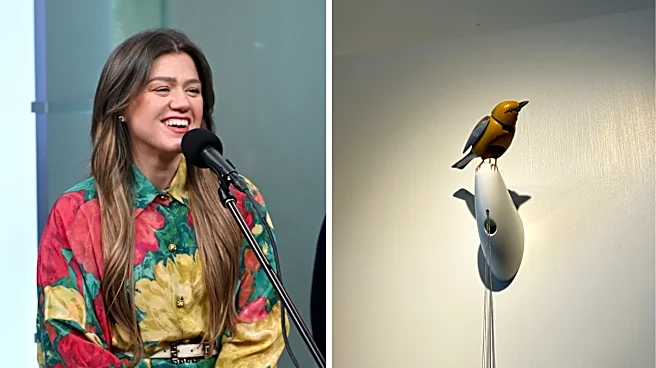
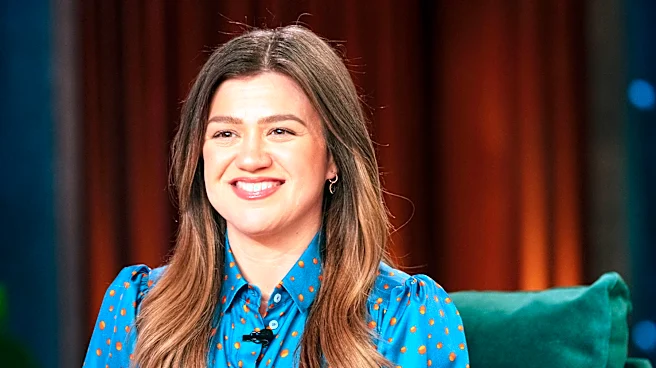
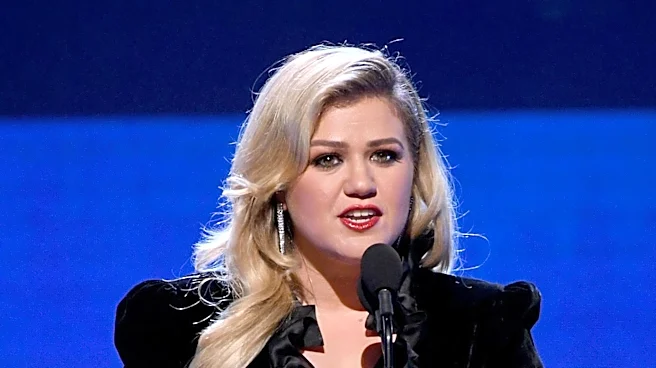
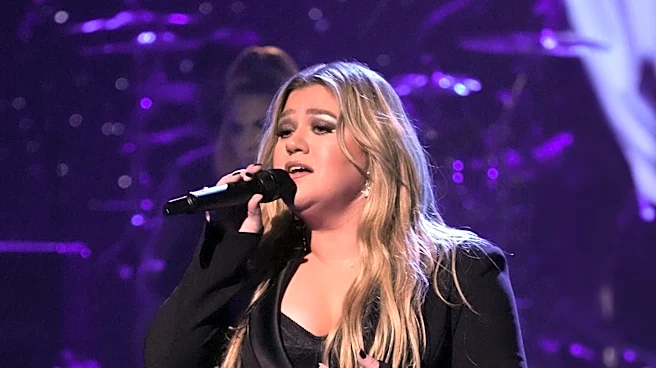
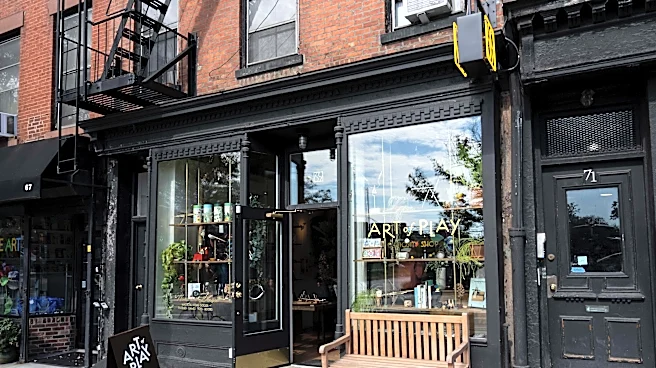
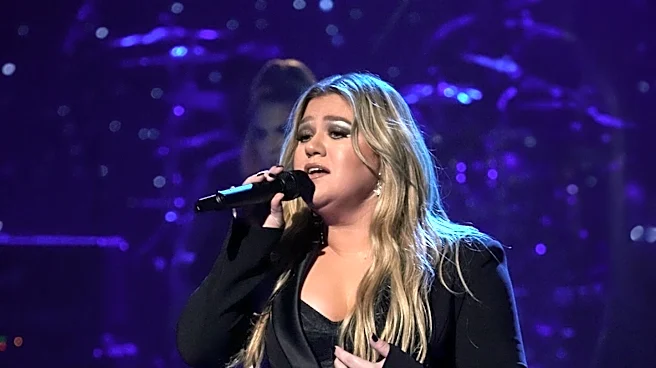
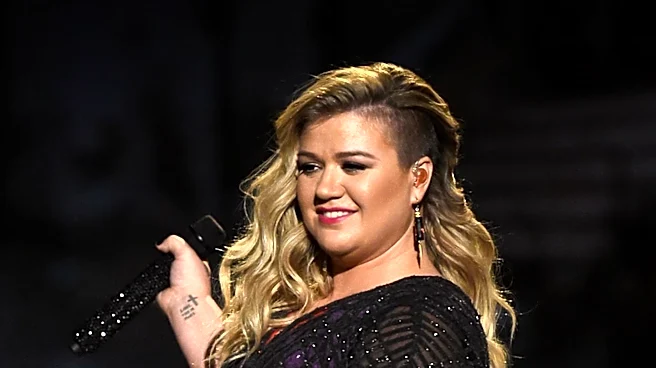
Adam Rubin, co-owner of Art of Play, a Brooklyn store, claims that Kelly Clarkson's public accusation of 'Pretty Woman' treatment has put his business in danger. The dispute originated from Clarkson's social media posts where she alleged that a store employee
treated her as if she couldn't afford a $15,000 mechanical singing bird and suggested a comparable item. Rubin states that the backlash has resulted in threats and doxing of individuals associated with the business. He accused Clarkson of an 'abuse of power' due to her celebrity platform, intensifying the negative impact on his small business. In response to the viral controversy, the mechanical bird, named Molly, which was originally priced at $15,000, now bears a sign with a staggering $15 million price tag. Art of Play clarified that Molly is a permanent fixture and not for sale, and the original $15,000 referred to a similar automaton available from the artist.
Why It's Important?
This incident highlights the significant impact of celebrity influence and social media on small businesses in the U.S. The rapid escalation of a personal shopping experience into a national controversy demonstrates the power celebrities wield and the potential for their statements to generate widespread public reaction, both positive and negative. For small businesses, such public disputes can have severe consequences, including reputational damage, financial losses, and even safety concerns for owners and employees, as claimed by Rubin. The dramatic increase in the bird's price to $15 million, while symbolic, underscores the absurdity and commercialization that can arise from viral internet moments. This event also raises questions about accountability and the responsibility of public figures when sharing negative experiences, particularly when those experiences can be amplified to the detriment of others. It serves as a case study on the challenges faced by local businesses in an increasingly digital and celebrity-driven landscape.
What's Next?
The immediate future for Art of Play likely involves managing the ongoing public perception and addressing any continued threats or harassment. The store may need to implement measures to ensure the safety of its staff and premises. From a broader perspective, this incident could prompt discussions within the entertainment industry and among public figures about the ethical implications of using social media to air grievances against businesses. It might lead to increased caution or the development of guidelines for celebrities regarding their online interactions with commercial entities. For Kelly Clarkson, the situation may require a public response or clarification to mitigate the perceived harm to the store, though she has already doubled down on her account. The 'Molly' bird, now valued at $15 million, will likely remain a symbol of this viral dispute, potentially attracting curious visitors to the store, but also serving as a reminder of the controversy.
Beyond the Headlines
This event delves into the deeper societal implications of online shaming and the 'cancel culture' phenomenon, particularly when a powerful individual targets a smaller entity. It raises questions about the balance between a consumer's right to share their experience and the potential for disproportionate harm caused by a celebrity's platform. The incident also touches upon the evolving nature of customer service and public relations in the digital age, where a single negative interaction can quickly spiral out of control. Furthermore, it highlights the vulnerability of small businesses to online narratives, regardless of the factual accuracy of initial claims. The symbolic repricing of the bird to $15 million can be seen as a commentary on the inflated value and attention that can be generated by viral content, often overshadowing the original context or intent. This situation serves as a stark reminder of the need for empathy, verification, and responsible communication in an interconnected world.