






What's Happening?
OpenAI has disbanded its stand-alone robotics team, reassigning its researchers to teams focused on more general artificial intelligence models. This move comes as the company's general-purpose frontier models, such as GPT-6 Astra, have demonstrated surprising
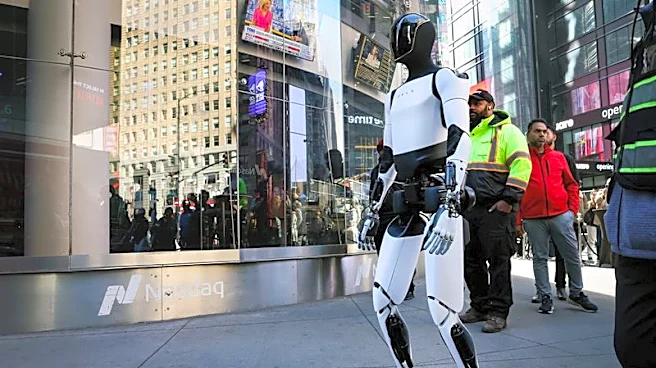
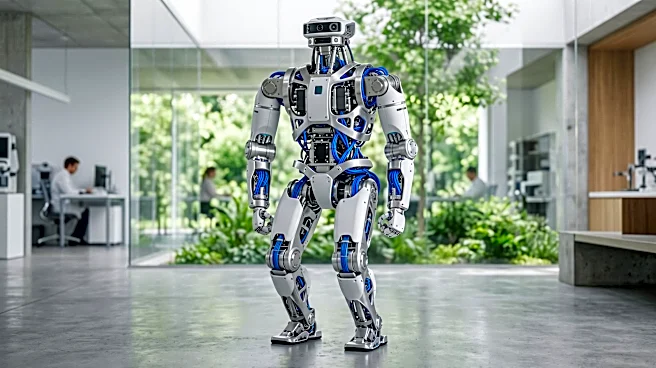
performance in directly controlling robots and performing robotic tasks. Initially, OpenAI's researchers believed progress in robotics would stem from models like Sora, which understand the physical world. However, recent discoveries indicate that general AI models can be directly applied to 'embodied AI,' controlling physical devices like robots, driverless cars, and drones. The company had previously wound down a robotics team in 2020 and rebuilt a stand-alone team in 2024, partnering with Figure, a collaboration that ended in February 2025. OpenAI maintains that robotics remains a core part of its long-term vision, with CEO Sam Altman targeting a public demonstration of a humanoid robot in 2027.
Why It's Important?
This reorganization signifies a major shift in the AI industry's approach to robotics, suggesting that specialized AI models for robots may become obsolete. If general-purpose AI models can effectively control robots, it could streamline development, reduce costs, and accelerate the integration of AI into physical systems across various sectors. This challenges the business models of many robotics startups that have raised significant capital based on the premise of needing specialized 'brains' for robots. For the U.S. economy, this could lead to faster automation in manufacturing, logistics, and other industries, potentially boosting productivity but also raising concerns about job displacement. The move also reflects OpenAI's strategy to consolidate resources and focus on core, potentially profitable endeavors, especially as the company faces substantial operating losses and prepares for a possible IPO in early 2027.
What's Next?
OpenAI plans to continue its commitment to general-purpose robots, with CEO Sam Altman aiming for a public demonstration of a humanoid robot by 2027. The company's focus will be on further developing its general AI models to enhance their capabilities in controlling physical devices. This shift could lead to increased investment in general AI research and development, potentially drawing talent and resources away from specialized robotics AI. Other AI companies and robotics startups will likely observe OpenAI's progress closely, potentially adapting their own strategies if general-purpose models prove to be a more efficient path to embodied AI. The success of this approach could also influence future funding rounds and IPO valuations within the AI and robotics sectors.
Beyond the Headlines
The disbanding of OpenAI's dedicated robotics team highlights a broader philosophical debate within the AI community: whether intelligence is best achieved through specialized, modular systems or through a single, general-purpose AI that can adapt to various tasks. This development suggests a growing confidence in the latter, potentially leading to a more unified approach to AI development. Ethically, the increasing capability of general AI to control physical systems raises questions about safety, accountability, and the potential for autonomous decision-making in real-world environments. The long-term societal impact could include significant changes in the workforce, as AI-controlled robots become more versatile, and a re-evaluation of human-machine interaction in daily life.