
What's Happening?
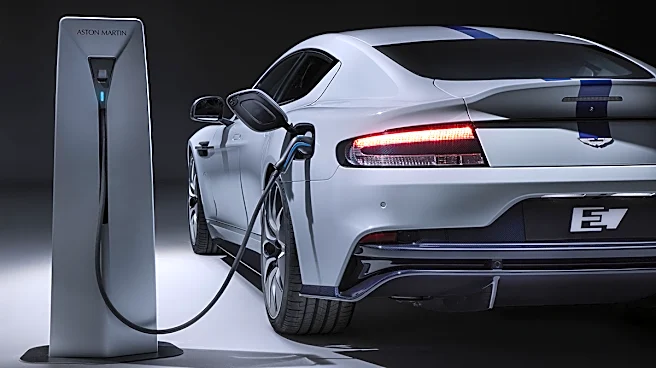
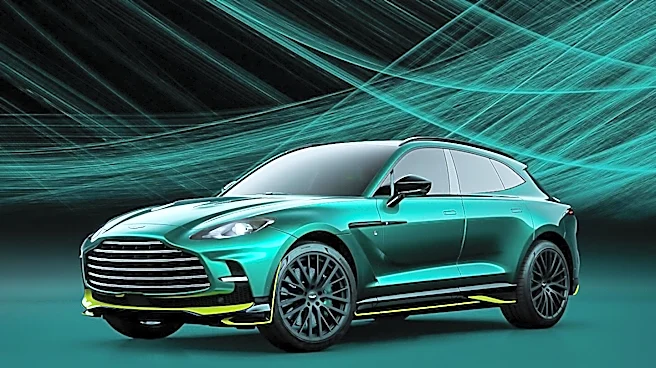
Aston Martin has announced a significant delay in the launch of its first full-electric vehicle (EV) model, pushing the timeline back to at least 2033. This decision, reported by Autoblog, marks a further postponement from previous targets of 2030 and
an original 2027 launch. According to Aston Martin CEO Adrian Hallmark, the brand will remain an 'ICE-first' company, focusing on internal combustion engine (ICE) vehicles, including V8s and V12s, for the foreseeable future. Hallmark cited rapidly changing demand for EVs and evolving legislation as key factors influencing this strategic shift, stating that these changes are occurring 'way faster than any car company can cope with.' Despite the delay, Aston Martin has entered a partnership with Lucid to access EV technology, indicating a long-term commitment to electric vehicles when market conditions and regulatory frameworks stabilize. The company also maintains an existing partnership with Mercedes-Benz for its ICE engines.
Why It's Important?
This strategic pivot by Aston Martin reflects a broader re-evaluation within the automotive industry regarding the pace and viability of the transition to electric vehicles. For the U.S. market, where EV adoption rates and infrastructure development are critical, Aston Martin's decision highlights the challenges even luxury brands face in meeting ambitious electrification targets amidst fluctuating consumer demand and regulatory uncertainties. The continued focus on high-performance ICE vehicles could appeal to a segment of the luxury car market that values traditional automotive engineering and sound, potentially influencing other premium manufacturers to reconsider their own EV timelines. This move also underscores the importance of flexible manufacturing and product development strategies in a rapidly evolving technological landscape, as companies like Aston Martin seek to balance innovation with market realities and legislative pressures. The partnership with Lucid for EV technology, while delaying its own EV launch, suggests a pragmatic approach to future electrification, leveraging external expertise rather than solely relying on in-house development during a period of market volatility.
What's Next?
Aston Martin will continue to monitor market demand for EVs and legislative developments, particularly the 2035 deadline for full battery electric vehicles (BEV) in certain regions. The company plans to stress-test various scenarios for different markets and regions to determine the optimal timing for its EV launch, aiming to comply with legislation without committing to a specific launch year before 2033. In the interim, Aston Martin will prioritize the development and production of its ICE-powered vehicles, including new V8 and V12 models. The partnership with Lucid for EV technology will likely continue to evolve, providing Aston Martin with a foundation for future electric models when the market is deemed more receptive and stable. The company's approach suggests a cautious, adaptive strategy, allowing it to respond to shifts in consumer preferences and regulatory environments rather than adhering to rigid, pre-set electrification schedules.
Beyond the Headlines
Aston Martin's decision to delay its full-EV launch extends beyond mere production schedules, touching upon the cultural and emotional aspects of luxury automotive brands. For many enthusiasts, the distinctive sound and performance of a V8 or V12 engine are integral to the Aston Martin experience. By prioritizing ICE vehicles, the company acknowledges and caters to this traditional customer base, potentially preserving brand identity in a rapidly changing industry. This move also raises questions about the long-term sustainability of niche luxury brands in an increasingly electrified world. While larger manufacturers might have the resources to absorb the costs and risks associated with a rapid EV transition, smaller, high-end brands like Aston Martin may find it more prudent to adopt a measured approach, ensuring that their electric offerings meet both performance expectations and brand ethos. The reliance on partnerships, such as with Lucid for EV technology and Mercedes-Benz for ICE engines, highlights a collaborative model that could become more prevalent as automakers navigate complex technological shifts and market demands.