






What's Happening?
Lloyd Enbom, a 40-year-old content creator from Australia, and his wife, Mandy Rutherford, have purchased an abandoned home in Hakuba, Japan, a ski town in Nagano Prefecture, for $22,000. The couple, who have been full-time travel content creators for nearly
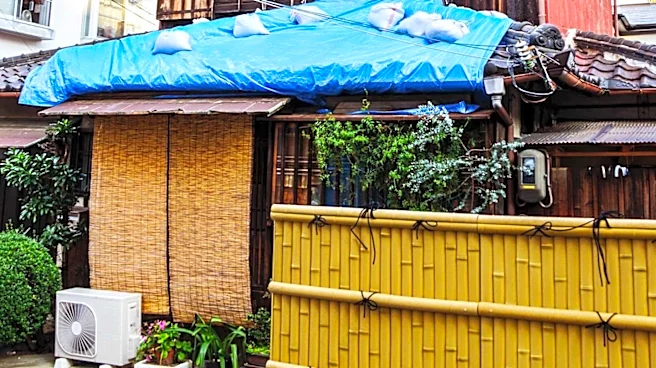
five years, plan to use the property as a home base for half the year while continuing their nomadic lifestyle with their two-year-old daughter. Their journey into travel content creation began in 2021, documenting their experiences in Southeast Asia and later traveling extensively across the Western United States in an RV. After settling in Thailand for two years, where their daughter was born, they sought a more permanent base due to the challenges of constant travel and the inability for foreigners to own land in Thailand. They discovered the possibility of purchasing property in Japan without residency, a process they found surprisingly straightforward, even allowing for remote purchase. The property, bought 'as-is,' requires significant renovations, with anticipated costs matching the purchase price.
Why It's Important?
This development highlights a growing trend among digital nomads and remote workers seeking affordable international property to establish semi-permanent bases. The ability to purchase property in Japan without requiring residency offers a unique opportunity for individuals seeking stability while maintaining a flexible, location-independent lifestyle. For the U.S. context, this trend could influence how American digital nomads view international real estate markets, potentially encouraging more to explore similar opportunities abroad. It also underscores the evolving nature of work and living arrangements, where traditional notions of home ownership are being redefined by global mobility and remote income streams. The story demonstrates how content creation can fund such ventures, inspiring others to pursue similar career paths that enable a nomadic lifestyle with strategic home bases.
What's Next?
Enbom and Rutherford plan to spend approximately the same amount on renovations as they did on the purchase of the home, with potential for further investment to enhance the property. Their immediate focus is on essential repairs, such as the boiler and bathroom, to make the house fully functional. They intend to utilize their visa status, which allows them to stay in Japan for up to six months a year, aligning with their preferred lifestyle of splitting time between different locations. This arrangement will enable them to enjoy the benefits of home ownership—personalizing their space and avoiding continuous rental searches—while continuing their global travels. Their experience may also serve as a case study for other digital nomads considering similar international property investments, potentially leading to increased interest in Japan's real estate market among this demographic.
Beyond the Headlines
The purchase of this abandoned home in Japan by digital nomads points to broader societal shifts in how individuals define 'home' and 'belonging' in an increasingly globalized and remote-work-enabled world. It challenges traditional models of homeownership tied to a single national identity or long-term residency. The accessibility of property ownership in Japan for non-residents, as highlighted by this case, could lead to discussions about property laws and foreign investment in other countries. Furthermore, the renovation aspect of their project touches upon themes of sustainability and revitalization of abandoned properties, which is a significant issue in many parts of Japan. This trend could foster new communities of international residents in areas previously experiencing depopulation, bringing economic and cultural diversity to local regions.