




What's Happening?
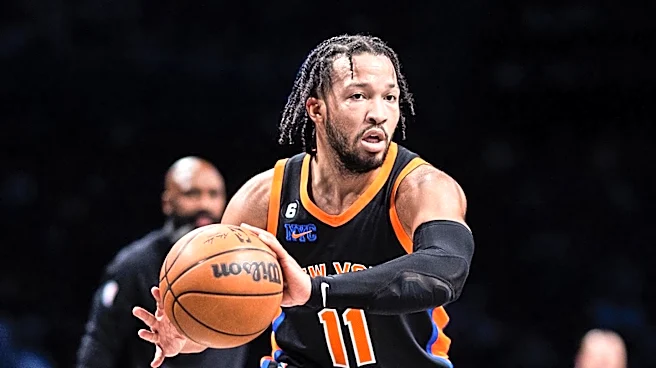
Jose Alvarado has been largely excluded from the New York Knicks' rotation for nearly two weeks, despite head coach Mike Brown's ongoing experimentation with lineups. Alvarado, who previously played a significant role in the Knicks' historic Game 4 comeback
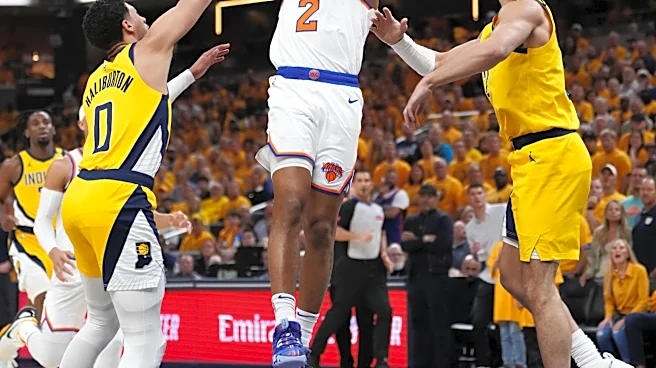
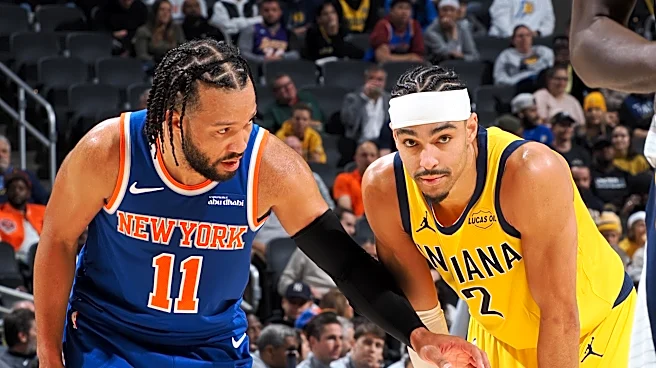
victory in the NBA Finals, has seen minimal meaningful playing time since returning from a sprained ankle. In the recent game against the Indiana Pacers, Pacôme Dadiet, another player, received over a minute of playing time, while Alvarado was listed as DNP (Did Not Play) due to a coach's decision. This decision is particularly notable given that Dadiet played during a crucial moment when the Knicks were trailing. While Tyler Kolek has largely taken over the backup point guard role, the lack of opportunities for Alvarado, especially in close games, has become a point of discussion.
Why It's Important?
The current treatment of Jose Alvarado by the Knicks' coaching staff raises questions about player utilization and roster management, particularly for a player who has demonstrated capability in high-pressure situations. His exclusion from meaningful minutes, despite his past performance and the team's current struggles, could impact team morale and player development. For Alvarado, this situation could affect his confidence and future with the team, especially if he is not given opportunities to contribute. From a strategic standpoint, not leveraging a player with a proven track record in clutch moments, especially when the team is struggling in close games, could be seen as a missed opportunity. This situation also highlights the complexities of coaching decisions and the constant balancing act of player rotations, particularly when experimenting with new lineups.
What's Next?
The ongoing rotation experiments by head coach Mike Brown will likely continue to be scrutinized, especially if the Knicks' struggles persist. The decision to keep Jose Alvarado out of meaningful minutes could lead to further discussions about his role and potential trade value if his playing time does not increase. It remains to be seen if Coach Brown will reintroduce Alvarado into the rotation, particularly in situations where the team needs a spark or a 'dog' on the court, as suggested by some. The performance of other backup guards, such as Tyler Kolek, will also influence future coaching decisions. The situation could evolve with potential roster changes or a shift in coaching strategy as the season progresses and the team aims to improve its record.
Beyond the Headlines
The situation with Jose Alvarado goes beyond simple playing time; it touches upon the emotional and cultural connection between a player and a team, especially for someone who played high school basketball in Queens and won a championship with his hometown team. While sentimentality doesn't dictate coaching decisions, the perceived sidelining of a 'New York through and through' player can resonate with fans and potentially impact team chemistry. The coach's experimentation, while a common practice, can sometimes lead to unintended consequences, such as alienating players or creating uncertainty within the roster. This scenario highlights the delicate balance coaches must maintain between strategic innovation, player development, and managing the human element of a professional sports team, especially when dealing with players who have contributed significantly in the past.