




What's Happening?
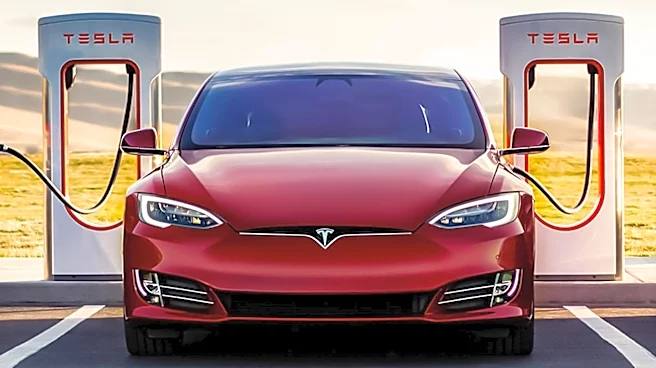
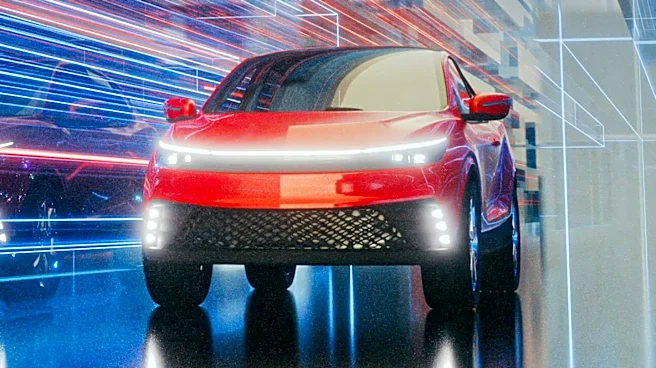
Rivian Automotive has launched a new mid-market SUV, the R2, aiming to compete directly with Tesla's Model Y, which currently leads the segment. Despite Rivian's smaller market capitalization of $23.5 billion compared to Tesla's $1.48 trillion, the company
is making strategic moves to capture a larger share of the electric vehicle (EV) market. Rivian's recent launch is part of its broader strategy to expand its product lineup beyond its existing high-end models, the R1S and R1T. The company is not yet profitable and is projected to burn through approximately $9 billion before achieving cash-flow positivity, which is not expected before 2030. Rivian's current cash reserves stand at $4.8 billion, indicating potential future capital raises through secondary offerings or debt issuance.
Why It's Important?
Rivian's entry into the mid-market SUV segment is significant as it challenges Tesla's dominance in a highly competitive market. This move could potentially alter the dynamics of the EV industry, offering consumers more choices and possibly driving down prices. For Rivian, capturing a portion of this market is crucial for its growth and long-term sustainability. The company's financial strategy, including potential capital raises, will be critical in supporting its expansion efforts. For Tesla, the increased competition may pressure it to innovate further and maintain its market leadership. The broader EV market could see accelerated growth as more players enter the space, potentially leading to increased adoption of electric vehicles.
What's Next?
Rivian's success in the mid-market SUV segment will depend on its ability to scale production and manage costs effectively. The company may need to secure additional funding to support its growth ambitions and achieve profitability. Investors and industry analysts will closely monitor Rivian's financial performance and market reception of the R2. For Tesla, maintaining its competitive edge will require continued innovation and possibly strategic adjustments in pricing or product offerings. The evolving competition in the EV market could lead to strategic partnerships, mergers, or acquisitions as companies seek to strengthen their positions.
Beyond the Headlines
Rivian's strategic move into the mid-market SUV segment highlights the growing importance of consumer choice and affordability in the EV market. As more companies enter this space, the industry may see a shift towards more sustainable and environmentally friendly transportation options. This could have broader implications for reducing carbon emissions and combating climate change. Additionally, the increased competition may drive technological advancements, leading to improved battery technology and longer vehicle ranges, further enhancing the appeal of electric vehicles to consumers.