
What's Happening?
Applied Digital Corp. (APLD) stock experienced a rise in premarket trading on Friday, signaling a rebound for AI infrastructure stocks. This recovery follows a period of significant losses for the sector,
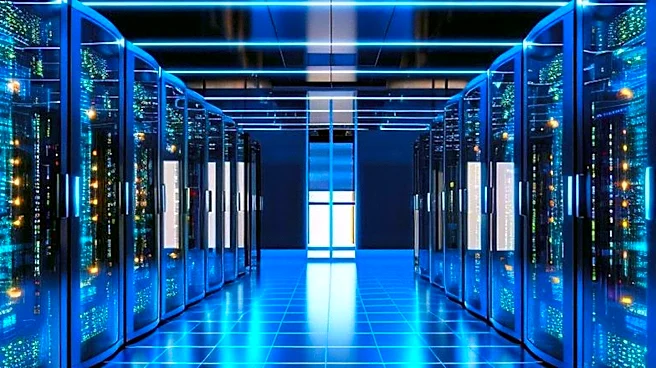
partly triggered by increased scrutiny of NVIDIA Corp. (NVDA). Applied Digital's shares had been nearing their 52-week low. The company reported substantial progress at its Polaris Forge 2 data center campus in Harwood, North Dakota. Specifically, Applied Digital completed the commissioning of the facility's first 75 megawatts (MW) of capacity and successfully activated its initial 25 MW data hall on schedule. This development is a key step in the company's strategy to expand its infrastructure for AI computing workloads. The broader AI infrastructure market, including peers like CoreWeave Inc., IREN Limited, and Cipher Digital Inc., has seen declines of 30% to 50% over the past month, with year-to-date losses ranging from 40% to 70%.
Why It's Important?
The rebound in Applied Digital's stock, alongside other AI infrastructure companies, is significant as it indicates a potential shift in investor sentiment after a period of broad selling pressure. The progress at Applied Digital's North Dakota data center underscores the ongoing demand for specialized infrastructure to support the growing needs of AI computing. As AI technologies continue to advance, the need for robust, high-capacity data centers becomes critical. Companies like Applied Digital are at the forefront of building this essential infrastructure, making their operational milestones important indicators of the sector's health and future growth. The previous sell-off, influenced by concerns surrounding NVIDIA's leadership and the outlook for AI infrastructure investment, highlighted the volatility and interconnectedness within the AI ecosystem. A recovery suggests renewed confidence in the long-term prospects of AI infrastructure development, which is crucial for the continued expansion of AI capabilities across various U.S. industries.
What's Next?
Looking ahead, the performance of Applied Digital and its peers will likely be closely watched as a barometer for the broader AI infrastructure market. Continued operational progress at facilities like Polaris Forge 2 will be key for Applied Digital to maintain investor confidence and capitalize on the demand for AI computing resources. The company's stock remains below its 20-, 50-, and 200-day simple moving averages, suggesting that while a rebound has occurred, it still faces technical hurdles. Analyst ratings, which currently show a 'Buy' consensus with an average price forecast significantly higher than current trading levels, indicate a belief in long-term growth potential. However, market sentiment regarding NVIDIA and overall AI infrastructure investment will continue to influence stock performance. Future earnings reports and further updates on data center expansion and client acquisitions will be critical in shaping the company's trajectory and the broader sector's recovery.
Beyond the Headlines
The developments surrounding Applied Digital highlight a deeper trend in the technology sector: the foundational importance of physical infrastructure for the advancement of artificial intelligence. While much attention is often given to AI software and algorithms, the underlying hardware and data center capabilities are equally crucial. The significant investments in purpose-built, liquid-cooled HPC data centers, as developed by Applied Digital, reflect a recognition that traditional data center designs may not be sufficient for the intensive computational demands of modern AI. This shift points to a future where specialized, energy-efficient infrastructure will be a competitive differentiator. Furthermore, the volatility experienced by AI infrastructure stocks underscores the speculative nature of emerging technology markets, where investor sentiment can rapidly shift based on perceived industry leadership or broader economic outlooks. This also brings into focus the critical role of semiconductor companies like NVIDIA, whose performance and outlook can have ripple effects across the entire AI value chain.