




What's Happening?
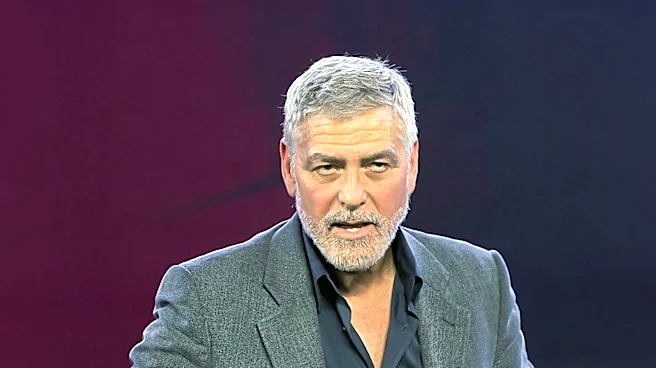
George Clooney, a prominent figure in Hollywood, has had a dynamic career spanning various roles as an actor, director, producer, and screenwriter. He first gained significant recognition for his portrayal of Dr. Doug Ross in the TV series 'ER'. His career has since
been characterized by a balance of commercially successful films and independent projects, showcasing his versatility. As a director, Clooney has explored complex historical and political themes in movies such as 'Argo' and 'The Tender Bar'. He also earned an Academy Award for his supporting role in the 2005 political thriller 'Syriana' and a second Academy Award as a producer for 'Argo' in 2013. Despite his extensive and successful career, Clooney has expressed regret over passing on a specific romantic drama role. He revealed that he was initially slated to play the younger version of Noah in 'The Notebook', a role that ultimately went to Ryan Gosling. Clooney decided against taking the role after realizing he couldn't convincingly play a younger version of a character that would be portrayed by the iconic Paul Newman in his older years, citing a lack of physical resemblance.
Why It's Important?
Clooney's reflection on his career choices, particularly his decision to pass on 'The Notebook', highlights the intricate considerations actors face in shaping their professional trajectories. His emphasis on balancing commercial success with artistically challenging projects demonstrates a strategic approach to maintaining relevance and critical acclaim in a competitive industry. The anecdote about 'The Notebook' also underscores the influence of other legendary actors, like Paul Newman, on the decisions of their peers. This reveals a deeper respect for legacy and authenticity within the acting community, where an actor might decline a role if they feel they cannot adequately embody the character's continuity with an established icon. This decision, while potentially sacrificing a popular role, speaks to Clooney's commitment to artistic integrity and his understanding of how public perception and character believability contribute to a lasting career. It also offers insight into the collaborative and sometimes self-sacrificing nature of filmmaking, where personal aspirations can be set aside for the perceived greater good of a project's casting.
What's Next?
George Clooney continues to be an active force in the entertainment industry, balancing his acting career with his roles as a director and producer. His ongoing involvement in diverse projects suggests a continued commitment to exploring varied narratives and themes. While he has expressed a desire to shift away from traditional leading-man romantic roles, following a path similar to Paul Newman, his future endeavors are likely to include more character-driven performances and directorial projects that tackle significant subjects. This evolution in his career indicates a focus on artistic growth and a desire to contribute to cinema in multifaceted ways beyond just acting. Audiences can anticipate more thought-provoking films from Clooney, both in front of and behind the camera, as he further solidifies his legacy as a versatile and influential figure in Hollywood.
Beyond the Headlines
Clooney's career trajectory and his candidness about past decisions offer a broader commentary on the nature of celebrity and artistic integrity in Hollywood. His ability to transition from a television heartthrob to a respected film actor, director, and producer illustrates a successful navigation of the industry's demands. His humanitarian work and advocacy further elevate his public persona beyond mere entertainment, transforming him into a figure of social influence. The decision to pass on 'The Notebook' due to a perceived lack of resemblance to Paul Newman, rather than solely for career advancement, speaks to a deeper artistic consciousness and a respect for the craft. This approach contrasts with the often-commercial-driven decisions in Hollywood, highlighting a commitment to authenticity that resonates with audiences and critics alike. His career serves as a model for how public figures can leverage their platform for both artistic expression and social impact, maintaining a balance between personal ambition and broader societal contributions.