





What's Happening?
Swarmer, Inc., an Austin, Texas-based defense technology company specializing in autonomous drone coordination, has signed an agreement to acquire certain intellectual property assets from Vataga Drone, a Ukrainian drone manufacturer. This acquisition
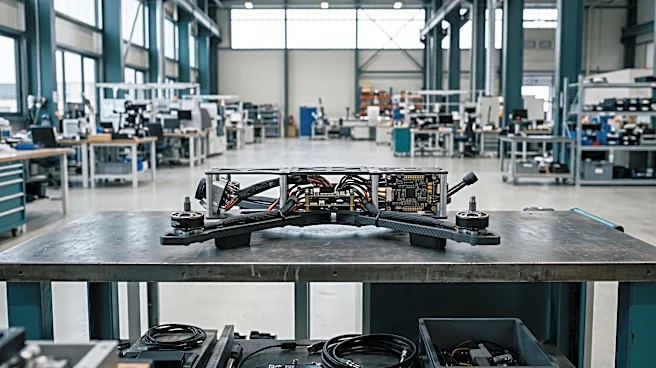
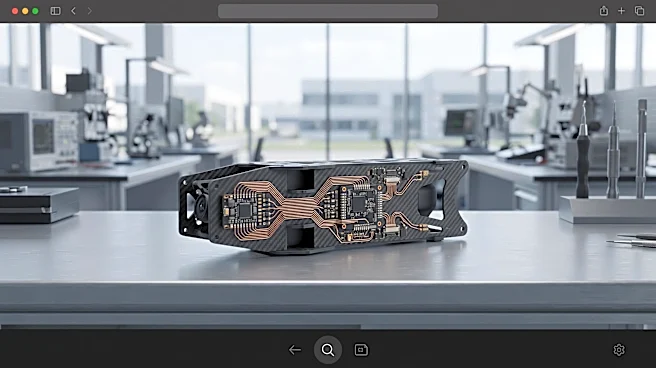
aims to expand Swarmer's hardware engineering capabilities and support the development of integrated autonomous unmanned systems. The transaction, which includes cash and equity consideration, is expected to bring Vataga CEO Maksym Melnyk and 14 members of Vataga's research and development team into Swarmer. The acquired intellectual property encompasses hardware and software engineering, including first-person-view (FPV) drone airframe designs, initiation electronics, ground-control equipment, development tools, and manufacturing documentation. Vataga, founded in 2023 and headquartered in Kyiv, will continue to operate as an independent manufacturing company, supplying equipment to Ukraine's armed forces through government procurement channels. Its products, such as the NATO-codified FPV-10 Peacemaker drone and VTG Spark initiation boards, are already deployed with Ukrainian military units and integrated into the country's defense technology supply chain.
Why It's Important?
This acquisition signifies a growing trend of U.S. defense technology companies integrating battle-tested innovations from conflict zones into their portfolios. For Swarmer, gaining access to Vataga's combat-proven hardware designs and engineering expertise, developed through operational use in Ukraine, provides a significant advantage in creating comprehensive unmanned systems. This move allows Swarmer to combine its autonomous swarm coordination software with established drone hardware, potentially reducing integration challenges and accelerating the development of full-stack solutions. For the U.S. defense industry, this collaboration highlights the value of leveraging real-world combat experience to refine and advance defense technologies. It also underscores the strategic importance of unmanned systems in modern warfare, with a focus on integrating hardware and software for enhanced autonomy and mission management. The transaction reflects continued U.S. investment in Ukraine's defense technology sector, which has become a crucible for rapid innovation in unmanned systems due to ongoing operational requirements.
What's Next?
Following the completion of the transaction, Swarmer plans to integrate Vataga's engineering expertise and intellectual property into its technology platform. The immediate focus will be on scaling the deployment of FPV drones and interceptor systems equipped with autonomous swarm capabilities. Maksym Melnyk will join Swarmer as Vice President of Hardware, leading the integration efforts. This collaboration is expected to lead to the development of more integrated autonomous systems for defense applications, combining aircraft design, onboard electronics, and autonomous mission management. Vataga will continue its independent manufacturing operations, ensuring a steady supply of its existing products to the Ukrainian armed forces. This partnership could also pave the way for further U.S. defense companies to explore similar acquisitions or collaborations with Ukrainian defense tech firms, given the rapid advancements and real-world testing occurring in the region. The success of this integration could influence future U.S. defense procurement strategies, emphasizing the adoption of agile, combat-proven technologies.
Beyond the Headlines
This acquisition points to a broader strategic shift in defense technology development, where the rapid pace of innovation driven by active conflict zones like Ukraine is being directly leveraged by leading defense firms. The integration of 'battle-tested' hardware and software from a real-world conflict environment into a U.S. company's offerings could significantly accelerate the development cycle for advanced unmanned systems, bypassing traditional, often lengthy, procurement and testing processes. This raises questions about the future of defense R&D, potentially leading to more agile and responsive development models that prioritize operational effectiveness over protracted theoretical development. Furthermore, the continued operation of Vataga as an independent manufacturer in Ukraine, while its IP is acquired by a U.S. firm, illustrates a complex model of international defense cooperation and technology transfer. This could foster deeper industrial ties between the U.S. and Ukraine, potentially strengthening Ukraine's defense industrial base while providing the U.S. with cutting-edge capabilities. The ethical implications of commercializing technologies developed in active warfare, particularly those with direct combat applications, will also be a subject of ongoing discussion.