





What's Happening?
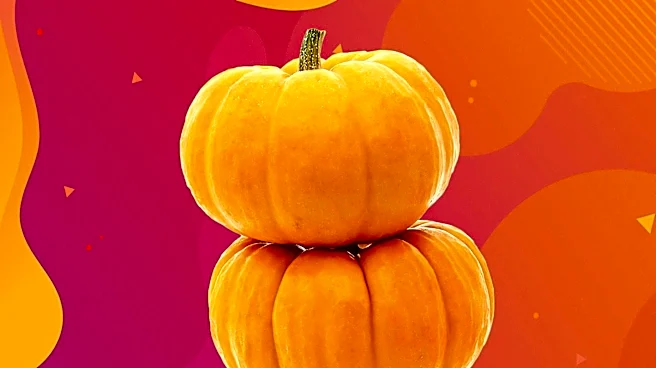
Major U.S. retailers have started stocking Halloween decorations, costumes, and candy in August, significantly earlier than traditional seasonal timelines. This trend has been observed in stores like Target and CVS, where a wide array of Halloween-themed
products are now available. The early rollout of holiday merchandise is sparking discussions among consumers about the blurring lines between seasonal celebrations. Many express surprise and some frustration at seeing Halloween items on shelves while summer weather persists, noting that it feels like a violation of the natural order of holiday progression. The phenomenon suggests a shift in retail strategies, potentially driven by consumer data indicating an earlier demand for holiday-related goods. This early introduction of Halloween products follows closely after Independence Day celebrations, further compressing the traditional retail calendar.
Why It's Important?
This early introduction of Halloween merchandise reflects a broader trend in retail to extend holiday shopping seasons, which can have significant economic and cultural implications. For businesses, starting holiday sales earlier can potentially boost revenue by capturing consumer spending over a longer period and capitalizing on impulse purchases. It also allows for better inventory management and reduces the pressure of last-minute shopping rushes. However, it can also lead to consumer fatigue, where the prolonged exposure to holiday themes diminishes their special appeal. Culturally, this trend alters the traditional rhythm of holidays, potentially eroding the distinctiveness of each celebration. It also highlights the increasing influence of data analytics in retail decisions, where consumer behavior patterns dictate merchandising schedules rather than traditional seasonal norms. This shift could impact smaller businesses that rely on more traditional seasonal cycles, as they may struggle to compete with larger retailers' extended promotional periods.
What's Next?
The trend of early holiday merchandising is likely to continue and potentially expand to other holidays, further blurring seasonal boundaries. Consumers can expect to see holiday-themed products appearing earlier each year, driven by retail data and competitive pressures. This could lead to a re-evaluation of traditional holiday marketing strategies by businesses, as they adapt to consumer purchasing habits that are less tied to specific calendar dates. There may also be continued public discourse regarding the commercialization of holidays and the impact on cultural traditions. Retailers will likely monitor sales data from these extended periods to refine their strategies, potentially leading to even earlier rollouts if initial results prove successful. This could also influence supply chain logistics, requiring earlier production and distribution of seasonal goods.
Beyond the Headlines
The early appearance of Halloween merchandise in August points to deeper societal shifts influenced by consumerism, climate change, and data-driven decision-making. The blurring of seasonal boundaries in retail mirrors a broader cultural phenomenon where traditional markers of time and season are becoming less distinct, partly due to the impact of climate change on weather patterns. If distinct seasons become less pronounced, the traditional timing of holidays, often linked to natural cycles, may lose relevance. Furthermore, the reliance on 'big data' to dictate holiday timing suggests a surrender to algorithmic consumerism, where human preferences are quantified and catered to in ways that may override traditional cultural norms. This raises questions about the authenticity of holiday experiences when they are primarily driven by commercial imperatives rather than genuine seasonal or cultural significance. It also highlights a potential disconnect between consumer desire for novelty and the preservation of traditional holiday rhythms.