




What's Happening?
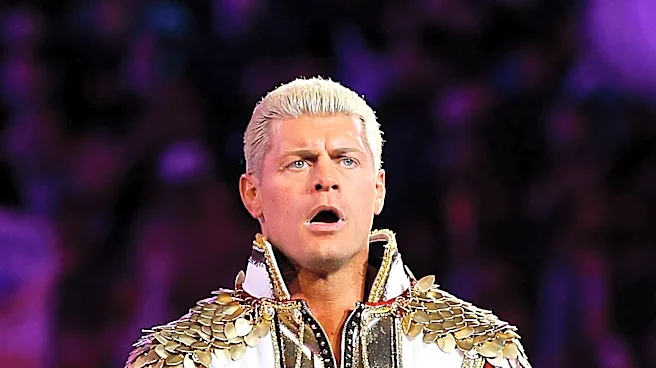
Cody Rhodes, a prominent figure in professional wrestling, has publicly criticized certain aspects of old-school wrestling etiquette, particularly the use of terms like 'New York' and 'The Fed' to refer to WWE. During a recent episode of his podcast,
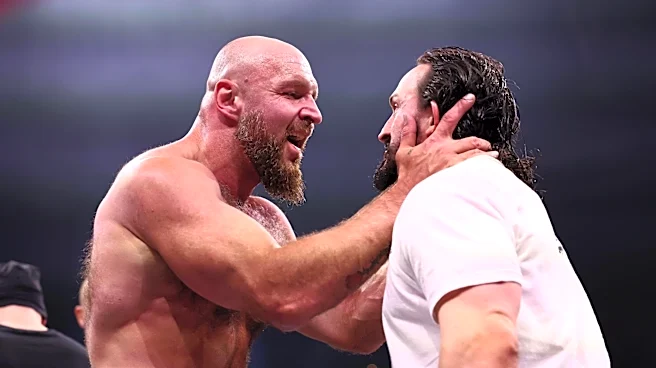
'What Do You Wanna' Talk About?', Rhodes expressed his view that these terms are outdated 'indie habits' and that he tunes out when he hears them, feeling they are passed down incorrectly. He also mentioned that some veterans joke about a handshake revealing a 'stiff worker,' but he couldn't recall any respected wrestler who actually practiced this. Rhodes' comments highlight a perceived disconnect between traditional wrestling customs and the modern landscape of the industry, advocating for a more contemporary approach to professional discourse.
Why It's Important?
Cody Rhodes' critique of outdated wrestling etiquette is significant as it comes from a wrestler who has experienced both the independent circuit and the highest levels of professional wrestling, including co-founding AEW and returning to WWE. His comments challenge long-standing, unwritten rules and terminology within the industry, suggesting a need for modernization. By calling out terms like 'The Fed' and 'New York,' Rhodes is advocating for a more direct and less coded language, which could foster greater transparency and respect among wrestlers and fans. This stance could influence younger generations of wrestlers to question and potentially abandon traditions that no longer serve a practical purpose, leading to a shift in professional culture. It also underscores the evolving nature of wrestling, where past practices are being re-evaluated in the context of a more interconnected and globalized industry.
What's Next?
Cody Rhodes' outspoken views on wrestling etiquette could spark further debate within the professional wrestling community. Other wrestlers, both veterans and newcomers, might weigh in on the relevance of these traditions, potentially leading to a broader re-evaluation of industry norms. His comments could encourage a more open dialogue about what constitutes 'paying dues' and how respect is earned and shown in modern wrestling. This might also lead to a decline in the use of the criticized terms, especially among those who look up to Rhodes. Ultimately, this discussion could contribute to a more contemporary and inclusive professional environment within wrestling, where communication is more direct and less reliant on historical, sometimes exclusionary, jargon. The impact could be seen in how wrestlers interact with each other and how the industry presents itself to a wider audience.
Beyond the Headlines
Beyond the immediate discussion of wrestling terminology, Cody Rhodes' comments delve into the broader theme of generational shifts and the challenge of preserving tradition while embracing progress. His perspective, rooted in both old-school respect and modern innovation, highlights the tension between honoring the past and adapting to the present. This extends beyond wrestling, reflecting similar debates in various professional fields where established practices are questioned by those who have experienced different eras. Ethically, Rhodes' stance promotes authenticity and directness, encouraging individuals to speak plainly rather than relying on coded language that can create unnecessary divisions. Culturally, it signifies a move towards a more transparent and less hierarchical professional environment, where the value of tradition is assessed based on its current relevance and impact, rather than simply its historical existence.