

What's Happening?
Commanders insider Ben Standig has provided his analysis following the Washington Commanders' decision to trim their roster to 53 players. The roster finalization comes with several key takeaways, including the confirmation that Trey Amos will be sidelined
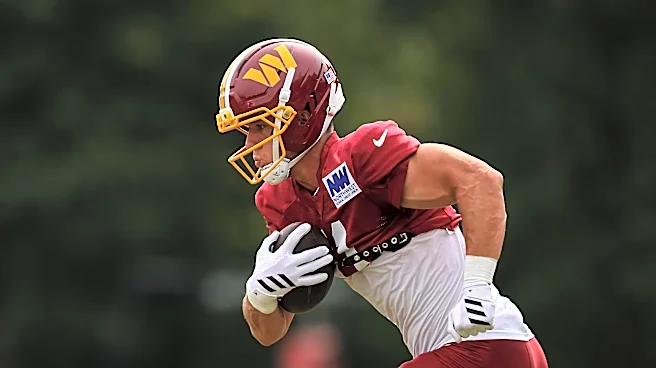
for at least the first month of the season due to injury. Additionally, the team's center positions remain unsettled, indicating ongoing evaluation or potential strategic adjustments. Notably, all six rookies and two undrafted free agents (UDFAs) have secured spots on the 53-man roster, showcasing a commitment to youth and new talent. Luke McCaffrey also made the cut. The team's defensive backfield composition, specifically the number of corners, is highlighted as a point of interest.
Why It's Important?
The finalization of the 53-man roster is a critical annual event for any NFL team, as it sets the foundation for the upcoming season. For the Washington Commanders, the injury to Trey Amos could impact defensive strategies and depth, requiring other players to step up. The unsettled center positions suggest potential vulnerabilities or a lack of clear leadership in a crucial offensive line role, which could affect game-day performance. The retention of all rookies and UDFAs signals a strong belief in the team's scouting and development programs, potentially injecting new energy and talent into the squad. Luke McCaffrey's inclusion is also noteworthy, indicating his successful transition or strong performance during training. These roster decisions collectively shape the team's competitive outlook, influencing fan expectations, coaching strategies, and the overall trajectory of the season.
What's Next?
With the 53-man roster now set, the Washington Commanders will shift their focus entirely to preparing for the regular season. The coaching staff will need to address the unsettled center positions, either by developing current players, making further roster moves, or adapting offensive schemes. The absence of Trey Amos will necessitate adjustments in the defensive lineup and potentially open opportunities for other players to gain experience. The performance of the retained rookies and UDFAs will be closely watched as they transition from training camp to regular-season play. Fans and analysts will be scrutinizing the team's initial games to see how these roster decisions translate into on-field success and how the team manages its depth and injury concerns throughout the season.
Beyond the Headlines
Beyond the immediate impact on the team's performance, the roster decisions reflect broader trends in professional sports, such as the increasing emphasis on youth development and the strategic integration of undrafted talent. The challenges faced by players like Trey Amos due to injury highlight the precarious nature of professional athletic careers and the constant pressure to perform. The unsettled center position could also point to deeper organizational issues in talent acquisition or player development within specific roles. Furthermore, the inclusion of all rookies and UDFAs can be a morale booster for the team, fostering a culture of opportunity and meritocracy. These decisions, while seemingly tactical, contribute to the long-term identity and competitive philosophy of the franchise, influencing everything from fan engagement to future draft strategies.