





What's Happening?
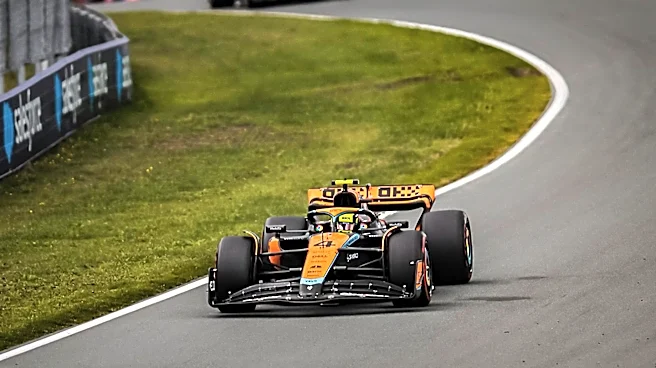
Lando Norris has identified the 'biggest lesson' from McLaren's unsuccessful title defense in the 2026 Formula 1 season: 'nothing comes easy.' McLaren lost both the World Drivers' Championship, with Norris being succeeded by Kimi Antonelli, and the Constructors'
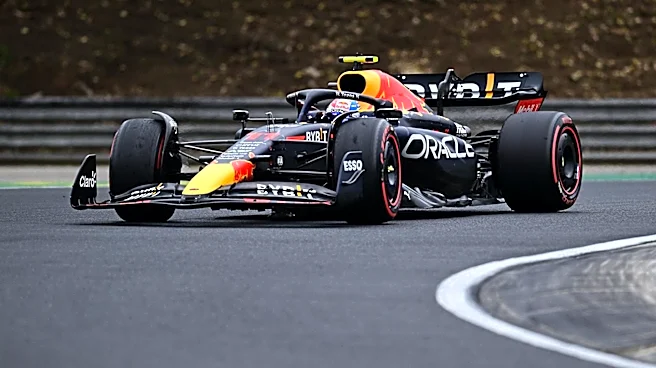
Championship to Mercedes. Despite securing wins in Hungary, the Netherlands, and Sao Paulo, and nearly winning in Spain, McLaren consistently found itself battling for third place behind Mercedes and Ferrari, with Red Bull also in contention. Norris explained that McLaren and Red Bull continued developing their 2025 cars to secure those titles, while Mercedes and Ferrari shifted focus earlier to the new 2026 technical regulations. This strategic trade-off meant McLaren faced a tougher challenge in the subsequent season, reinforcing Norris' belief that success requires continuous, harder work each year.
Why It's Important?
This reflection from Lando Norris highlights the intense strategic trade-offs and competitive pressures within Formula 1. The decision by McLaren and Red Bull to prioritize the 2025 titles by continuing development on their existing cars, rather than shifting resources to the new 2026 regulations, had significant consequences. This approach, while securing immediate success, put them at a disadvantage when the new regulations came into effect, as rival teams like Mercedes and Ferrari had a head start in development. This scenario underscores the critical balance teams must strike between short-term glory and long-term competitiveness, especially during periods of significant rule changes. It also emphasizes that past success does not guarantee future performance, requiring constant innovation and effort to stay at the top.
What's Next?
Moving forward, McLaren will likely re-evaluate its long-term development strategies, particularly concerning major regulation changes. The lesson that 'nothing comes easy' will probably influence how they allocate resources between current and future car development cycles. Teams often face this dilemma, and McLaren's experience in 2026 will serve as a crucial case study. Expect McLaren to potentially adopt a more balanced approach in future transitional periods, ensuring they remain competitive under new regulations while still fighting for current championships. This could involve earlier resource allocation to future projects or a more aggressive development pace across multiple car generations to avoid falling behind competitors who make earlier strategic shifts.
Beyond the Headlines
The 'nothing comes easy' lesson extends beyond the immediate competitive landscape of Formula 1, reflecting a broader truth in high-performance environments. It speaks to the relentless nature of top-tier competition, where complacency can quickly lead to decline. This mindset is crucial not only for sports teams but also for businesses and organizations striving for sustained excellence. The need for continuous improvement, adaptation, and an understanding that past achievements do not guarantee future success is a universal principle. McLaren's experience serves as a reminder that even after reaching the pinnacle, the effort required to stay there, or return to it, often surpasses the effort initially expended to get there, demanding constant vigilance and strategic foresight.