
What's Happening?
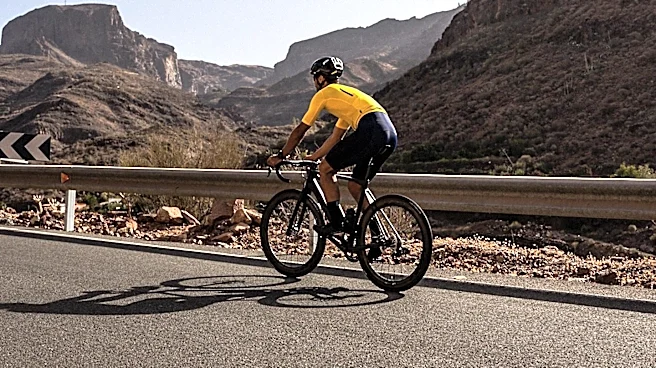
A major cycling race in Saudi Arabia, the AlUla Tour, has been canceled for 2027, and its long-term future is uncertain due to ongoing instability in the Middle East and a shift in the investment strategy of the Saudi Public Investment Fund (PIF). The
AlUla Development Company, owned by the PIF, will no longer be a co-title sponsor for men's team Jayco-AlUla and women's team Liv-AlUla-Jayco. This development follows a tumultuous year for the PIF's overseas sporting investments, including the withdrawal of backing for the LIV Golf circuit in April and the early termination of a deal to host women's tennis' flagship season-ending tournament. The 2026 Urban Cycling Championships were also canceled due to safety concerns. The Amaury Sports Organisation (ASO), which partly runs the ProSeries AlUla Tour, confirmed that the Saudi Federation did not register the race for 2027.
Why It's Important?
The PIF's reduction in sports investments has significant implications for the global sports industry, particularly for events and teams that have relied on Saudi funding. The cancellation of the AlUla Tour and the withdrawal of sponsorship from cycling teams signal a broader trend of the PIF prioritizing domestic investments over international sporting ventures. This shift could leave a funding gap for various sports organizations and events, potentially impacting their financial stability and operational capacity. For U.S. sports, while not directly affected by the cycling race, it indicates a potential decrease in Saudi investment interest across different sports, which could influence future partnerships or funding opportunities. The instability in the Middle East, particularly the conflicts between Saudi Arabia and Houthi rebels, and the broader regional tensions, are contributing factors, making international sporting events in the region less viable due to safety concerns.
What's Next?
The cancellation of the AlUla Tour and the withdrawal of PIF-backed sponsorship raise questions about the future of other sporting events in the region, such as the UAE Tour and Tour of Oman. The Qatari Cycling Federation's plans to resurrect the Tours of Qatar have also been shelved, with the earliest possible return now in 2028. This trend suggests a cautious approach to international sports investments from Gulf nations, particularly those linked to the PIF. Sports organizations and teams that previously sought or received Saudi funding will need to explore alternative financial models and sponsorship opportunities. The ongoing geopolitical situation in the Middle East will continue to be a critical factor influencing the viability and security of hosting international sporting events in the region, potentially leading to further cancellations or relocations.
Beyond the Headlines
The PIF's retrenchment from international sports investments reflects a broader strategic re-evaluation driven by economic pressures and regional instability. The initial surge of Saudi investment in global sports was often seen as a component of its 'Vision 2030' to diversify its economy and enhance its international image. However, the current shift suggests a prioritization of internal economic stability and security over external soft power initiatives. This could lead to a more localized sports development strategy within Saudi Arabia, focusing on domestic leagues and events. The ethical and political dimensions of 'sportswashing' – using sports to improve a country's reputation – may also be re-evaluated as the PIF scales back its international presence. The decision highlights the vulnerability of global sports to geopolitical shifts and the financial priorities of major state-backed funds.