
What's Happening?
UFC fighter Dustin Poirier has voiced strong opposition to a rumored ban on the oblique kick technique in mixed martial arts. The debate over this controversial front kick to the knee, famously used by
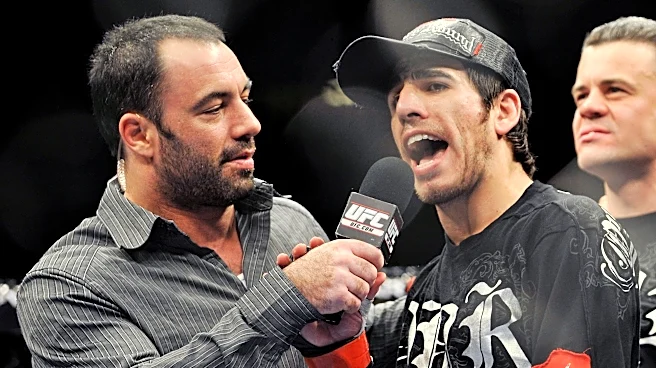
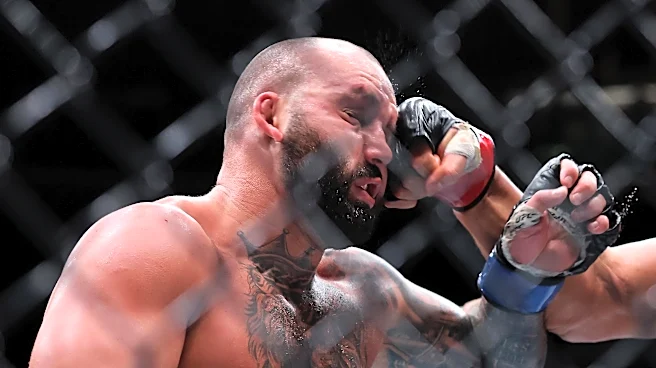
former UFC champion Jon Jones, has been reignited, with UFC commentator Joe Rogan claiming on his podcast that such a ban is imminent. UFC President Dana White has reportedly supported the idea, and the California State Athletic Commission previously discussed a ban after UFC 331, where Edmen Shahbazyan was repeatedly struck with the kick. Poirier, who retired from MMA in July 2025, argues that banning such a move removes a crucial 'weapon' from fighters' arsenals. He emphasized that MMA is a sport where participants aim to hurt each other and should not be 'softened up' with more rules, stating, 'We're fighting, bro, we're fighting… That's a weapon. You're taking away weapons.'
Why It's Important?
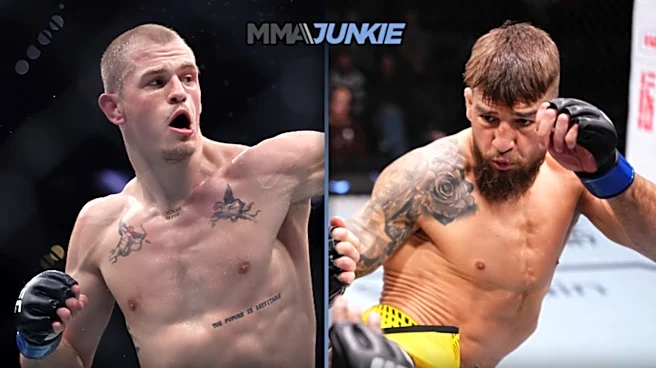
The potential ban on oblique kicks carries significant implications for the sport of mixed martial arts, particularly for fighter strategy and safety. If implemented, it would alter the landscape of combat, forcing fighters who effectively utilize this technique, such as Ian Machado Garry and Khalil Rountree Jr., to adapt their fighting styles. The move is known for causing serious injuries, as seen with Shavkat Rakhmonov and Modestas Bukauskas, which is likely the primary driver behind the proposed ban. However, fighters like Poirier argue that such restrictions undermine the 'no holds barred' nature of MMA, potentially leading to a slippery slope where other effective, yet dangerous, techniques could also be outlawed. This debate highlights the ongoing tension between fighter safety and the desire to maintain the raw, competitive essence of the sport, affecting both current and aspiring MMA athletes.
What's Next?
The future of the oblique kick in MMA remains uncertain, but the discussion by the California State Athletic Commission and the reported support from UFC President Dana White suggest that formal action could be taken. Fighters and commentators will likely continue to express their views, influencing public opinion and potentially the decision-making bodies. If a ban is enacted, it would necessitate rule changes across various athletic commissions and promotions, impacting fighter training and competitive strategies. The MMA community will be closely watching for official announcements from regulatory bodies and the UFC regarding the status of this controversial technique, as any decision will set a precedent for how fighter safety is balanced against the sport's inherent combativeness.
Beyond the Headlines
The controversy surrounding the oblique kick ban extends beyond immediate rule changes, touching upon the philosophical underpinnings of mixed martial arts. Poirier's argument that 'This is no holds barred. This is mixed martial arts' reflects a purist view that emphasizes the sport's brutal honesty and the acceptance of inherent risks. A ban could be seen as a step towards 'Nickelodeon-ing' the sport, as Poirier put it, potentially diluting its appeal for fans who appreciate its raw intensity. Conversely, proponents of the ban might argue that protecting fighters from debilitating, career-ending injuries is a moral imperative and crucial for the long-term sustainability and legitimacy of the sport. This ethical dilemma—balancing fighter welfare with the sport's identity—will continue to shape discussions about rule modifications and the future evolution of MMA.