









What's Happening?
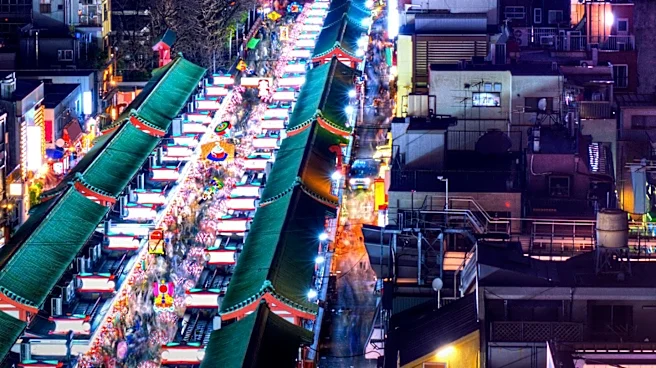
Tokyo's Sensoji Temple, the city's oldest temple founded in 645 A.D., continues to be a major attraction, drawing approximately 30 million visitors annually. Dedicated to Avalokitesvara Bodhisattva, the temple complex provides a nostalgic glimpse into
old Japan. Visitors enter through the impressive Kaminarimon gate, marked by a massive chochin lantern, and proceed down Nakamise-dori, a street lined with souvenir shops, many of which have been family-run for over 150 years. Further into the complex, the Hozomon wooden gate leads to the main temple grounds, featuring an elaborately detailed main hall and a five-story pagoda. Before entering the main hall, visitors can participate in a purification ritual using incense smoke, believed to ward off illness and misfortune while enhancing intelligence and health. Inside, after making a wish, visitors can pick an omikuji, a fortune slip, to test their luck. The surrounding area also offers numerous izakaya bars, teahouses, and restaurants, alongside street performers, providing a comprehensive cultural experience.
Why It's Important?
The enduring popularity of Sensoji Temple highlights the significant role of cultural and historical sites in attracting tourism and preserving heritage. For the U.S. tourism industry, destinations like Sensoji offer valuable insights into how historical authenticity, combined with accessible cultural practices and local commerce, can create a compelling visitor experience. The temple's ability to draw millions annually underscores the global appeal of well-maintained historical landmarks. This sustained interest supports local economies through tourism revenue, benefiting small businesses along Nakamise-dori and the broader hospitality sector. Furthermore, the temple's emphasis on traditional rituals and architecture provides a unique cultural exchange opportunity for international visitors, including those from the U.S., fostering a deeper appreciation for Japanese traditions and history. The blend of spiritual significance and commercial activity around the temple serves as a model for integrating cultural preservation with economic development.
What's Next?
Sensoji Temple is expected to continue its role as a primary cultural and tourist destination in Tokyo. Efforts will likely focus on maintaining the temple's historical integrity while accommodating the large influx of visitors. This may involve ongoing preservation projects for its ancient structures and potentially implementing strategies to manage crowd flow, especially during peak seasons. The surrounding businesses on Nakamise-dori will likely continue to thrive, adapting their offerings to cater to diverse international tourists while retaining their traditional charm. The temple's management may also explore new ways to enhance the visitor experience, such as digital guides or interactive exhibits, to engage a broader audience while respecting its sacred nature. The consistent appeal of such a landmark ensures its continued contribution to Tokyo's tourism economy and cultural identity.
Beyond the Headlines
Beyond its immediate appeal as a tourist attraction, Sensoji Temple represents a profound connection to Japan's spiritual and historical roots. Its continuous operation since 645 A.D. signifies an unbroken lineage of cultural and religious practice, offering a tangible link to the past in a rapidly modernizing city. The temple's rituals, such as the incense purification and omikuji fortune slips, are not merely tourist activities but deeply embedded cultural practices that provide insight into Japanese beliefs and daily life. The presence of family-run shops for over 150 years along Nakamise-dori illustrates the importance of generational continuity and traditional craftsmanship in Japanese society. This blend of ancient spirituality, historical commerce, and cultural resilience offers a powerful narrative about identity and heritage, resonating with visitors seeking authentic experiences beyond superficial sightseeing.