



What's Happening?
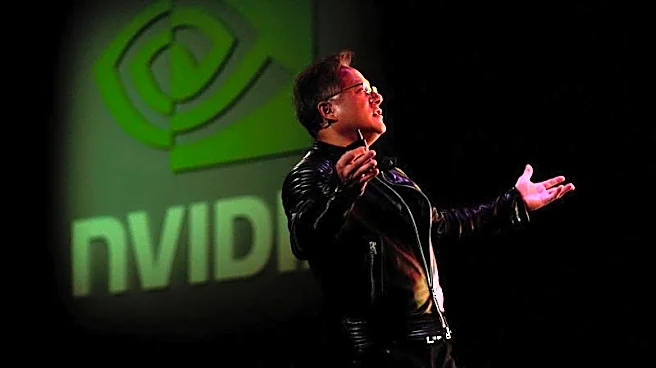
A widely circulated social media claim regarding a $500 billion investment in XST, purportedly linked to President Trump and involving Nvidia, has been debunked. The claim asserted that this investment would be confirmed by August 26. However, no official
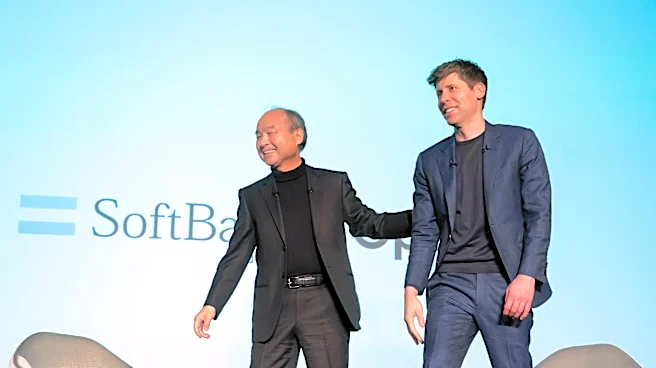
announcement, press release, or filing from Nvidia, President Trump, or any entity connected to Stargate LLC materialized on the specified date. The misinformation borrowed elements from genuine events to create a false sense of credibility. For instance, the $500 billion figure is associated with a real AI infrastructure investment initiative by Stargate LLC, involving OpenAI, Oracle, and SoftBank. The August 26 date coincided with Nvidia's Q2 FY2027 earnings report, an actual event in the AI infrastructure sector. The claim fabricated a connection between these verifiable elements and XST, a token with no documented relationship to the mentioned parties.
Why It's Important?
This incident highlights the sophisticated nature of financial misinformation, particularly concerning low-capitalization tokens and emerging technologies like AI. The fabrication's use of real numbers, names, and dates from unrelated events can mislead investors and the public, creating an illusion of legitimacy that bypasses casual scrutiny. Such claims can artificially inflate or destabilize token prices, leading to financial losses for those who act on unverified information. The XST token, for example, has seen a significant decline in value, trading near $0.0128, down approximately 71% over the past seven days, according to CoinGecko. This decline suggests that while the misinformation spread widely, it likely did not become a meaningful price driver for informed traders, indicating a market that largely ignored the fabricated claim.
What's Next?
The passing of the August 26 deadline without any confirmation serves as clear evidence that the claim was fabricated. This outcome provides a crucial lesson for evaluating future viral claims about low-cap tokens. Investors and the public are advised to verify information through official channels, such as company press releases, earnings calls, and SEC filings, rather than relying on social media screenshots. The XST case demonstrates that a specific deadline can effectively test the veracity of such claims. Moving forward, the market dynamics of XST will likely continue to be influenced by factors such as its concentrated supply, undeveloped product, and the natural exhaustion of narrative-driven speculative interest, rather than by debunked misinformation.
Beyond the Headlines
The XST misinformation case underscores a broader challenge in the digital age: the spread of sophisticated disinformation designed to exploit market interest and generate financial gains for specific groups. The method of combining real, verifiable elements with fabricated connections is a recurring pattern in such schemes. This approach makes it difficult for individuals to discern truth from falsehood, as each component of the claim might pass an isolated fact-check. Understanding this construction pattern is crucial for developing media literacy and critical thinking skills to navigate the complex information landscape. It also raises questions about the responsibility of social media platforms in curbing the spread of financially manipulative content and the need for robust regulatory frameworks to protect investors from such deceptive practices.