


What's Happening?
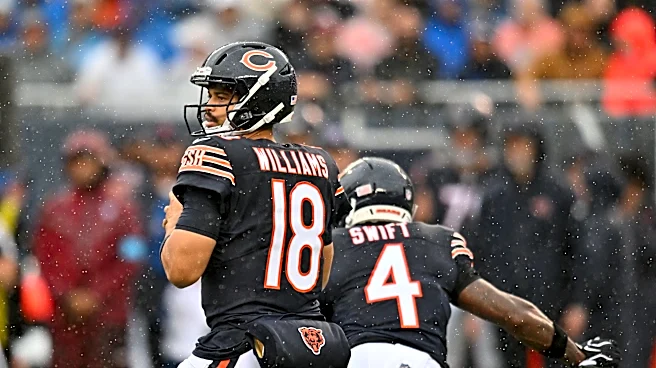
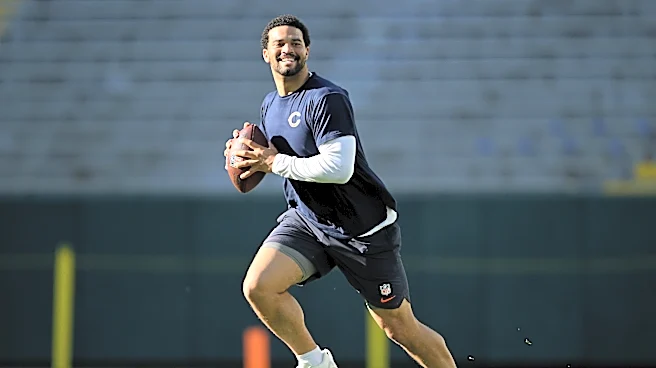
Chicago Bears quarterback Caleb Williams has confirmed he sustained a 'pretty serious' hamstring tear, not merely a strain, and has expressed significant frustration with what he describes as inaccurate media reports regarding his injury. Williams, who
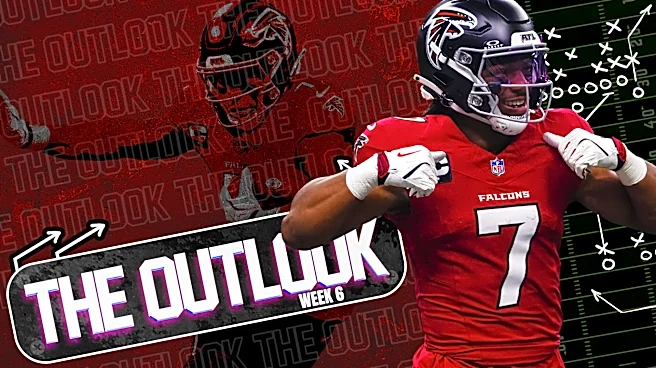
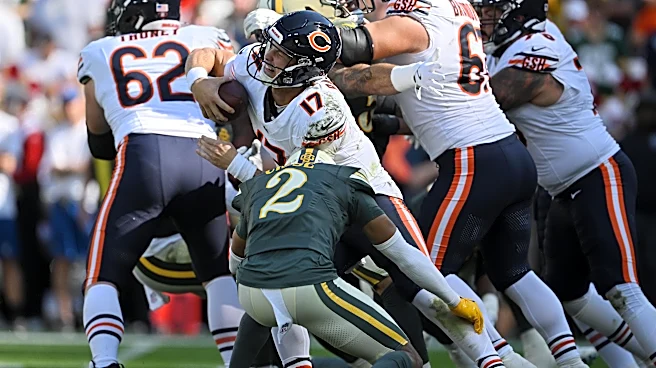
has been undergoing five to six hours of daily rehabilitation, participated fully in practice for the first time in nearly a month. Despite this progress, his availability for the upcoming Week 6 game against the Atlanta Falcons remains undecided. He stated that he must pass a final stress test before a decision can be made, emphasizing that no accurate information about his injury has come from sources other than himself or the team. Williams sustained the injury in Week 2 during a game against the Minnesota Vikings, where he felt a 'pop' in his hamstring and was visibly emotional as he was carted off the field. He defended his emotional reaction, attributing it to his passion for the game and his teammates.
Why It's Important?
The uncertainty surrounding Caleb Williams' return has significant implications for the Chicago Bears and their performance in the NFL season. As a highly touted quarterback, his presence on the field is crucial for the team's offensive strategy and overall morale. His absence has already seen the Bears' backup quarterbacks struggle, highlighting his importance to the team's success. The situation also underscores the broader challenges athletes face with media scrutiny and the dissemination of medical information. Williams' public frustration with 'false' reports could influence how other high-profile athletes choose to manage injury disclosures, potentially leading to more guarded communication from players and teams. For fans and fantasy football enthusiasts, the lack of clear information creates uncertainty, impacting game predictions and player selections. The team's decision will balance Williams' health and long-term career with the immediate need for a competitive quarterback, especially with a tight schedule including a Thursday game next week.
What's Next?
Caleb Williams' immediate future hinges on passing a final stress test this week to assess his physical readiness for Sunday's game against the Atlanta Falcons. The Bears' coaching staff, including head coach Ben Johnson, has not yet announced a starting quarterback for the upcoming game, maintaining that the situation is 'still fluid.' If Williams is cleared, he will likely return to the starting role. However, the team must also consider the risk of re-injury, especially with a short turnaround to a Thursday night game next week against the New England Patriots. Williams himself acknowledged that a hamstring tear does not fully heal in a few weeks but suggested that 'certain parameters' could allow him to play without excessive risk. The team will need to weigh the benefits of his return against the potential for further injury, which could sideline him for an even longer period. The decision will also impact the roles of backup quarterbacks Tyson Bagent and Case Keenum, who have filled in during Williams' absence.
Beyond the Headlines
Caleb Williams' public comments about the 'false' reports surrounding his injury highlight a growing tension between athletes and sports media regarding personal health information. This situation raises questions about the ethical responsibilities of reporting on athlete injuries and the impact of speculative news on a player's mental and emotional well-being. Williams' defense of his emotional reaction to the injury also touches on broader societal expectations of male athletes to suppress vulnerability, challenging traditional notions of 'toughness' in professional sports. The incident could contribute to a shift in how athletes and teams manage injury narratives, potentially leading to more controlled and direct communication channels to counter misinformation. Furthermore, the pressure on a high-profile rookie quarterback to perform while recovering from a serious injury underscores the intense demands of professional sports and the fine line between competitive drive and long-term health. This dynamic can influence player-team relationships and the broader culture of injury management in the NFL.