






What's Happening?
Nautilus Shipping has provided a comprehensive glossary of maritime operations terms, emphasizing their critical role in efficient international trade and regulatory compliance. The glossary covers essential documents like the Bill of Lading (B/L), commercial
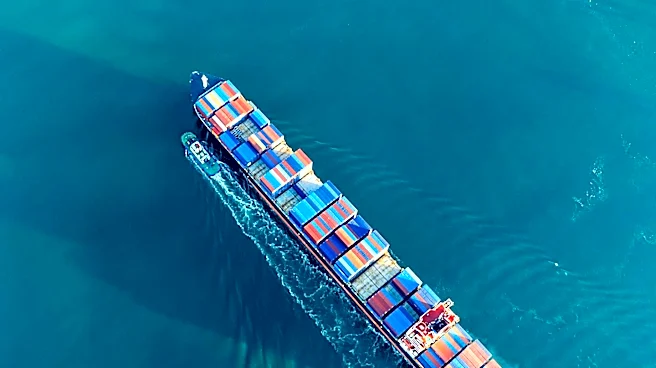
invoices, and cargo manifests, detailing their functions and variants. It also distinguishes between bulk and container cargo operations, highlighting the unique terminology and infrastructure associated with each. Key operational terms such as laytime, demurrage, and detention are explained, alongside regulatory frameworks like SOLAS, MARPOL, and the ISM Code. The document also clarifies roles and responsibilities of various parties in the supply chain, including beneficial cargo owners, carriers, and intermediaries like freight forwarders and customs brokers.
Why It's Important?
The precise understanding and application of maritime terminology are crucial for U.S. businesses involved in international shipping. Misinterpreting terms can lead to significant financial penalties, delays, and legal disputes, particularly at U.S. ports where regulations like the Automated Manifest System (AMS) are strictly enforced by CBP. For instance, incorrect cargo manifests can trigger holds, impacting supply chain efficiency and increasing costs for U.S. importers and exporters. This detailed glossary helps U.S. stakeholders navigate complex international trade agreements, ensure compliance with environmental and safety regulations, and optimize logistics, thereby protecting their financial interests and maintaining operational flow in a highly regulated global market.
What's Next?
As international trade continues to grow and regulations evolve, the importance of precise maritime terminology will only increase. Nautilus Shipping's glossary serves as a vital resource for ongoing training and operational clarity within the industry. Future developments will likely see further integration of digital systems like AIS and AMS, requiring even greater accuracy in data submission and interpretation. U.S. companies and maritime professionals will need to continuously update their knowledge of these terms to adapt to new regulations, technological advancements, and changing global trade dynamics. The emphasis on compliance, safety, and environmental terms suggests a future where regulatory adherence will be paramount for all maritime operations.
Beyond the Headlines
Beyond the immediate operational benefits, a standardized understanding of maritime terms fosters greater transparency and reduces friction in global supply chains. This shared language is fundamental to mitigating risks associated with international trade, including fraud and security threats. The detailed explanations of regulatory frameworks underscore the ethical and legal responsibilities of all parties involved in shipping, promoting safer and more environmentally conscious practices. For the U.S., a well-informed maritime sector can enhance national security by ensuring compliance with import/export controls and contribute to economic stability by facilitating efficient trade flows. The continuous evolution of these terms reflects the dynamic nature of global commerce and the constant need for adaptation.