




What's Happening?
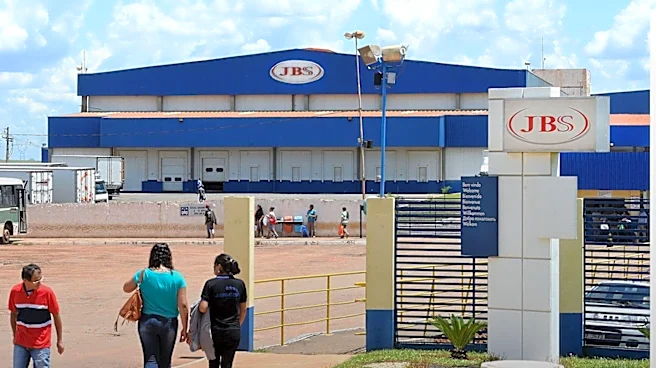
JBS, the world's largest meatpacker, expects its U.S. beef business to improve significantly in 2027. This projection comes after the company missed its third-quarter profit estimates, with net profit falling over 70% to $164 million, below the $256 million consensus
forecast. Total revenue also slightly missed analyst expectations, reaching $22.74 billion against a projected $22.82 billion. The company has faced challenges due to a prolonged U.S. cattle shortage, which has driven beef prices to near-record highs. This shortage was exacerbated by years of drought, high feed costs, and a suspension of Mexican cattle imports. Despite these difficulties, JBS's North American beef division, which contributes approximately one-third of the group's revenue, saw improved margins year-over-year. This improvement is attributed to the resumption of Mexican cattle imports and industry-wide cuts in processing capacity, including JBS's closure of two U.S. plants in June and the consolidation of local management teams to enhance efficiency. These measures helped the U.S. beef unit achieve a positive EBITDA margin of 0.3% under U.S. GAAP accounting standards, after several quarters of negative performance.
Why It's Important?
The anticipated recovery of JBS's U.S. beef business is significant for the broader U.S. meatpacking industry and consumers. A prolonged cattle shortage has led to elevated beef prices, impacting consumer spending and the profitability of meatpackers. The expected increase in cattle imports from Mexico, projected to return to historical levels of around 1 million head annually, could alleviate supply pressures. This would potentially stabilize or reduce beef prices, benefiting consumers. For the industry, improved cattle supply and easing overcapacity could lead to better profit margins for companies like JBS, which have been struggling with high input costs and reduced processing volumes. The strategic decisions made by JBS, such as plant closures and management consolidation, highlight efforts within the industry to adapt to challenging market conditions and improve operational efficiency. A stronger performance from a major player like JBS could signal a broader recovery for the U.S. beef sector, influencing investment decisions and market stability.
What's Next?
JBS anticipates that conditions in the U.S. beef market will improve considerably by 2027, primarily driven by the recovery of cattle imports from Mexico. Wesley Batista Filho, who is set to become global CEO in January and currently heads JBS's U.S. operations, stated that the U.S. should experience a much better year in 2027 compared to 2026. The company will likely continue to monitor cattle supply trends and adjust its operational strategies accordingly. Further industry-wide capacity adjustments may occur as companies seek to optimize their processing capabilities in response to evolving supply and demand dynamics. Stakeholders, including consumers, ranchers, and investors, will be closely watching for signs of increased cattle availability and potential shifts in beef pricing. The performance of JBS's U.S. beef unit in the coming quarters will be a key indicator of the sector's trajectory towards recovery and stability.
Beyond the Headlines
The challenges faced by JBS and the broader U.S. beef industry underscore the complex interplay of environmental factors, international trade, and corporate strategy. Years of drought and high feed costs highlight the vulnerability of agricultural supply chains to climate variations and economic pressures. The reliance on cattle imports from Mexico also emphasizes the interconnectedness of North American agricultural markets and the impact of cross-border trade policies. JBS's decision to close plants and consolidate management reflects a broader trend in mature industries to rationalize operations and seek efficiencies during periods of strain. This could lead to further consolidation within the meatpacking sector, potentially raising questions about market concentration and its implications for competition and consumer choice. The long-term sustainability of beef production in the U.S. will depend on resilient supply chains, effective resource management, and adaptive business models that can navigate both environmental and economic volatility.