




What's Happening?
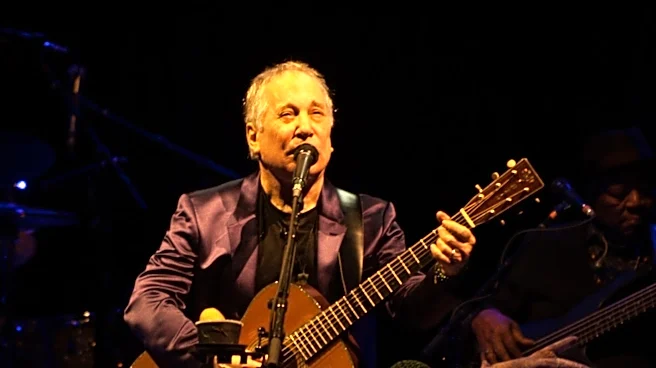
American Songwriter highlights three Paul Simon songs that resonate more profoundly as listeners age: 'Still Crazy After All These Years,' 'Old,' and 'Old Friends.' These tracks, while always popular, acquire new significance through lived experiences.
'Still Crazy After All These Years' speaks to enduring connections and looking back on shared history. 'Old' directly addresses the process of aging and the realization of one's place in the world, offering a relatable perspective on growing older. 'Old Friends,' a Simon & Garfunkel song, explores the concept of old age from a youthful viewpoint, a perspective that shifts as the listener matures and begins to identify with the older characters depicted in the lyrics. The article suggests these songs 'grow with you,' requiring personal growth to fully appreciate their depth.
Why It's Important?
The re-evaluation of Paul Simon's classic songs by American Songwriter underscores the timeless appeal and evolving relevance of certain musical works. For the music industry, this highlights the long-term value of artists whose lyrical content transcends immediate trends and connects with universal human experiences like aging and reflection. It also demonstrates how cultural products can gain new audiences and deeper appreciation over time, potentially leading to renewed interest in an artist's back catalog. For listeners, this perspective offers a framework for engaging with music on a more personal and introspective level, recognizing how art can mirror and inform their own life stages. The enduring power of these songs to evoke different emotions and understandings at various points in life speaks to their profound artistic merit and their lasting impact on American culture.
What's Next?
This type of critical re-appraisal could inspire other music publications and critics to revisit the discographies of established artists, exploring how their works resonate with contemporary audiences and changing societal perspectives. For Paul Simon's catalog, this renewed attention might lead to increased streaming, sales, or even new interpretations by contemporary artists. It could also encourage fans to delve deeper into his lyrical themes, fostering a more analytical and appreciative engagement with his music. The article's focus on the aging process within these songs might also spark discussions about how music can serve as a companion through different life stages, offering comfort, reflection, and understanding.
Beyond the Headlines
The phenomenon of songs gaining deeper meaning with age touches upon broader themes of human development, memory, and the evolving relationship between individuals and art. It suggests that the 'meaning' of a piece of art is not static but is co-created through the interaction between the artwork and the viewer's or listener's personal journey. This highlights the psychological and emotional power of music to act as a mirror for our own experiences, allowing us to process and understand life's transitions. Ethically, it raises questions about the responsibility of artists to create works that possess such enduring quality and universal resonance, contributing to a cultural legacy that continues to enrich lives across generations. It also speaks to the cultural value of preserving and re-examining classic works, ensuring their continued relevance in a rapidly changing world.