
What's Happening?
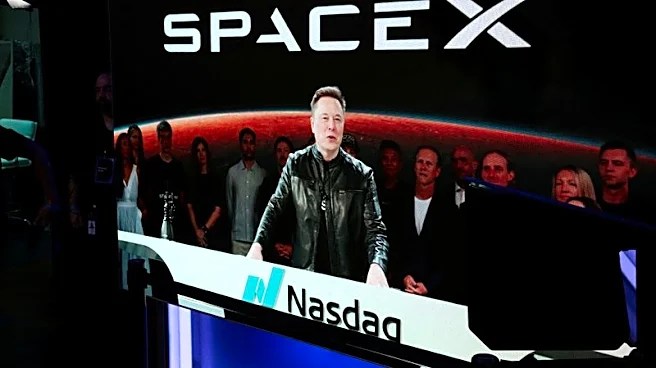
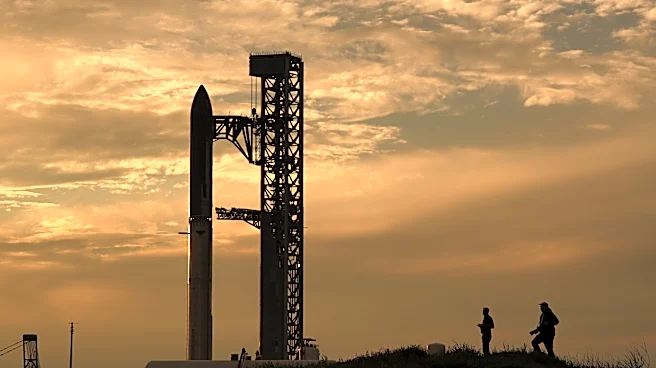
Walter Isaacson, Elon Musk's biographer, has stated that a merger between Tesla Inc. and Space Exploration Technologies Corp. (SpaceX) is "almost inconceivable" to avoid, citing their increasingly intertwined technological ambitions. This comes as Bloomberg
reported that merger negotiations are advancing, with a potential announcement as early as December. Isaacson believes the companies' collaborative semiconductor manufacturing project, Terafab, which aims to produce specialized chips for Tesla's self-driving vehicles and Optimus robots, and SpaceX's AI infrastructure and orbital data centers, necessitates a merger. While Musk himself has been more cautious, Isaacson expects more clarity at Tesla's December 3 shareholder meeting. The probability of an official merger announcement by December 31 has risen on Polymarket, though traders are more confident about a longer timeline, pricing an 81% chance by the end of 2027.
Why It's Important?
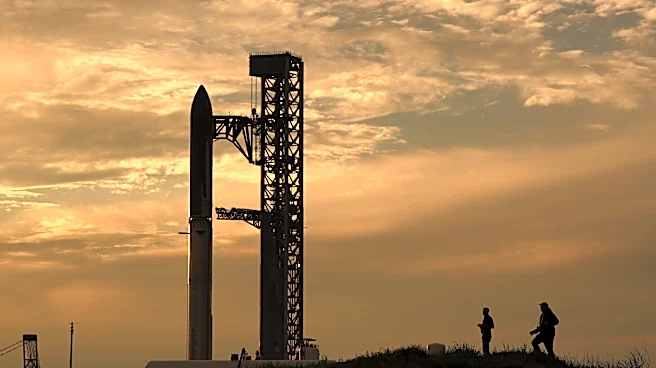
A potential merger between Tesla and SpaceX would create a colossal entity with a combined valuation of approximately $3.45 trillion, making it potentially the largest merger in history. This consolidation would bring together Musk's ventures in artificial intelligence, robotics, electric vehicles, and aerospace under one corporate structure, potentially streamlining development and resource allocation for ambitious projects like Terafab. The move could significantly impact the technology and automotive sectors, as a unified entity might accelerate advancements in AI and autonomous systems. Furthermore, the merger could alter the competitive landscape, especially concerning chip manufacturing, as the combined company aims to develop its own AI chips, potentially reducing reliance on external suppliers like Nvidia. This strategic vertical integration could give the merged entity a substantial advantage in innovation and cost control, affecting both established tech giants and emerging startups.
What's Next?
The immediate next step is Tesla's shareholder meeting on December 3, where Walter Isaacson anticipates more clarity regarding the potential merger. While a December announcement is possible, the timeline remains uncertain, with Polymarket traders indicating a higher probability for a merger by the end of 2027. Should the merger proceed, significant regulatory scrutiny would likely follow, given the unprecedented scale and market implications of combining two such influential companies. Key questions regarding the structure of the deal, such as whether Tesla shareholders would receive a takeover premium or exchange shares for SpaceX stock, remain unanswered. The integration of diverse operations, from automotive manufacturing to space exploration, would present complex operational and strategic challenges, requiring careful planning and execution to realize the envisioned synergies.
Beyond the Headlines
The proposed merger highlights a broader trend of convergence in advanced technology sectors, particularly between AI, robotics, and space exploration. Elon Musk's vision appears to be driving a strategy of deep vertical integration, aiming to control critical components like semiconductors to accelerate innovation and reduce dependencies. This approach could set a precedent for other tech conglomerates seeking to consolidate their technological ecosystems. Ethically, the concentration of such vast technological and economic power under a single corporate umbrella raises questions about market dominance, competition, and the potential for monopolistic practices. Culturally, it reflects a growing ambition among tech leaders to tackle grand challenges across multiple domains, pushing the boundaries of what a single corporation can achieve, while also inviting increased public and regulatory scrutiny over their influence.