





What's Happening?
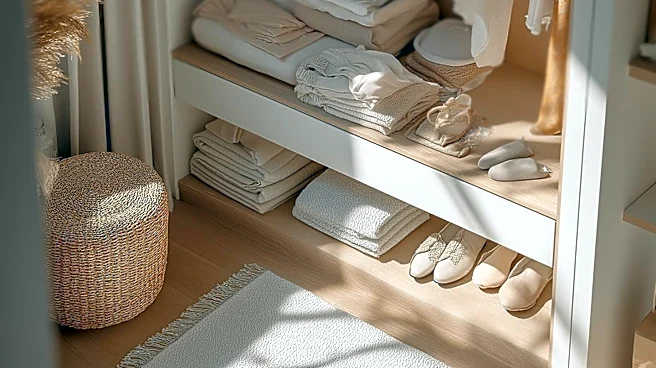
Minimalism, a lifestyle choice focused on intentional living with fewer possessions, is being promoted through practical tips designed to help individuals maintain a clutter-free environment. These tips include setting clear physical boundaries for belongings,
such as dedicating a specific shelf for all food containers, and appreciating empty spaces within the home. The philosophy encourages a 24-hour rule for non-essential purchases and integrating spouses into significant buying decisions to prevent impulsive accumulation. Furthermore, it emphasizes decluttering continuously as new items enter the home, ensuring that spaces do not become overwhelmed. A core tenet is prioritizing experiences over material goods, as studies suggest experiences contribute more to happiness. Regular reflection on the benefits of minimalism is also advised to reinforce commitment and prevent the lifestyle from being a temporary phase. The goal is to foster consistent intentionality to sustain simplicity and freedom from excessive possessions.
Why It's Important?
The promotion of sustained minimalist practices holds significance for U.S. consumers and society by offering a counter-narrative to prevalent consumerism. In a culture often driven by acquisition and material wealth, these tips provide a framework for individuals to reduce financial strain, decrease environmental impact through less consumption, and potentially improve mental well-being by reducing clutter and decision fatigue. For industries, a widespread adoption of minimalism could shift consumer spending patterns from goods to services and experiences, impacting retail sectors while potentially boosting travel, entertainment, and personal development industries. Economically, it could lead to a re-evaluation of production and marketing strategies, with a greater emphasis on durability, multi-functionality, and ethical sourcing rather than planned obsolescence and rapid consumption. Socially, it encourages a focus on intrinsic values and relationships over material possessions, potentially fostering stronger community ties and a more sustainable way of life.
What's Next?
Individuals adopting these minimalist principles are encouraged to implement small, daily routines to maintain an orderly environment. This includes consistent decluttering and finding inspiration from like-minded communities, whether through personal connections or online resources. The emphasis on continuous engagement suggests that minimalism is not a one-time event but an ongoing process requiring deliberate effort. Future trends may see an increase in services that support minimalist living, such as consignment shops, rental services for infrequently used items, and digital tools for tracking consumption and decluttering progress. Educational initiatives promoting mindful consumption and the benefits of a less cluttered life could also gain traction, influencing public policy discussions around sustainability and consumer behavior. The long-term impact could involve a cultural shift towards valuing utility and experience over sheer volume of possessions.
Beyond the Headlines
The deeper implications of sustained minimalism extend beyond personal organization, touching upon ethical and cultural dimensions. Ethically, it challenges the societal pressure to constantly acquire new goods, prompting questions about the environmental and labor practices associated with mass production. Culturally, it represents a potential shift away from a consumer-driven identity towards one defined by experiences, relationships, and personal growth. This could lead to a redefinition of success and status, moving from visible material wealth to less tangible forms of fulfillment. The emphasis on appreciating empty spaces and buying experiences over things also highlights a psychological aspect, suggesting that true contentment may lie in sufficiency rather than abundance. This philosophical underpinning could foster a more resilient and adaptable society, less susceptible to economic fluctuations tied to consumer spending and more focused on intrinsic human values.