








What's Happening?
Jim Henson, the visionary behind The Muppets, began his professional puppetry career in the mid-1950s, inspired by television and fellow puppeteers. While studying art at the University of Maryland, College Park, he joined a puppetry class where he met
his future collaborator and wife, Jane Nebel. Their professional journey started in 1954 with a short-lived children's show on WTOP-TV. The station, recognizing their talent, retained them for other programs, leading to a nightly segment on an NBC-affiliate station. This opportunity culminated in the creation of 'Sam and Friends,' a three-to-five minute sketch comedy puppet show that aired locally in Washington, D.C. from 1955 to 1961. The show allowed Henson significant creative freedom, laying the groundwork for his innovative puppetry. He utilized foam rubber for puppets, enabling more lifelike expressions and greater control, and experimented with camera techniques beyond static shots. 'Sam and Friends' introduced the world to early versions of characters, including Kermit, and was highly popular, even serving as a lead-in to 'The Tonight Show.'
Why It's Important?
Jim Henson's early work, particularly 'Sam and Friends,' was crucial in establishing a new paradigm for puppetry in American television. His innovative use of foam rubber for puppets allowed for a broader range of expressions and movements, moving away from traditional wooden puppets and making characters more relatable and 'real' to audiences. This technical advancement, combined with his creative storytelling and camera work, elevated puppetry from a niche art form to a mainstream entertainment staple. The success of 'Sam and Friends' not only launched Henson's career but also demonstrated the commercial viability and artistic potential of sophisticated puppetry on television. The show's popularity, even leading into a major national program like 'The Tonight Show,' indicated a significant public appetite for his unique style. This early foundation was instrumental in the later development of iconic franchises like 'The Muppet Show' and 'Sesame Street,' which profoundly influenced generations of American children and adults, shaping cultural perceptions of entertainment and education.
What's Next?
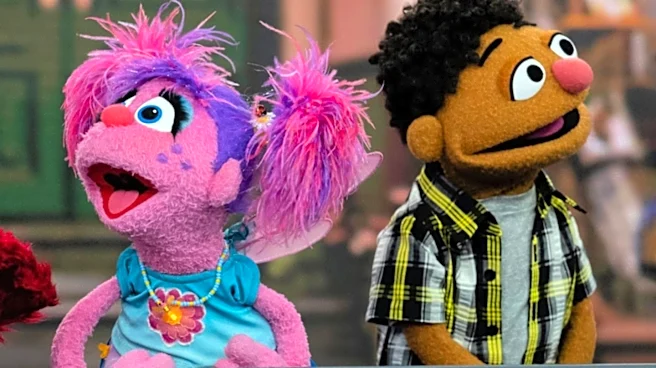
Following the success of 'Sam and Friends,' Jim Henson's career trajectory saw him and his puppets gain national exposure through appearances on various variety and talk shows, including 'The Ed Sullivan Show.' The Muppets also became prominent in TV commercials, notably the Wilkins coffee ads, which showcased a distinct, often humorous, approach to advertising. Henson's next significant regular television role was as the puppeteer for Rowlf, a piano-playing dog, on 'The Jimmy Dean Show' from 1963 to 1966, marking the first time a Muppet regularly appeared on a nationally aired network series. During this period, Frank Oz joined the Henson Company as an apprentice, eventually becoming a key collaborator and voicing iconic characters. Henson also began exploring experimental filmmaking, leading to his Oscar-nominated film 'Time Piece' (1965) and the teleplay 'The Cube' (1969). His work continued to balance family-friendly specials, such as 'Hey, Cinderella!' and 'The Great Santa Claus Switch,' with his artistic ambitions, setting the stage for his later involvement with 'Sesame Street' and 'The Muppet Show.'
Beyond the Headlines
Jim Henson's journey from local television to national recognition highlights a deeper cultural shift in how puppetry was perceived and utilized in the United States. Initially viewing puppetry as a 'side gig,' Henson's perspective evolved after a trip to Europe in 1958, where he observed puppetry being treated as a serious art form. This realization spurred him to co-found Muppets, Inc. (now The Jim Henson Company) with Jane Nebel, committing to the artistic integrity and potential of the medium. His innovative approach, which blended humor, relatable characters, and technical ingenuity, challenged the conventional boundaries of children's entertainment and television production. By making puppets act with 'thoughts and emotions,' Henson imbued them with a humanity that resonated deeply with audiences, transcending age barriers. This commitment to artistic depth, even amidst commercial success, laid the groundwork for a legacy that continues to influence storytelling, character development, and the integration of educational content within entertainment, demonstrating that popular media can also be a vehicle for profound artistic expression.