



What's Happening?
UFC CEO Dana White has publicly voiced his exasperation regarding the ongoing difficulties in finalizing the highly anticipated boxing match between heavyweights Tyson Fury and Anthony Joshua. The fight, initially slated for the end of the year, has been
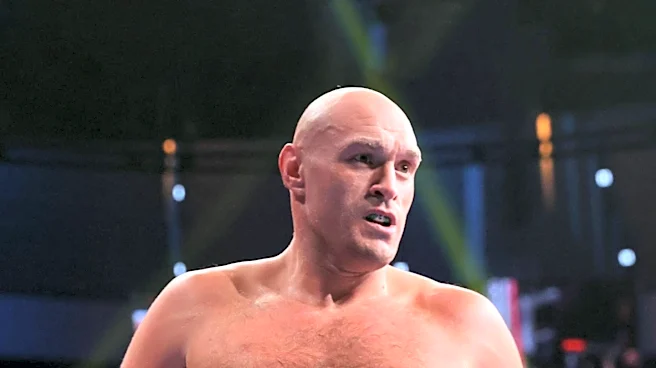
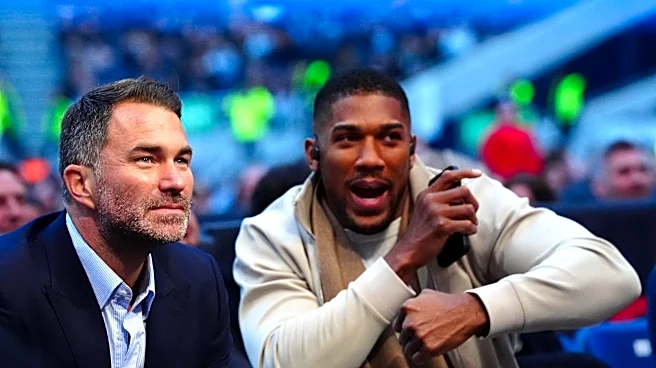
plagued by contract disputes, particularly concerning a proposed change of venue from Wembley Arena in London to Madison Square Garden in New York City. White, who is involved in promoting the fight, indicated that the situation has become transparently problematic. His comments follow a public feud between Joshua's promoter, Eddie Hearn, and White, with Hearn blaming White and TKO's involvement for the delays. Tyson Fury subsequently expressed support for White and suggested moving on to fight Oleksandr Usyk, seemingly abandoning the Joshua bout. White's recent remarks suggest he shares Fury's sentiment that the superfight may not materialize.
Why It's Important?
The potential collapse of the Tyson Fury vs. Anthony Joshua fight carries significant implications for the boxing world and combat sports promotion. This bout was expected to be one of the biggest heavyweight clashes in recent memory, generating substantial revenue and global viewership. For the U.S. market, a fight at Madison Square Garden would have brought a major international sporting event to a prominent American venue, boosting local economies and tourism. The ongoing public disagreements and White's frustration highlight the complexities and challenges of promoting high-stakes cross-promotional events, especially when multiple parties with differing interests are involved. The failure to secure this fight could lead to a loss of fan interest in future superfights and potentially impact the financial prospects of both fighters and their respective promoters, including the UFC's broader ambitions in boxing promotion.
What's Next?
Given Dana White's recent comments and Tyson Fury's apparent shift towards a fight with Oleksandr Usyk, the immediate future of the Fury-Joshua bout appears uncertain. It is likely that negotiations, if they continue, will face increased scrutiny and skepticism from fans and media. The focus may now shift to Fury's potential fight with Usyk, which would also be a significant event in the heavyweight division. For Anthony Joshua, the path forward would involve identifying a new opponent, potentially delaying his return to a major championship fight. The public feud between promoters Eddie Hearn and Dana White could also escalate, potentially affecting future collaborations between their respective organizations. The boxing community will be watching closely to see if any resolution can be found or if the superfight is definitively abandoned.
Beyond the Headlines
The protracted saga of the Fury-Joshua fight underscores deeper issues within professional boxing, particularly the fragmented promotional landscape compared to the more centralized structure of organizations like the UFC. The involvement of multiple promoters, each with their own interests and contractual obligations, often leads to complex negotiations and public disagreements that can derail major events. This situation also highlights the power dynamics between fighters, promoters, and venues, where financial incentives and personal rivalries can overshadow the desire to deliver highly anticipated matchups for fans. The public nature of these disputes, amplified by social media, can erode public trust and enthusiasm for the sport. Ultimately, the inability to easily finalize such a marquee fight raises questions about the long-term health and governance of professional boxing, especially in an era where other combat sports are gaining significant traction.