





What's Happening?
NetApp, Inc., a U.S.-based data storage and intelligent data infrastructure company, is actively competing in the evolving data storage industry. The company, headquartered in San Jose, California, provides enterprise storage hardware, software, support
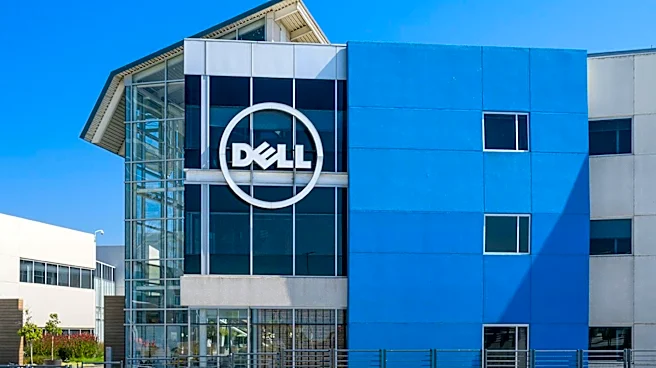
services, and cloud-delivered data services. NetApp's core strategy revolves around its ONTAP platform, which enables consistent data management across on-premises infrastructure and multiple public clouds, including AWS, Microsoft Azure, and Google Cloud. The company operates with two primary segments: Hybrid Cloud, which encompasses its unified storage portfolio and support for modernizing data centers, and Public Cloud, focusing on services like Azure NetApp Files and Amazon FSx for NetApp ONTAP. NetApp faces competition from major vendors such as Dell Technologies, Hewlett Packard Enterprise, IBM, and Pure Storage, as well as cloud providers like Amazon, Microsoft, and Google, who are both partners and competitors.
Why It's Important?
NetApp's position in the data storage market is crucial for U.S. businesses and the broader technology sector. As data volumes continue to grow and enterprises increasingly adopt hybrid and multi-cloud environments, NetApp's ability to offer a unified software layer for data management provides a differentiated solution. This is particularly important for companies seeking to optimize data storage, enhance cybersecurity through features like ransomware protection, and support data-intensive AI workloads. The company's focus on all-flash storage, which offers higher value and better economics than older disk-based systems, aligns with the industry's shift towards more efficient and high-performance solutions. NetApp's business model, which includes a significant portion of recurring revenue from support and subscription services, contributes to a more stable financial profile compared to pure hardware vendors, offering a degree of resilience in a competitive and rapidly changing technological landscape.
What's Next?
NetApp is expected to continue its focus on all-flash arrays, hybrid cloud solutions, cyber resilience, and AI-driven data workloads. The company's strategy involves leveraging its ONTAP platform to maintain its competitive edge in data management across diverse environments. As technological advancements accelerate, particularly in software-defined storage, hyperconverged infrastructure, and cloud-native architectures, NetApp will need to adapt to these shifts to prevent erosion of demand for traditional storage systems. The company's performance will also be influenced by enterprise IT spending cycles and macroeconomic conditions, which can impact infrastructure purchases. Investors and stakeholders will be monitoring NetApp's ability to navigate intense competition and rapid technological change while maintaining its recurring revenue streams and disciplined capital allocation.
Beyond the Headlines
The intense competition in the data storage industry, highlighted by NetApp's rivals and the dual role of cloud providers as partners and competitors, underscores a broader trend in the technology sector: the convergence of hardware, software, and cloud services. This dynamic environment necessitates continuous innovation and strategic partnerships. The emphasis on hybrid cloud strategies reflects the complex reality for many enterprises that require both on-premises control and the flexibility of cloud resources. Furthermore, the integration of cyber-resilience features and support for AI workloads within data storage solutions points to the increasing importance of data security and the strategic value of data in modern business operations. The shift towards subscription-based models and recurring revenue streams also signifies a move away from one-time hardware sales towards more stable, service-oriented business models in the tech industry.