





What's Happening?
2D animation, a method of creating movement using drawings or flat graphic shapes that possess height and width but lack modeled depth, is widely employed across various sectors. This animation style is characterized by its ability to convey flexible
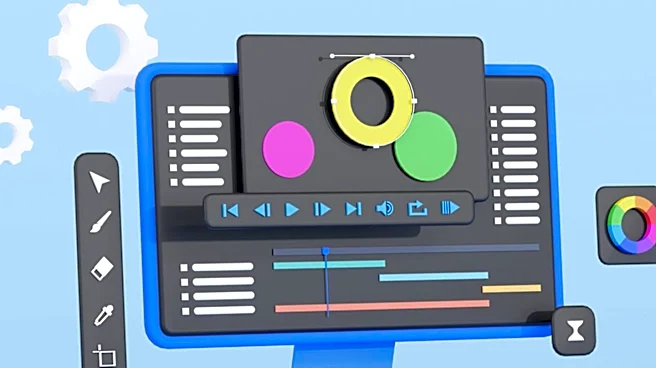
expressions and actions, whether drawn on paper or digitally. Unlike 3D animation, which uses models in a digital space with depth, 2D animation relies on changing drawings or controlling separate parts over time to create the illusion of movement. It is a versatile tool used for marketing, training, entertainment, product communication, and games. The technique allows for precise control over what the viewer sees, making it effective for isolating processes, demonstrating ideas, and simplifying complex information. Examples of 2D animation range from traditional frame-by-frame methods, as seen in Disney's 'Snow White and the Seven Dwarfs,' to vector animation, motion graphics, cutout animation, whiteboard animation, and rotoscoped 2D, each offering distinct approaches to artwork creation and movement control.
Why It's Important?
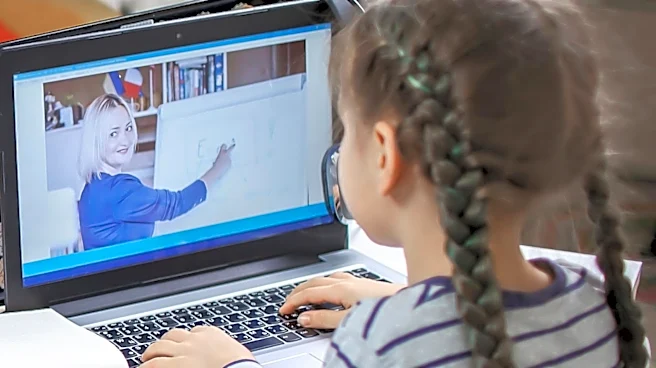
The widespread application of 2D animation is significant due to its effectiveness in clear and controlled communication across numerous U.S. industries. In marketing, it allows brands to express their character without the need for filmed locations, while in training and education, it simplifies complex processes by presenting information one step at a time. For product and software walkthroughs, 2D animation highlights relevant actions without overwhelming the viewer with unnecessary details. Its use in social ads, television series, films, and games underscores its role in entertainment and engaging audiences. Furthermore, in specialized fields like medical and science, 2D animation visualizes internal body processes or microscopic phenomena that are impossible to film, ensuring accuracy through adherence to approved reference materials. This adaptability makes 2D animation a crucial tool for businesses and organizations seeking to convey messages effectively, engage users, and simplify intricate concepts, ultimately impacting how information is consumed and understood by the public.
What's Next?
The future of 2D animation is likely to see continued evolution, particularly with advancements in digital tools and integration with emerging technologies. While traditional methods remain foundational, the increasing sophistication of software for vector animation, motion graphics, and digital drawing will streamline production processes and expand creative possibilities. The demand for clear and engaging visual content in marketing, education, and user experience design suggests a sustained need for 2D animation. Furthermore, the mention of AI innovation in motion design for mobile products indicates a potential trend towards AI-assisted animation, which could automate certain aspects of the animation process, enhance scalability, and enable more dynamic and personalized user experiences. As industries continue to seek efficient and impactful ways to communicate, 2D animation, potentially augmented by AI, will remain a vital medium for conveying information and storytelling.
Beyond the Headlines
Beyond its immediate applications, 2D animation carries deeper implications for visual culture and communication. Its ability to simplify and stylize reality allows for the exploration of abstract concepts and emotional narratives that might be challenging to convey through live-action. Ethically, the control inherent in 2D animation means creators bear a significant responsibility in shaping perceptions and ensuring accuracy, particularly in educational and scientific contexts. The ongoing debate surrounding viral AI animation and its impact on character design and authenticity highlights a cultural tension between human creativity and algorithmic generation. Legally, intellectual property rights for animated works, especially those created with new AI tools, will likely become a more complex area. Ultimately, 2D animation's enduring presence and evolution reflect a fundamental human need for visual storytelling and clear communication, continually adapting to new technologies while retaining its core principles of movement and expression.