






What's Happening?
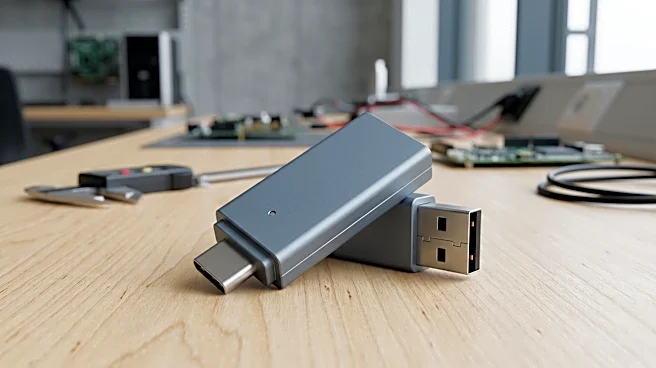
Crypta Labs has developed what is believed to be the world's first USB-C Quantum Random Number Generator (QRNG) prototype. This new device, still in its developmental stage and not yet available for sale, incorporates a USB-C connection alongside a USB-A
option, catering to both modern and older hardware setups. The QRNG utilizes the same quantum optics model in both connector types and adheres to the NIST 800-90B build specification, which outlines requirements for random bit generators. The rapid development of this prototype, following a user suggestion for a USB-C version just two weeks prior, highlights the company's agile iteration process. This advancement aims to provide high-quality, unpredictable random numbers for enhanced security applications.
Why It's Important?
The development of a USB-C QRNG is significant for the cybersecurity landscape in the U.S. and globally. Quantum Random Number Generators produce truly random numbers based on quantum phenomena, making them inherently more secure and unpredictable than traditional pseudo-random number generators. This enhanced randomness is crucial for cryptographic applications, secure communications, and maintaining the integrity of digital systems. The adoption of USB-C, a modern and increasingly ubiquitous standard, makes this advanced security technology more accessible and compatible with current hardware, potentially accelerating its integration into various devices and infrastructure. For industries reliant on robust security, such as finance, government, and critical infrastructure, this innovation offers a stronger defense against sophisticated cyber threats and side-channel attacks, which can compromise less secure random number generation methods.
What's Next?
Crypta Labs plans to continue building upon this prototype, with further developments expected before the product is ready for commercial release. The company will likely focus on refining the device's housing and ensuring the health-check path is robust and reliable. As a prototype, it is not yet available for purchase, indicating that further testing, certification, and potentially mass production planning are underway. The introduction of both USB-C and USB-A versions suggests a strategic approach to market entry, aiming for broad compatibility. Future iterations may also explore increased wattage capabilities offered by USB-C to potentially enhance performance, such as higher bits per second (bps) for random number generation, further solidifying its role in advanced security solutions.
Beyond the Headlines
The emergence of a USB-C QRNG points to a broader trend in cybersecurity: the increasing reliance on quantum technologies to address the limitations of classical computing in generating true randomness. This development underscores the growing recognition that the quality of random numbers is a foundational element of digital security. As quantum computing advances, the need for quantum-resistant cryptographic solutions, including QRNGs, will become even more critical. This prototype could pave the way for more widespread adoption of quantum-based security measures, influencing future standards and best practices in data protection. It also highlights the dynamic nature of technological innovation, where user feedback can rapidly drive product development, pushing the boundaries of what's possible in securing digital interactions and infrastructure.