




What's Happening?
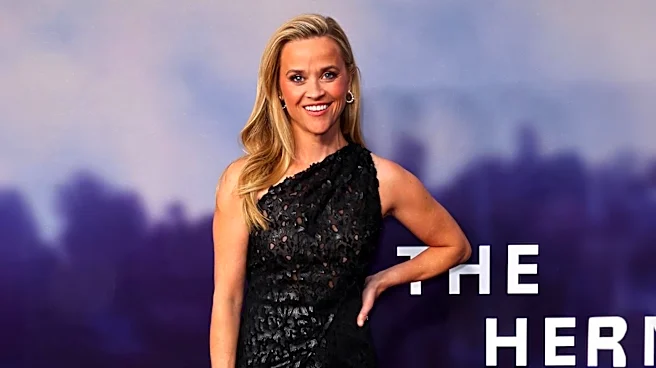
Reese Witherspoon, an Academy Award-winning actress known for her versatile roles, found it challenging to make her character, Annette Hargrove, likable in the 1999 film 'Cruel Intentions.' The character, adapted from Madame de Tourvel in Pierre Choderlos
de Laclos’ 1782 novel 'Les Liaisons dangereuses,' was originally conceived as shy and timid. Witherspoon aimed to modernize Annette, portraying her as an intellectual woman with strong convictions, rather than judgmental. Despite her efforts to make the character more contemporary and realistic, Witherspoon noted that audiences struggled to warm up to Annette, often preferring the 'wonderfully despicable' other characters in the film. This experience contrasted with Witherspoon's general public image, where she is often seen as universally appealing, partly due to her 'good girl' label early in her career and her philanthropic work in women's rights and disaster relief.
Why It's Important?
This situation highlights the complexities of audience perception and typecasting in Hollywood. For an actress like Reese Witherspoon, who has cultivated a public image of likability and versatility through roles such as Jennifer in 'Pleasantville' and June Carter in 'Walk the Line,' playing a character that audiences actively dislike can be a significant professional challenge. It underscores how an actor's established persona can influence how their performances are received, even when they strive for nuanced character development. The difficulty in making Annette Hargrove appealing, despite Witherspoon's intentional choices to imbue her with intellectual strength and conviction, suggests that audience expectations can sometimes override an actor's creative interpretation. This dynamic can impact an actor's career trajectory, influencing future role selections and the types of narratives they are perceived as suitable for, potentially limiting their artistic range in the eyes of the public and casting directors.
What's Next?
While the film 'Cruel Intentions' was released in 1999, the discussion around Witherspoon's portrayal of Annette Hargrove continues to offer insights into the enduring impact of character perception. For Witherspoon, her career has since evolved to include significant roles as a producer and a New York Times bestselling author, alongside her acting. Her continued involvement in projects like 'Big Little Lies' and her book club, which focuses on women's stories, demonstrates a strategic alignment with her public image and philanthropic interests. This suggests a conscious effort to leverage her influence for projects that resonate with her established brand, potentially avoiding roles that might again challenge audience likability in a similar vein to Annette Hargrove. The ongoing conversation about this particular role serves as a case study for actors and filmmakers on the delicate balance between challenging audience expectations and maintaining a connection with their fan base.
Beyond the Headlines
The struggle to make Annette Hargrove likable, despite Witherspoon's efforts to portray her as strong-minded and intellectual, touches upon deeper societal perceptions of female characters. Often, 'strong' female characters are still expected to possess a degree of conventional likability or vulnerability to gain audience empathy. Annette's intellectual and conviction-driven nature, which Witherspoon intended to make her more contemporary, paradoxically made her less relatable to some viewers who preferred the 'despicable' yet perhaps more overtly dramatic or emotionally expressive characters. This raises questions about the unconscious biases in how audiences, and perhaps the industry, define and accept female strength on screen. It also highlights the ethical dimension of character portrayal, where an actor's personal brand and philanthropic work can shape public reception, sometimes overshadowing the artistic intent behind a role. The incident serves as a reminder that even well-intentioned character development can clash with ingrained audience expectations, particularly concerning gender roles and moral ambiguity in storytelling.