
What's Happening?
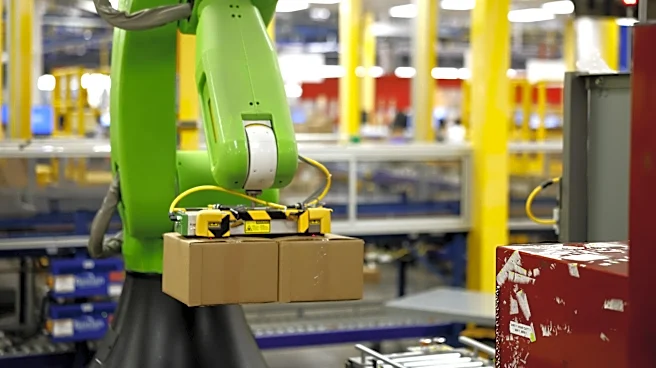
Consumer product giant Procter & Gamble (P&G) is significantly increasing its investment in automated manufacturing lines that can operate without human intervention for several hours, particularly during
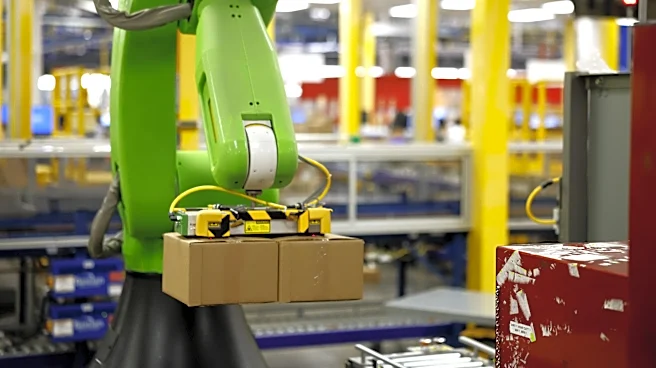
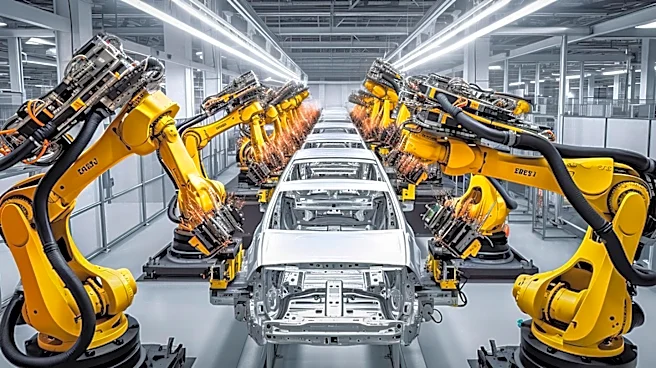
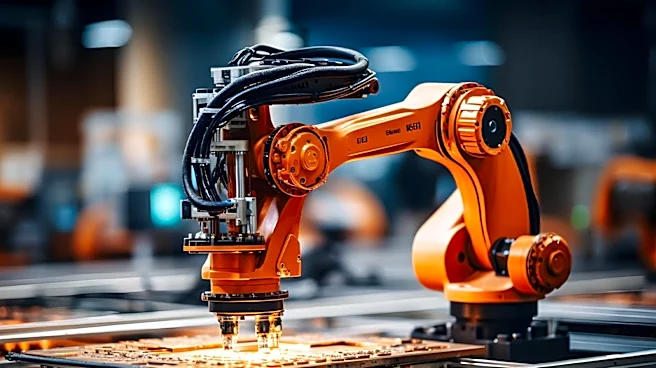
overnight shifts. The Cincinnati-based company, known for brands like Gillette, Tide Pods, and Crest, currently operates 15 such sites globally and plans to expand this number by 2027. Luc Reynaert, P&G's chief product supply officer, stated that these "unattended operations" are expected to boost manufacturing productivity by up to 20% over the next four years. P&G has also implemented autonomous robots in warehouses and at loading docks, and is exploring the use of driverless trucks. This strategic shift aims to enhance efficiency and achieve cost savings of up to $10 billion. However, this rise in automation, often referred to as "dark-shift manufacturing," has sparked fears of substantial job losses within the manufacturing sector.
Why It's Important?
The expansion of automated manufacturing by a major U.S. corporation like Procter & Gamble signals a broader trend that could profoundly impact the American workforce and economy. While P&G anticipates significant productivity gains and cost reductions, the potential for widespread job displacement is a critical concern. Shawn Fain, President of the United Auto Workers (UAW), has publicly labeled the replacement of human workers by robots as a "profound threat." This development highlights the ongoing tension between technological advancement and labor market stability. If other large manufacturers follow suit, it could lead to a substantial reduction in manufacturing jobs, necessitating a reevaluation of social safety nets and worker retraining programs to support those displaced by automation. The economic benefits of increased productivity for companies must be weighed against the societal costs of potential unemployment and economic disruption for affected communities.
What's Next?
As Procter & Gamble continues to roll out its automated manufacturing facilities, other U.S. companies may observe its success and consider similar transitions, potentially accelerating the adoption of "dark-shift manufacturing" across various industries. This trend will likely intensify discussions among labor unions, policymakers, and economists regarding the future of work and the need for proactive measures to address automation-induced job losses. Josh Bivens, chief economist at the Economic Policy Institute, suggests that while stopping automation is difficult, increasing the social safety net in the United States is crucial to support workers displaced by these technological advancements. Future policy debates may focus on strategies such as universal basic income, expanded unemployment benefits, and large-scale retraining initiatives to mitigate the economic impact on the workforce. The UAW and other labor organizations are expected to continue advocating for worker protections and fair transitions in the face of increasing automation.
Beyond the Headlines
The shift towards fully automated manufacturing, exemplified by Procter & Gamble's plans, raises fundamental questions about the nature of work, economic equity, and societal responsibility in an increasingly technological world. Beyond the immediate concern of job losses, there are deeper implications for the distribution of wealth and the role of human labor in production. If companies can achieve significant productivity gains with minimal human input, the economic benefits might disproportionately accrue to shareholders and executives, potentially exacerbating income inequality. This development also challenges traditional notions of employment and could necessitate a redefinition of societal value beyond direct labor. Ethical considerations surrounding the deployment of AI and robotics in industrial settings, including accountability for errors and the long-term psychological impact on a workforce facing obsolescence, will become increasingly prominent. The long-term societal contract between corporations, labor, and government will likely need to evolve to address these profound changes.