







What's Happening?
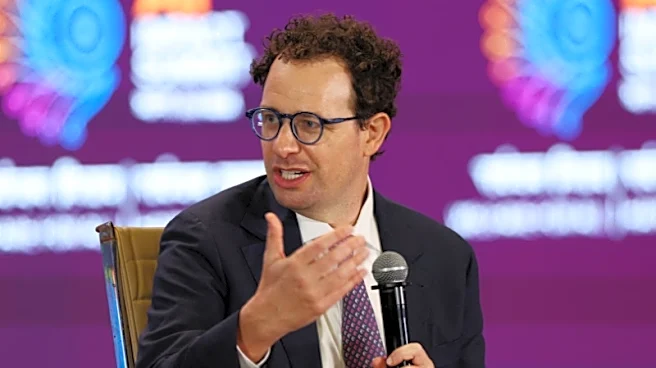
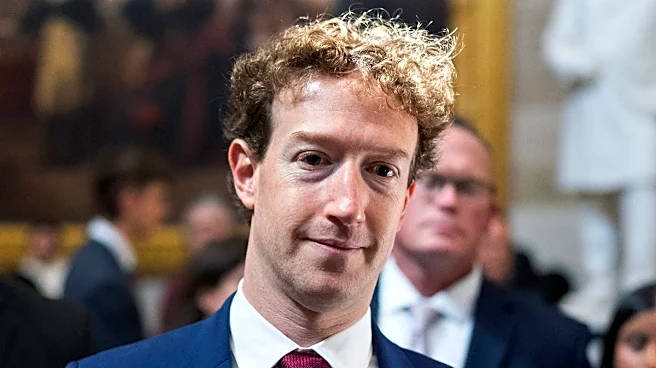
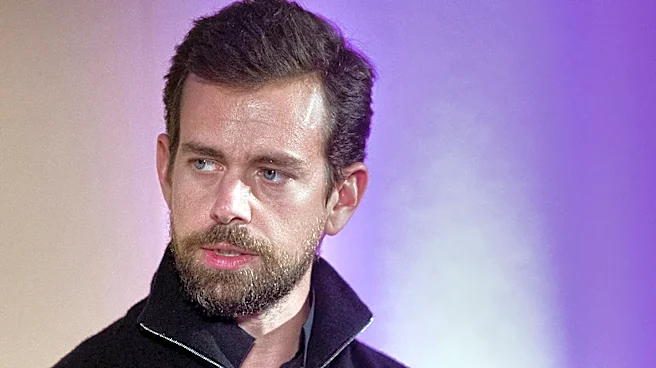
Former Twitter CEO Jack Dorsey has released a manifesto advocating for an open artificial intelligence (AI) frontier, asserting that the development of machine intelligence should remain accessible to all. This stance comes days after Anthropic CEO Dario
Amodei called for a deliberate slowdown in the rate of AI model capability improvements, a sentiment echoed by OpenAI's Sam Altman and Elon Musk. Dorsey's manifesto, titled 'open the frontier,' emphasizes that preserving a company's commercial advantage should not be conflated with safety objectives. He argues for open alternatives capable of competing with proprietary models, independent researchers with the freedom to publish findings without corporate approval, and users having control over their own tools. Dorsey's proposal also calls for sustained public funding for pooled computing capacity controlled by independent research groups, with a catastrophic-risk exception for general-purpose models, provided the evidence is independently reviewable.
Why It's Important?
Dorsey's intervention highlights a critical debate within the U.S. technology sector regarding the future direction and control of artificial intelligence development. His argument, framed as an economic rather than purely ideological one, focuses on barriers to entry in the frontier model development space. He suggests that current industry leaders, by advocating for a slowdown and potential antitrust waivers, could convert temporary commercial leads into institutional dominance, stifling innovation and competition. This debate has significant implications for the U.S. economy, as the accessibility and openness of AI development can influence the pace of technological advancement, the creation of new businesses, and the distribution of economic power. If AI development becomes concentrated among a few large entities, it could limit opportunities for smaller startups and independent researchers, potentially impacting job creation and economic diversification.
What's Next?
The ongoing discussion between proponents of an open AI frontier, like Dorsey, and those advocating for a more controlled, slower development pace, such as Amodei, Altman, and Musk, is expected to continue shaping policy and investment in the AI sector. Dorsey's call for publicly funded compute capacity and independent research groups suggests a potential push for government involvement in fostering a more decentralized AI ecosystem. Future developments may include increased scrutiny from regulatory bodies regarding potential anti-competitive practices if industry leaders coordinate on development pacing. The debate also sets the stage for further discussions on the ethical and safety implications of AI, with different factions proposing varying approaches to oversight and control. The outcome of these discussions could influence the allocation of research grants, the formation of industry standards, and the legislative landscape surrounding AI in the U.S.
Beyond the Headlines
Beyond the immediate concerns of commercial advantage and safety, Dorsey's argument touches upon fundamental questions of power, transparency, and democratic control in the age of advanced AI. His emphasis on independent evaluators and the freedom to publish findings without corporate influence speaks to a broader desire for accountability and public trust in powerful technological systems. The 'borders problem' he identifies, where researchers are not interchangeable with their governments, underscores the global nature of AI development and the challenges of establishing universal standards or controls. This debate also implicitly raises the issue of 'AI nationalism,' where countries might prioritize their own AI development and control, potentially leading to a fragmented global AI landscape. The lack of clear answers regarding liability after a serious AI incident further complicates the discussion, highlighting a significant legal and ethical vacuum that needs to be addressed as AI capabilities continue to advance.