








What's Happening?
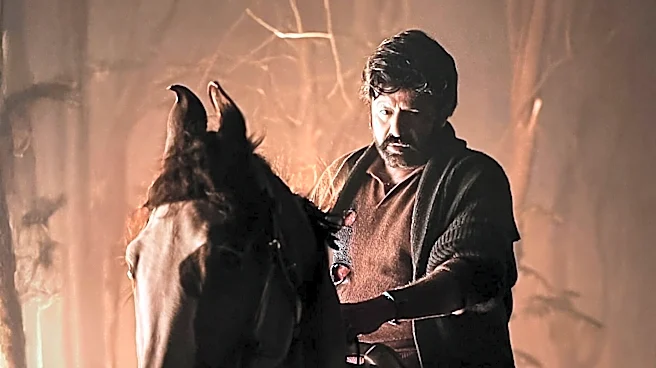
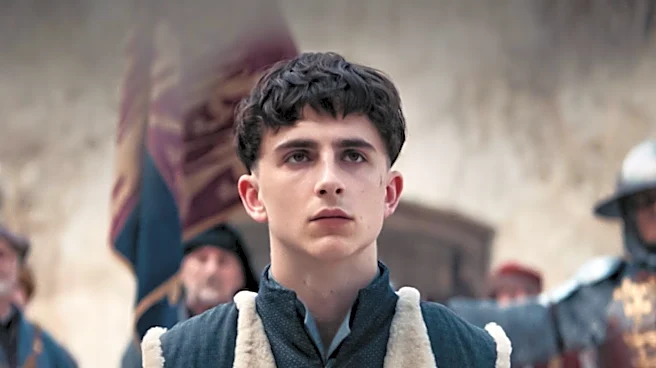
The film 'Young Washington,' directed by Jon Erwin, presents a dramatized account of the formative years of George Washington, the first President of the United States. The movie, produced by Angel Studios, attempts to depict Washington's early life and
his journey from a British loyalist to a key figure in the American Revolution. Despite its ambitions to be a historical epic, the film is critiqued for its formulaic script and budgetary constraints, which limit its impact to that of a TV movie. The narrative follows Washington's experiences on the American frontier, his interactions with British and Native American figures, and his involvement in the French & Indian War. The film concludes with Washington's symbolic transition from British red to colonial blue, hinting at his future role in American history.
Why It's Important?
The portrayal of historical figures like George Washington in film can significantly influence public perception and understanding of history. 'Young Washington' contributes to the ongoing dialogue about America's founding figures by focusing on Washington's early life and the challenges he faced. However, the film's romanticized depiction and historical inaccuracies may lead to a skewed understanding of Washington's character and the complexities of the era. This highlights the broader issue of historical representation in media and its impact on cultural memory. The film's approach to sensitive topics, such as slavery, by relegating them to the background, also raises questions about the responsibility of filmmakers to address historical realities comprehensively.
What's Next?
As 'Young Washington' continues to be screened, it may spark discussions among historians, educators, and audiences about the accuracy and artistic liberties taken in historical films. The film's reception could influence future projects about historical figures, potentially encouraging filmmakers to balance entertainment with historical fidelity. Additionally, the film may prompt educational institutions to address the gaps in historical narratives presented in popular media, fostering a more nuanced understanding of America's past.
Beyond the Headlines
The film's depiction of George Washington's early years without a deep exploration of the moral complexities of the time, such as slavery, reflects a broader trend in historical storytelling that prioritizes heroism over critical examination. This approach can perpetuate myths and oversimplifications about historical figures, affecting how they are remembered and taught. The film's creative liberties, while serving dramatic purposes, also highlight the tension between historical accuracy and narrative appeal in biographical films.