

What's Happening?
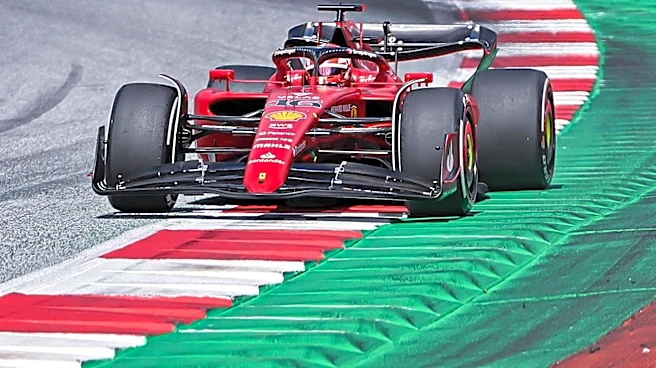
Charles Leclerc expressed dissatisfaction with Ferrari's performance following the Hungarian Grand Prix, where he finished fourth despite starting second on the grid. Leclerc highlighted the team's ongoing struggle to predict the car's performance across
different circuits, which has led to inconsistent results. During the race, Ferrari's SF-26 did not meet expectations, and Leclerc's race was further compromised by a poor start. Despite these challenges, Leclerc acknowledged the progress Ferrari has made in recent months, citing victories at Silverstone and Barcelona as evidence of the team's potential. However, he emphasized the need for Ferrari to address the lack of correlation between their simulations and actual race performance.
Why It's Important?
The inconsistency in Ferrari's performance is significant as it affects their competitiveness in the Formula 1 championship. The inability to predict car performance can lead to strategic missteps and lost opportunities in races, impacting their standings. For Ferrari, a team with a storied history in F1, maintaining a competitive edge is crucial for both their brand and their position in the sport. The ongoing issues could affect their ability to attract top talent and sponsors, as well as their fan base's confidence. Addressing these challenges is essential for Ferrari to remain a top contender in the championship.
What's Next?
Ferrari is expected to analyze the data from the first half of the season during the summer break to identify and rectify the issues with their car's performance. The team aims to return stronger for the second half of the season, with a focus on achieving more consistent results. This analysis will be crucial for Ferrari to develop strategies that align their simulations with real-world performance, potentially leading to better race outcomes. The team's ability to adapt and improve will be closely watched by competitors and fans alike.