


What's Happening?
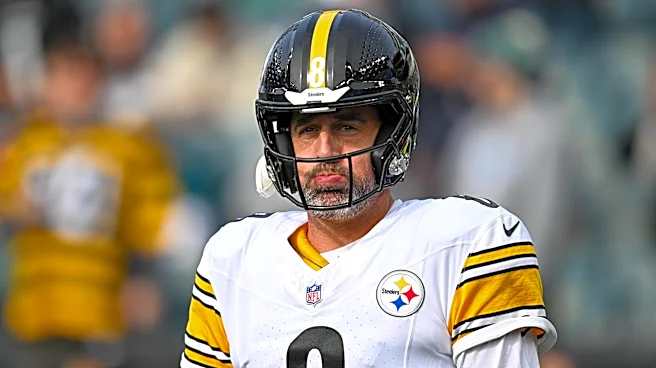
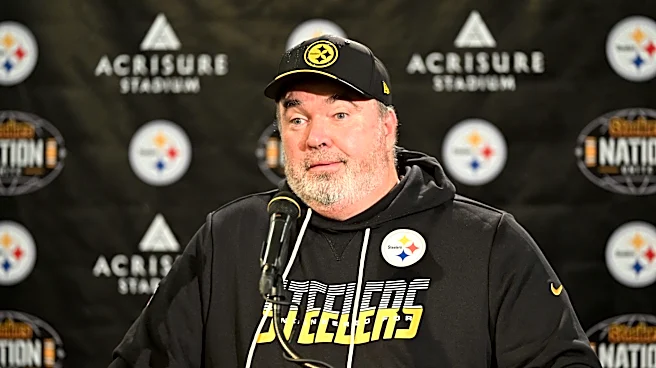
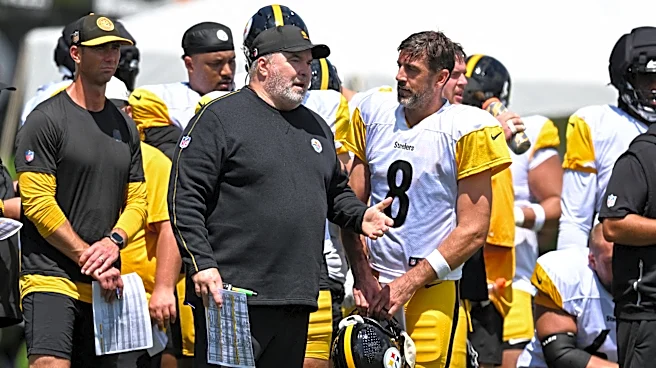
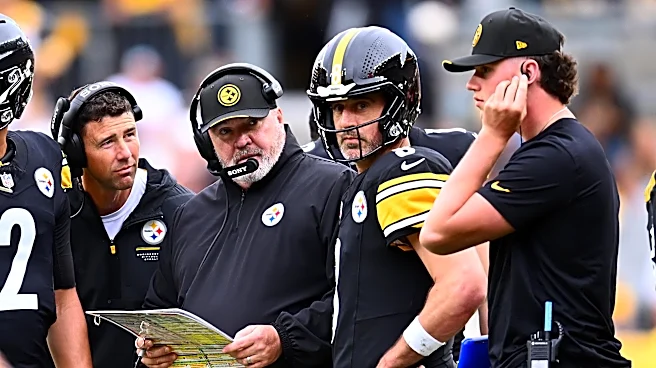
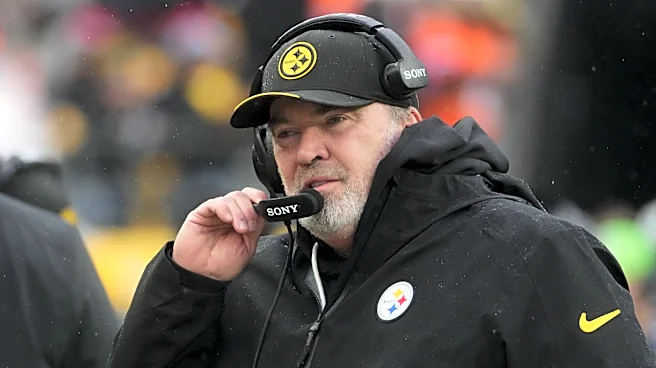
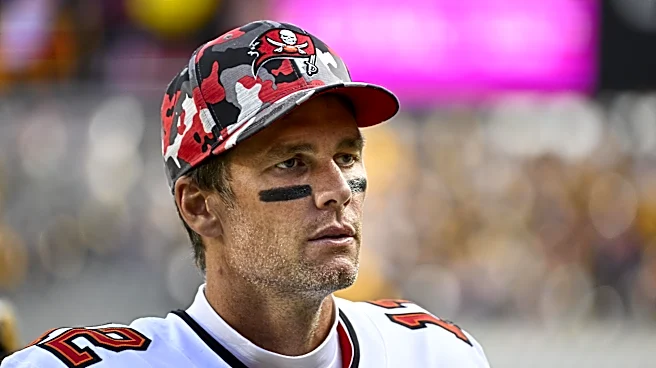
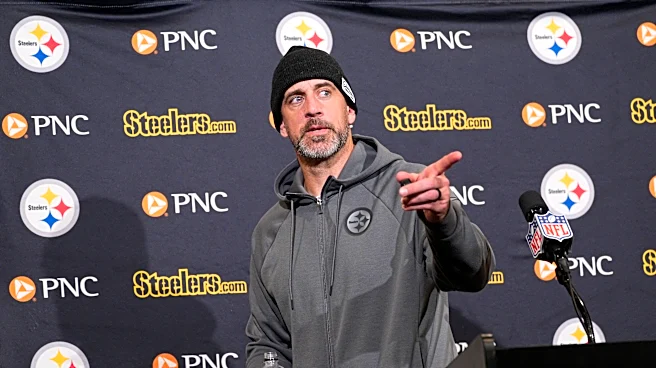
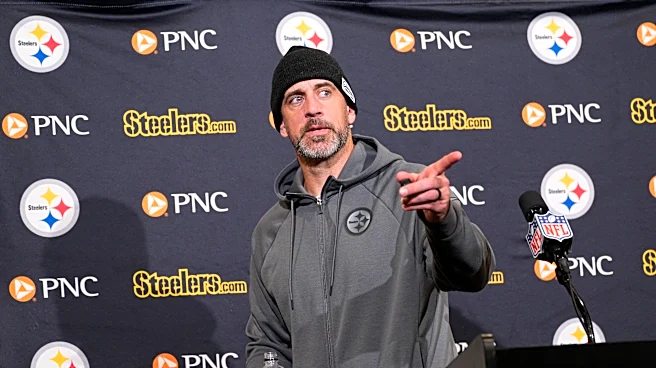
Tom Brady has publicly expressed his disappointment regarding Aaron Rodgers' comments after Rodgers was benched by the Pittsburgh Steelers. Rodgers, who was replaced by Mason Rudolph, publicly criticized coach Mike McCarthy, accusing him of falling asleep
during team meetings and failing to connect with players. Brady emphasized the sanctity of an NFL locker room, stating that private matters should not be made public. He highlighted that being in an NFL locker room is a privilege and that players should prioritize the team's accomplishments over individual promotion. Brady, who had a 3-2 record against Rodgers in his career, including a 2021 NFC Championship victory, suggested Rodgers' admissions were selfish. McCarthy, in response, stated that he considered their conversations private and acknowledged a difference of opinion, focusing on the team's upcoming game.
Why It's Important?
This incident highlights the delicate balance between player autonomy and team cohesion within professional sports, particularly in the high-stakes environment of the NFL. Public disputes between star players and coaches can significantly impact team morale, public perception, and organizational stability. For the Steelers, this situation could create internal divisions and distract from their performance. For the league, it underscores the challenges of managing strong personalities and maintaining a professional image. The comments from a respected figure like Tom Brady, known for his team-first approach, reinforce the traditional values of discretion and loyalty within sports organizations. This event could influence how future player-coach disagreements are handled, potentially leading to more emphasis on internal conflict resolution to prevent public airing of grievances.
What's Next?
The immediate aftermath will likely involve the Steelers organization managing the fallout from Rodgers' public statements and McCarthy's response. The team will need to address any potential divisions within the locker room to maintain focus on their season. The situation could also prompt discussions within the NFL about player conduct and the boundaries of public criticism, especially concerning internal team dynamics. Former Steelers coach Mike Tomlin described the dispute as a "dumpster fire," indicating the significant negative impact such public spats can have. The long-term implications for Rodgers' career, particularly given the public nature of his criticisms and his recent benching, remain to be seen. The incident may also serve as a cautionary tale for other players and teams regarding the handling of internal conflicts.
Beyond the Headlines
Beyond the immediate sports implications, this event touches upon broader themes of professional ethics and the impact of social media in amplifying personal grievances. In an era where athletes have direct platforms to communicate with the public, the line between private team matters and public discourse becomes increasingly blurred. This incident raises questions about the responsibilities of high-profile individuals to their organizations and the potential for individual actions to overshadow collective goals. The differing perspectives of Brady, who champions team sanctity, and Rodgers, who chose to air grievances publicly, reflect a generational or philosophical divide in how professional athletes approach their roles and relationships within their teams. This could contribute to ongoing debates about player empowerment versus organizational control in professional sports.