









What's Happening?
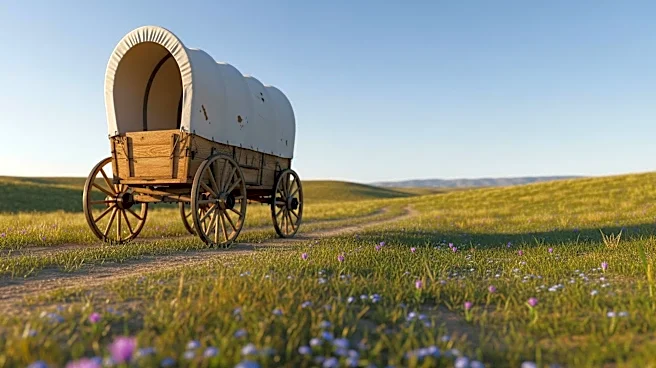
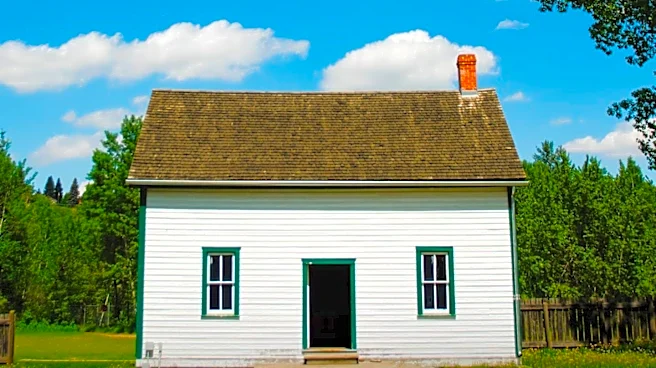
Netflix has released a reboot of 'Little House on the Prairie,' a series originally based on Laura Ingalls Wilder's autobiographical books. The new adaptation, created by Rebecca Sonnenshine, revisits the story of the Ingalls family as they settle in Independence,
Kansas, during the 1860s and 70s. This version aims to address historical criticisms of the original series, particularly its portrayal of Indigenous peoples and the concept of Manifest Destiny. The show juxtaposes the experiences of the Ingalls family with those of an Osage family, highlighting the complexities of westward expansion and the impact on Native American communities. The series has been renewed for a second season, indicating its success in engaging a multigenerational audience.
Why It's Important?
The reboot of 'Little House on the Prairie' is significant as it attempts to provide a more nuanced portrayal of American history, particularly the interactions between settlers and Indigenous peoples. By presenting multiple perspectives, the show encourages viewers to reconsider the narratives of westward expansion and the myth of Manifest Destiny. This approach not only educates a new generation about historical complexities but also reflects ongoing cultural discussions about representation and historical accuracy in media. The series' success suggests a growing appetite for content that challenges traditional narratives and offers a more inclusive view of history.
What's Next?
With the show's renewal for a second season, it is likely that Netflix will continue to explore the themes of cultural interaction and historical revisionism. The series may delve deeper into the personal stories of both the Ingalls and the Osage families, providing further insight into the challenges and relationships of the era. As the show progresses, it may also influence other media productions to adopt similar approaches in addressing historical narratives, potentially leading to broader changes in how history is portrayed in entertainment.
Beyond the Headlines
The reboot of 'Little House on the Prairie' raises important questions about the role of media in shaping public understanding of history. By addressing past criticisms and incorporating diverse perspectives, the series contributes to a larger conversation about the ethical responsibilities of storytellers. It challenges viewers to consider whose stories are told and how they are framed, prompting a reevaluation of historical narratives that have long been accepted without question. This shift in storytelling could have lasting impacts on cultural perceptions and the way history is taught and understood.