



What's Happening?
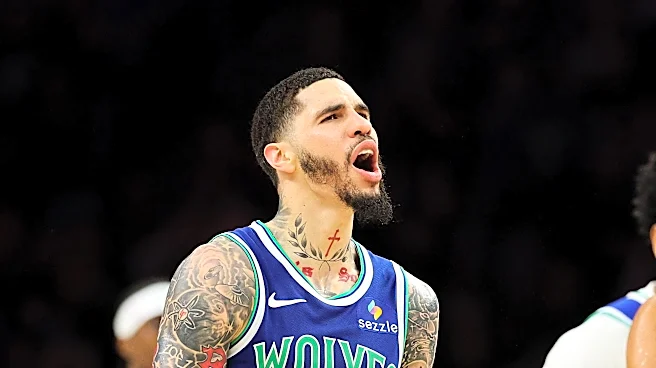
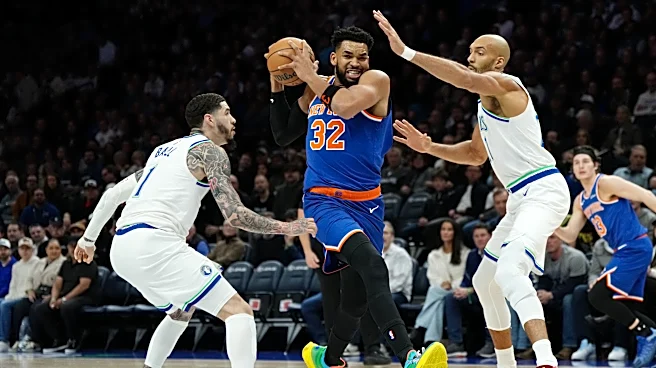
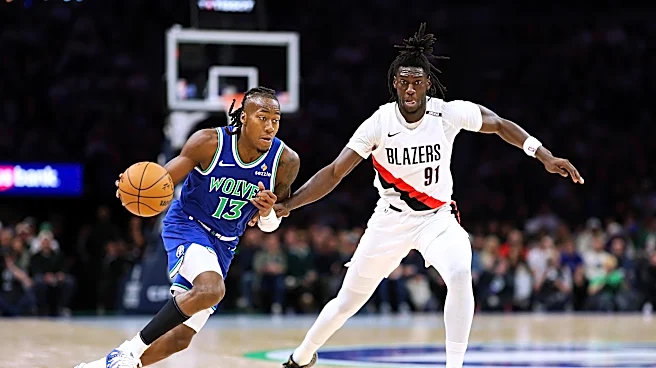
The Minnesota Timberwolves, despite losing star guard Anthony Edwards to knee surgery early in the 2026-27 season, have achieved an 11-4 start, surprising the Western Conference. This strong performance is attributed to an elite defense and solid backcourt
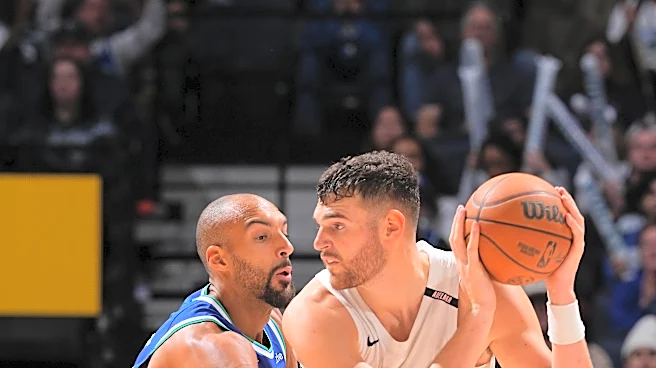
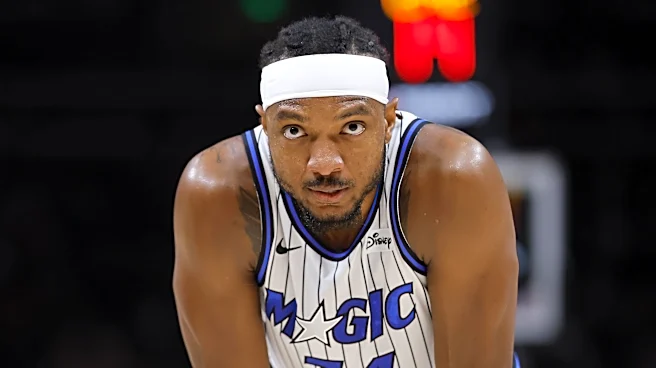
play from LaMelo Ball and Ayo Dosunmu. However, with Edwards' return timeline uncertain and Donte DiVincenzo sidelined until spring due to Achilles surgery, the team's frontcourt depth behind 34-year-old center Rudy Gobert is a concern. To address this, Timberwolves president Tim Connelly is reportedly targeting Orlando Magic big man Wendell Carter Jr. The proposed trade involves Minnesota acquiring Carter Jr. in exchange for DiVincenzo, Bones Hyland, Trey Lyles, and a 2032 first-round pick swap. This move aims to solidify the team's championship rotation and maintain its competitive edge while awaiting the return of key players.
Why It's Important?
This potential trade is significant for the Minnesota Timberwolves as it directly addresses a critical vulnerability in their roster: frontcourt depth. With Edwards out and DiVincenzo recovering, the team's reliance on rookie Joan Beringer and veteran Trey Lyles to support Gobert is unsustainable for a deep playoff run. Wendell Carter Jr. offers a crucial upgrade, providing a reliable, physical two-way big man who can anchor the paint and stretch the floor. His ability to shoot from three-point range (40.5% this season) would open up driving lanes for guards like Ball and Dosunmu, diversifying the team's offense beyond Gobert's dunker-spot presence. Defensively, Carter Jr.'s strength and switchability would allow him to contend with formidable Western Conference centers, enhancing the Timberwolves' defensive versatility and overall championship aspirations.
What's Next?
If the trade for Wendell Carter Jr. materializes, the immediate next step for the Minnesota Timberwolves would be integrating him into their rotation. Carter Jr. would likely assume a significant role, providing crucial minutes alongside or in relief of Rudy Gobert. This move would allow the team to maintain its strong start and potentially improve its standing in the Western Conference while awaiting Anthony Edwards' return. For the Orlando Magic, the trade would provide perimeter shooting with DiVincenzo (once healthy) and immediate bench depth with Hyland and Lyles, while also clearing future cap flexibility. The Timberwolves' front office will need to finalize the deal, and then the coaching staff will focus on optimizing Carter Jr.'s fit within their existing system, particularly in preparation for the demanding postseason schedule.
Beyond the Headlines
The pursuit of Wendell Carter Jr. by the Minnesota Timberwolves highlights a broader strategic shift in NBA team building, emphasizing versatility and depth, especially in the frontcourt. In an era where star players are increasingly prone to injuries, having reliable two-way players who can fill multiple roles becomes paramount for championship contenders. Carter Jr.'s skill set, combining interior defense with outside shooting, exemplifies the modern big man archetype. This trade also reflects the growing trend of teams making significant moves early in the season to address weaknesses rather than waiting until the trade deadline, signaling an aggressive approach to maximizing championship windows. The financial implications, with the Timberwolves navigating salary cap rules to combine contracts, also underscore the complex financial engineering involved in high-stakes NBA transactions.