




What's Happening?
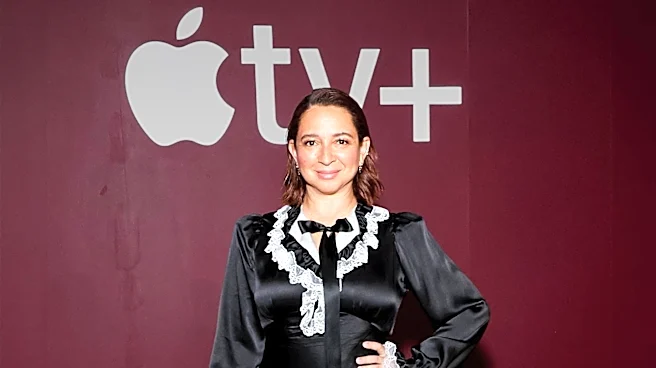
Actress Maya Rudolph and filmmaker Paul Thomas Anderson have been in a committed relationship for over two decades, raising four children without formalizing their union through marriage. Rudolph openly refers to Anderson as her husband, indicating that
their commitment is deeply felt and recognized despite the absence of a wedding ceremony. Their approach to partnership highlights a growing trend among some celebrity couples who prioritize mutual respect, shared family life, and personal understanding over traditional marital vows. This long-standing relationship demonstrates that a lasting and connected partnership can thrive outside conventional societal expectations, offering a model of commitment that is defined on their own terms. Their story is often cited as an example of how love and family can be built and sustained without the legal or ceremonial aspects of marriage.
Why It's Important?
The enduring partnership of Maya Rudolph and Paul Thomas Anderson is significant as it challenges traditional notions of commitment and family structure in American society. Their decision to remain unmarried, despite having a long-term relationship and four children, reflects a broader cultural shift where individuals are increasingly defining relationships on their own terms. This trend can influence public perception, particularly among younger generations, by normalizing diverse forms of family units and committed partnerships. For the entertainment industry, it showcases that celebrity relationships do not always conform to the 'Hollywood script' of grand weddings and public declarations, promoting a more private and authentic approach to personal life. This example can empower individuals to pursue relationships that align with their personal values rather than societal pressures, potentially reducing the stigma associated with cohabitation or raising children outside of marriage. It also highlights the importance of mutual understanding and shared values as foundational elements of a successful partnership, irrespective of legal status.
What's Next?
Given their established pattern, it is unlikely that Maya Rudolph and Paul Thomas Anderson will alter their relationship status in the foreseeable future. Their continued public and private life will likely serve as an ongoing example for other couples considering non-traditional relationship paths. Their careers in film and television are expected to continue, with their personal arrangement remaining a private aspect of their lives, occasionally referenced in interviews as a testament to their unique bond. The couple's focus will likely remain on their children and their respective professional endeavors. Their story may continue to be featured in discussions about modern relationships and family dynamics, contributing to a broader dialogue about what constitutes a committed partnership in contemporary society. There are no indications of any upcoming changes to their relationship structure or public statements regarding marriage.
Beyond the Headlines
The relationship between Maya Rudolph and Paul Thomas Anderson delves into deeper societal implications regarding the evolving definition of family and commitment. Their choice to forgo marriage, while maintaining a strong and loving family unit, subtly questions the legal and cultural supremacy of marriage as the sole indicator of a successful partnership. This can have long-term effects on legal frameworks concerning unmarried couples, parental rights, and inheritance, potentially prompting discussions about how laws can better accommodate diverse family structures. Ethically, their relationship promotes the idea of individual autonomy in defining personal happiness and commitment, moving beyond prescriptive societal norms. Culturally, it contributes to a more inclusive understanding of what a 'family' looks like, potentially reducing judgment against those who choose alternative paths. This shift could lead to greater acceptance of various relationship models, fostering a society that values genuine connection and shared life experiences over traditional formalities.