





What's Happening?
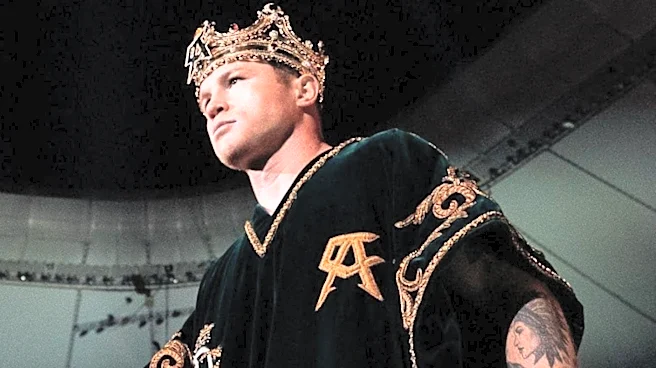
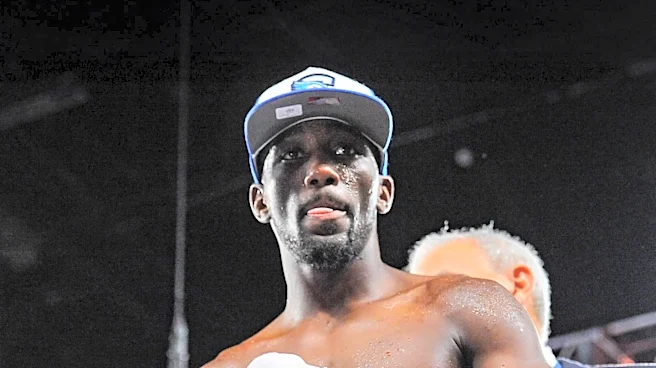
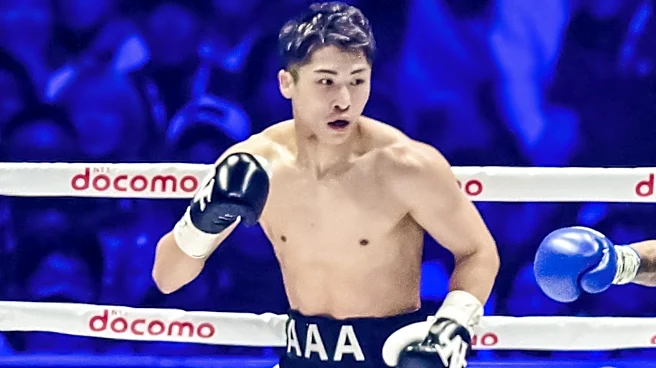
Terence Crawford has publicly questioned the World Boxing Council (WBC) regarding their decision to deny Lester Martinez a shot at Canelo Alvarez, while Christian Mbilli was granted the opportunity. Crawford expressed his dissatisfaction on X, stating,
"I don’t get it. It’s crazy how the @wbcmoro say Lester not good enough to fight @Canelo but Mbilli was. This the type of stuff I don’t like with these sanction bodies, they pick and choose. How being the interim champion not good enough for a chance at the championship." Mbilli held the full WBC super middleweight title, which Canelo won from him by decision on October 31. Martinez, on the other hand, holds only the interim belt. Crawford and Martinez share a training history under Brian 'BoMac' McIntyre, who also coached Crawford for his 2025 victory over Canelo, suggesting a loyalty factor in Crawford's advocacy.
Why It's Important?
Terence Crawford's public criticism of the WBC highlights ongoing concerns within the boxing community about the fairness and transparency of sanctioning bodies in determining title challengers. His comments suggest a perception that these organizations 'pick and choose' fighters based on factors beyond merit, potentially disadvantaging deserving contenders. This situation brings to light the complex interplay of sporting achievement, marketability, and political influence in professional boxing. For Lester Martinez, being overlooked for a title shot against a high-profile opponent like Canelo Alvarez means a significant loss of potential career advancement and financial gain. It also raises questions about the value of interim titles if they do not guarantee a path to a full championship fight, impacting the credibility of such belts and the sport's competitive integrity.
What's Next?
The WBC and its president, Mauricio Sulaimán, may face increased scrutiny and pressure to clarify their criteria for selecting mandatory challengers, especially in light of Crawford's public remarks. Lester Martinez will likely need to secure more significant victories against top-tier opponents to build his resume and leverage for a title shot, as his current interim belt status and name recognition are not deemed sufficient by promoters like Turki Alalshikh, who prioritizes global spectacles. Crawford's intervention, while supportive, may not immediately alter Martinez's path. Martinez will need to earn his way into contention by defeating legitimate opposition such as IBF champion Osleys Iglesias, Darius Fulghum, Bektemir Melikuziev, or top middleweights moving up, like Janibek Alimkhanuly and Carlos Adames, to build a compelling case for a fight with Canelo.
Beyond the Headlines
Crawford's critique also exposes a perceived double standard within boxing, as he himself received a 'shortcut' in 2025, bypassing the middleweight division to challenge Canelo for the undisputed 168-pound championship without following the traditional mandatory path. This suggests that while Crawford advocates for fairness for his former gymmate, the realities of boxing often involve strategic matchmaking driven by star power and financial interests rather than strict adherence to rankings. The incident underscores how personal connections and influence can play a role in who gets opportunities, and how fighters with less star power, like Martinez, struggle to secure high-profile bouts despite holding legitimate titles. This dynamic perpetuates a system where marketability can sometimes outweigh pure sporting achievement, leading to frustration among fighters and fans alike.