


What's Happening?
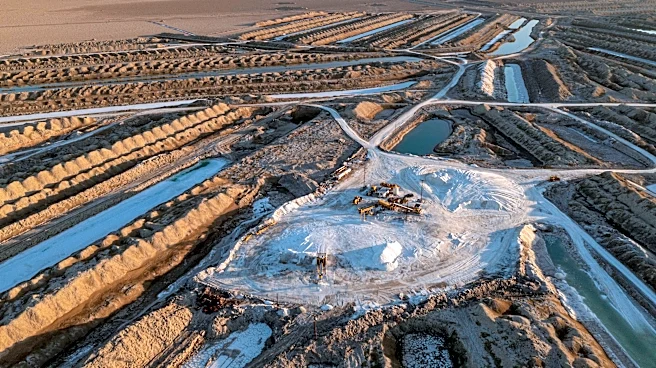
Australian mining company RareX Limited has formally petitioned Kenya’s Public Procurement Regulatory Authority (PPRA) to review the proposed award of the Mrima Hill niobium and rare earths project in Kwale County. RareX alleges that a U.S.-led consortium,
Frontier Minerals LLC, submitted its Expression of Interest after the official deadline. The Frontier Minerals LLC-led consortium includes ReElements, American Resources Corporation, and Bunker Hill Silver Corporation. RareX, in partnership with Iluka Resources, lodged the complaint on November 24, 2026, following an announcement on November 19 that the Frontier Consortium was ranked first, with RareX–Iluka coming second. RareX Managing Director James Durrant and Chairman Jeremy Robinson have described the admission of Frontier’s bid as a “serious administrative irregularity,” arguing that the consortium missed the deadline by a significant number of days. RareX has also requested a debriefing and access to procurement records from Kenya's State Department for Mining.
Why It's Important?
This dispute is significant for U.S. business interests as it directly challenges the integrity of a major international mining tender awarded to a U.S.-led consortium. The Mrima Hill project involves niobium and rare earths, critical minerals with increasing strategic importance for various high-tech industries, including defense, electronics, and renewable energy. A successful challenge by RareX could lead to the U.S.-led consortium losing the bid, impacting their access to these vital resources and potentially affecting U.S. supply chains for critical minerals. The allegations of procedural irregularities also raise questions about transparency and fairness in international procurement processes, which could influence future foreign investment and partnerships for U.S. companies in emerging markets. The outcome will determine which consortium gains control over a significant rare earth deposit, with implications for global mineral markets and geopolitical resource competition.
What's Next?
RareX has requested the PPRA to investigate the matter, inspect procurement records, and direct that the evaluation and award be restricted to bidders who submitted their Expressions of Interest within the deadline. If the late submission is excluded, RareX–Iluka believes it would emerge as the highest-ranked bidder. The State Department for Mining acknowledged RareX's request for a debriefing and procurement records on November 23. Under the Notification of Intention to Award, a debriefing should be provided within five business days, and if not, the standstill period is extended. Mining Cabinet Secretary Hassan Joho has previously stated that an award would not immediately permit mining, as environmental compliance, community consent, landowner agreements, and a formal prospecting license would still be required. RareX remains committed to developing the project but acknowledges the uncertainty of its complaint's success.
Beyond the Headlines
The Mrima Hill mining row underscores the complexities and potential for disputes in the global competition for critical minerals. Beyond the immediate tender process, the incident highlights the ethical and legal dimensions of international business dealings, particularly in resource-rich developing nations. The allegations of a U.S.-led consortium benefiting from a procedural irregularity could strain diplomatic and trade relations between the involved countries. Furthermore, the emphasis by RareX on community and cultural heritage concerns, governance, and local value addition in its proposal reflects a growing trend in the mining industry towards more socially responsible and sustainable practices. The outcome of this dispute could influence future tender processes globally, pushing for stricter adherence to deadlines and greater transparency to ensure fair competition and prevent similar controversies.