


What's Happening?
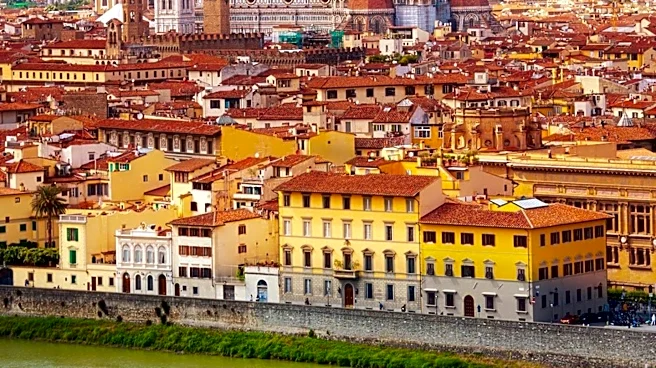
Florence's historic 'buchette del vino,' or wine windows, dating back to the 16th century, have experienced a resurgence in popularity, largely driven by social media and international tourism. These small openings in the facades of historic buildings,
originally used by noble families to sell wine directly from their estates, are now being utilized by bars, restaurants, and gelaterias to serve drinks and food to customers on the street. The phenomenon gained significant traction after being featured on the CNN program 'Stanley Tucci: Searching for Italy' in 2021, making them a must-visit attraction for foreign tourists. While these windows offer a unique historical experience, their current use is primarily geared towards tourism, with locals reportedly not frequenting them as much. The wine windows allow for ordering from the street, though wine service through them typically ceases at 9 PM due to regulations against public alcohol consumption.
Why It's Important?
The revival of Florence's wine windows highlights a broader trend in major Italian art cities where historical elements are re-contextualized to cater to tourist demands, often for social media appeal. This phenomenon underscores the significant influence of media and social platforms in shaping tourist itineraries and perceptions of cultural heritage. While it generates economic activity for local businesses, it also raises questions about the authenticity of the experience for residents versus visitors. The focus on 'stereotyped and often anachronistic' experiences, as described in the source, suggests a potential commodification of history, where traditions are presented in a way that prioritizes visual appeal and novelty for tourists over their original cultural significance. This trend can lead to a disconnect between the daily lives of locals and the curated experiences offered to visitors, potentially altering the urban fabric and cultural landscape of historic cities.
What's Next?
The continued popularity of Florence's wine windows suggests that similar historical features in other Italian cities might be re-evaluated for their tourism potential. The 'Associazione Buchette del Vino,' founded in 2015, continues to catalog and preserve these windows, indicating an ongoing effort to maintain their historical integrity while promoting their use. The development of specialized wine window tours, with prices starting around 30 euros, points to a growing industry built around these attractions. Future developments could include more structured regulations for their use, particularly concerning alcohol sales and crowd management, to balance tourist demand with local quality of life. The success of these windows may also inspire other cities to explore innovative ways to leverage their historical architecture for tourism, potentially leading to both economic benefits and challenges related to overtourism and cultural preservation.
Beyond the Headlines
The phenomenon of the wine windows touches upon the complex relationship between tourism, historical preservation, and local identity. While the windows offer a charming glimpse into Florence's past, their current function as a tourist attraction, rather than a local custom, reflects a broader shift in how historical sites are consumed. The emphasis on experiences 'perfect to photograph and film' for social media suggests a performative aspect of modern tourism, where the act of sharing the experience online becomes as important as the experience itself. This can lead to a superficial engagement with culture, where the depth of history is overshadowed by its aesthetic appeal. The ethical implications of transforming historical elements into curated photo opportunities, potentially diluting their original meaning, are a subtle but significant consequence. It also raises questions about who truly benefits from such tourism – local businesses, tourists seeking unique content, or the city's long-term cultural integrity.