





What's Happening?
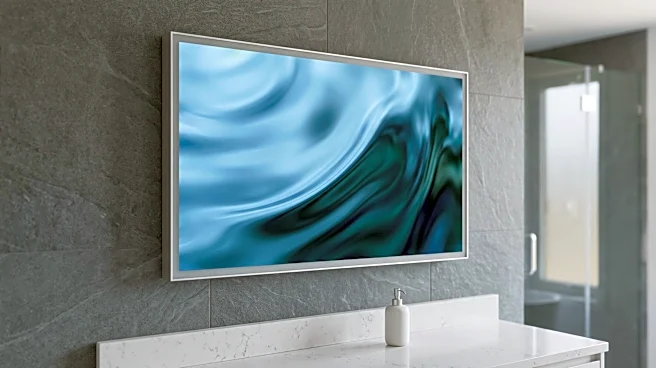
The market for smart vanity technology is expanding, with a notable focus on smart mirror TVs that serve as both mirrors and functional waterproof LED televisions. These devices, when powered on, offer a range of features including Bluetooth speakers,
streaming service compatibility, and touch controls. Available in various sizes, from 22-24 inches to larger 32-55 inch models, these smart mirrors are designed for specialized environments such as bathrooms and luxury hotels. Prices for these units vary significantly, ranging from approximately $36 to $800, depending on the features and size. Some advanced models incorporate Android operating systems, IP66-rated waterproof protection, Wi-Fi connectivity, and defog technology, enhancing their utility and appeal in moisture-prone settings. The demand for these specialized devices is driven by consumers seeking integrated technology solutions for small spaces and luxury applications.
Why It's Important?
The emergence of smart vanity technology, particularly smart mirror TVs, signifies a growing trend in home automation and integrated living spaces within the U.S. market. This technology impacts the consumer electronics industry by creating a new niche for specialized, high-end products that blend aesthetics with functionality. For consumers, it offers enhanced convenience and entertainment options in previously overlooked areas like bathrooms, transforming them into more luxurious and tech-savvy spaces. The development also pushes manufacturers to innovate in areas such as waterproofing, display technology, and smart integration, potentially leading to advancements that could be applied to other product categories. The varying price points indicate accessibility across different consumer segments, from budget-conscious buyers to those seeking premium, custom solutions for their homes or hospitality businesses. This trend reflects a broader societal shift towards smart homes and personalized technological experiences.
What's Next?
The smart vanity technology market is expected to continue its growth trajectory, with further advancements in integration and feature sets. Manufacturers are likely to focus on developing more sophisticated AI capabilities, improved touch interfaces, and seamless connectivity with other smart home devices. We may see an increase in the adoption of 4K smart models, with Mini-LED and 4K technology becoming more affordable and prevalent in this segment. The expansion into specialized environments like RVs and campervans, alongside continued demand from luxury hotels and residential bathrooms, suggests a broadening application of these technologies. Future developments could also include more personalized content delivery, advanced health monitoring features integrated into the mirrors, and greater energy efficiency. The competitive landscape will likely see both established electronics giants and niche specialists vying for market share through innovation and strategic partnerships.
Beyond the Headlines
Beyond the immediate convenience and entertainment, smart vanity technology, particularly smart mirror TVs, touches upon deeper implications regarding privacy, data collection, and the evolving definition of personal space. As these devices become more integrated with smart home ecosystems and potentially incorporate features like 'body checks' or personalized health data, questions about data security and user consent will become increasingly pertinent. The seamless blend of a mirror with a screen blurs the lines between reflection and digital interaction, potentially altering daily routines and self-perception. Ethically, the constant presence of screens, even in private spaces like bathrooms, could contribute to an 'always-on' culture, impacting mental well-being and the ability to disconnect. Culturally, these devices represent a further step towards ubiquitous computing, where technology is embedded into every facet of our environment, reshaping our interactions with physical spaces and personal routines.