







What's Happening?
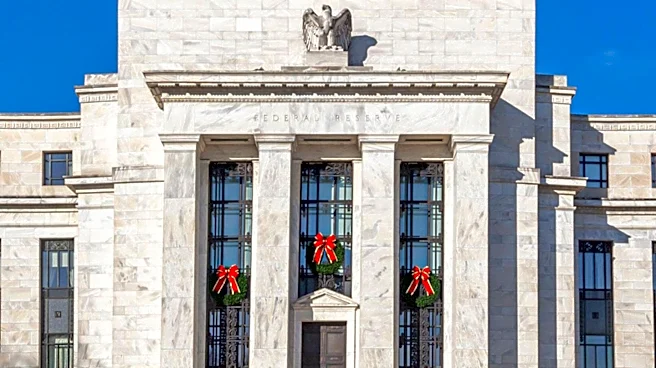
The Consumer Federation of America (CFA) and the Center for Responsible Lending have jointly sent a letter to the Federal Reserve concerning Chime Financial's application to acquire Central Services Corporation. This acquisition would also indirectly
include Central Services Corporation's subsidiary, Stride Bank, with the ultimate goal of Chime Financial becoming a bank holding company. The letter signifies a formal communication from these consumer advocacy groups to the federal banking regulator, expressing their views or concerns regarding the proposed transaction. This action highlights the scrutiny that significant financial acquisitions undergo, particularly when they involve entities that could impact consumer banking services and the broader financial landscape.
Why It's Important?
This intervention by the Consumer Federation of America and the Center for Responsible Lending is important because it brings consumer protection perspectives directly to the Federal Reserve's attention during a critical regulatory review process. The Federal Reserve's decision on Chime Financial's application to become a bank holding company, through the acquisition of Central Services Corporation and Stride Bank, could set a precedent for how fintech companies integrate into the traditional banking system. The involvement of these advocacy groups suggests potential concerns related to consumer access, financial stability, or regulatory oversight that they believe warrant careful consideration. The outcome of this application could influence future mergers and acquisitions in the financial sector, particularly those involving non-traditional financial service providers seeking to expand their banking operations.
What's Next?
The Federal Reserve will now consider the letter from the Consumer Federation of America and the Center for Responsible Lending as part of its ongoing review of Chime Financial's application. The regulatory body is expected to evaluate all submitted information, including public comments and concerns raised by advocacy groups, before making a decision. Chime Financial's path to becoming a bank holding company hinges on this approval, which could significantly alter its operational structure and regulatory obligations. The decision will likely be closely watched by other fintech companies, traditional banks, and consumer protection organizations, as it could signal the Federal Reserve's stance on the evolving financial services industry and the integration of digital-first banking models.
Beyond the Headlines
The joint letter from these consumer advocacy groups underscores a broader tension between innovation in financial technology and the imperative for robust consumer protection. As fintech companies like Chime Financial grow and seek to expand their services by acquiring traditional banking entities, questions arise about how existing regulations apply and whether new frameworks are needed to safeguard consumers. This situation highlights the ongoing challenge for regulators to balance fostering innovation with ensuring financial stability and protecting vulnerable populations. The outcome of this specific application could influence the regulatory landscape for digital banking and the future of financial services in the U.S., potentially shaping how consumers interact with their banks and how financial products are offered and regulated.