

What's Happening?
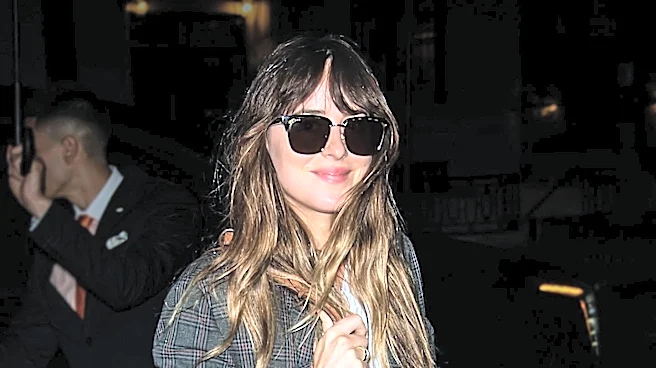
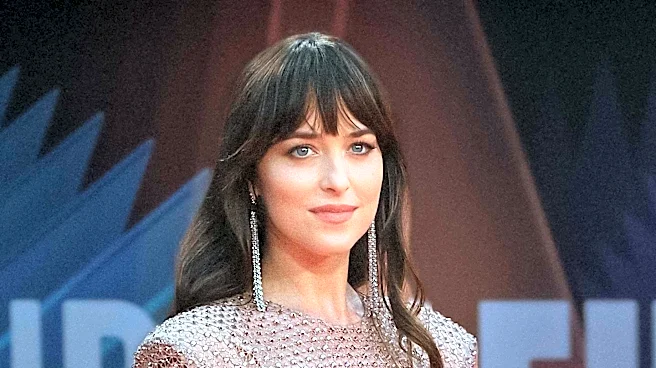
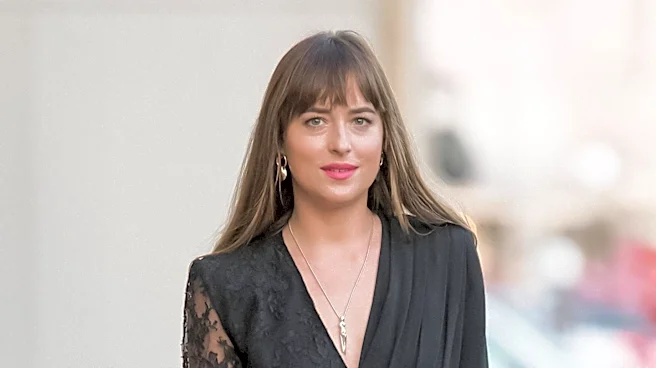
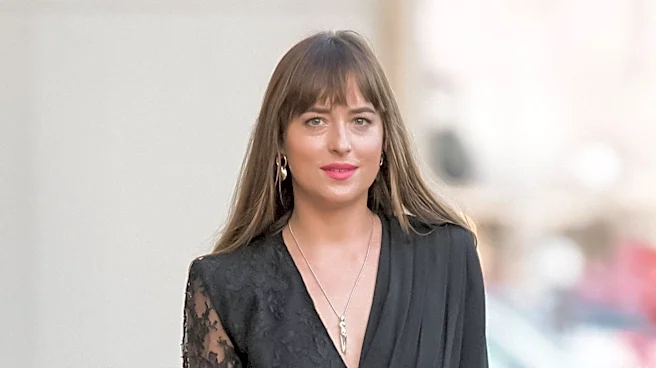
Megyn Kelly has publicly accused actress Dakota Johnson of orchestrating paparazzi photographs of herself leaving a gym. During the November 13 episode of her talk show, Kelly scrutinized images of Johnson, suggesting that her appearance and attire indicated
a pre-arranged photo opportunity rather than a candid sighting. Kelly highlighted Johnson's choice of clothing, describing it as a 'purplish-mauve bathing suit with matching sheer tights underneath,' and questioned the perfectly styled hair and sunglasses. She argued that there was 'zero chance' the photos were not orchestrated. Kelly also referenced Johnson's October 2026 interview with Vogue, where the actress expressed a desire for privacy, contrasting it with what Kelly perceived as a curated public appearance. According to Kelly, Johnson is 'looking for attention' despite claiming to want privacy, implying a discrepancy between her stated preferences and her actions.
Why It's Important?
This accusation by Megyn Kelly highlights a recurring debate within celebrity culture regarding authenticity and privacy. For public figures like Dakota Johnson, managing their image is crucial, and accusations of staging photos can impact public perception and credibility. If true, it suggests a calculated effort to control narratives and maintain visibility, which is a common practice in the entertainment industry but often met with skepticism by the public and media. The incident also underscores the role of media personalities like Megyn Kelly in scrutinizing celebrity behavior, potentially influencing public opinion and shaping discussions around celebrity privacy versus public interest. For Johnson, such claims could lead to questions about her sincerity regarding her desire for a private life, potentially affecting her relationship with fans and the media.
What's Next?
It remains to be seen whether Dakota Johnson or her representatives will respond to Megyn Kelly's accusations. A response could either deny the claims, offer an explanation, or choose to ignore them, each carrying different implications for public relations. The incident may fuel further discussions in entertainment news outlets about celebrity privacy, the role of paparazzi, and the authenticity of public appearances. Other celebrities might weigh in, either supporting Kelly's perspective on staged photos or defending Johnson's right to manage her image. This event could also prompt a closer examination of how celebrities present themselves in public and how media figures interpret these presentations, potentially influencing future interactions between celebrities and the press.
Beyond the Headlines
The controversy surrounding Dakota Johnson's paparazzi photos touches upon broader themes of media manipulation and the curated reality of celebrity life. In an era dominated by social media and constant public scrutiny, celebrities often walk a fine line between maintaining a public profile and safeguarding their personal lives. The accusation of staging photos suggests a strategic approach to image management, where even seemingly candid moments are carefully constructed. This raises ethical questions about journalistic integrity when reporting on celebrity 'sightings' and the public's consumption of such content. It also reflects a cultural fascination with celebrity authenticity, where audiences often seek genuine glimpses into the lives of stars, yet are increasingly aware of the manufactured nature of much of what they see. This dynamic contributes to a complex relationship between celebrities, the media, and the public, where trust and perception are constantly negotiated.