





What's Happening?
Hilary Duff, the 39-year-old former Disney Channel star, is featured in a new photo shoot for Paper magazine, embracing the Y2K aesthetic. The shoot, published on Monday, highlights bold, bedazzled eyebrows and other fashion elements reminiscent of the late
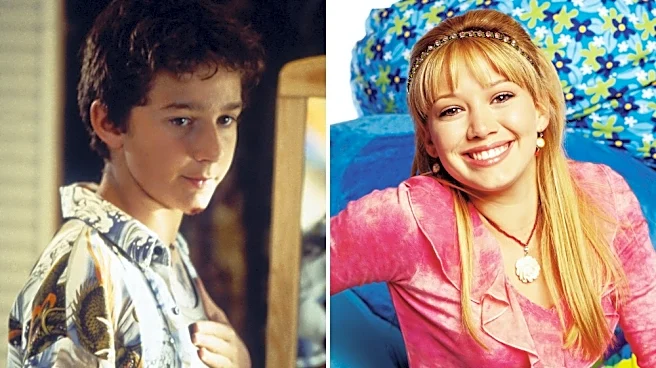
1990s and early 2000s. In one image, Duff is seen laughing with colorful jewels on her brows, wearing a strapless black minidress. Another shot features her with pink rhinestones on her brows and matching crystals in her hair. For the magazine's cover, she sports a purple lacy minidress, chunky black platform heels, and numerous beaded bracelets. Duff, known for her role in 'Lizzie McGuire' which aired from 2001 to 2004, discussed her millennial fans bringing back Y2K style to her concerts, partly as a tribute to her 2003 album, 'Metamorphosis.' She expressed happiness about the return of some fashion trends, particularly baggy low-rise jeans, while acknowledging that she is content to leave other styles, like certain shawls, in the past. Duff also noted a reduced pressure to conform to specific looks now.
Why It's Important?
This resurgence of Y2K fashion, exemplified by Hilary Duff's Paper magazine feature, underscores a broader cultural trend of nostalgia influencing contemporary style and consumer behavior in the U.S. The embrace of past aesthetics by celebrities like Duff can significantly impact fashion cycles, driving demand for specific clothing items and accessories. For the fashion industry, this means a renewed interest in vintage-inspired designs, potentially leading to increased sales for brands that successfully tap into this nostalgic sentiment. It also highlights the enduring influence of pop culture icons from previous decades on current generations, particularly millennials and Gen Z, who are often key drivers of fashion trends. The emphasis on comfort and individuality, as noted by Duff regarding baggy low-rise jeans and the 'we don't care and we're cool' attitude, reflects a shift in consumer priorities away from rigid beauty standards. This trend can also influence marketing strategies, with brands leveraging celebrity endorsements and nostalgic themes to connect with a wider audience, fostering a sense of community and shared cultural experience.
What's Next?
The continued visibility of Y2K fashion through celebrity endorsements and media features suggests that this trend will likely persist in the near future. Fashion retailers and designers are expected to further incorporate Y2K elements into their collections, ranging from bedazzled accessories to low-rise denim and vibrant colors. We may see more collaborations between contemporary brands and figures iconic to the Y2K era, similar to Hilary Duff's current engagement. Social media platforms will continue to play a crucial role in disseminating and popularizing these trends, with influencers and users showcasing their interpretations of Y2K style. This could lead to a broader adoption of these aesthetics in everyday fashion, influencing everything from casual wear to more formal attire. Additionally, the emphasis on comfort and personal expression within this nostalgic trend may encourage a more diverse and inclusive approach to fashion, moving away from overly restrictive or prescriptive styles. The longevity of this trend will depend on its ability to evolve and adapt to new interpretations while retaining its core nostalgic appeal.
Beyond the Headlines
The phenomenon of Y2K fashion's return, as highlighted by Hilary Duff, extends beyond mere clothing choices; it reflects a deeper societal yearning for simpler times and a sense of comfort in the familiar. In an era marked by rapid technological advancement and global uncertainties, revisiting past fashion trends can offer a psychological escape and a connection to a perceived golden age. This trend also speaks to the cyclical nature of fashion and culture, where styles are continuously reinterpreted and reintroduced to new generations. Ethically, it raises questions about sustainable consumption, as the rapid turnover of trends can contribute to fast fashion and its environmental impact. However, it also presents an opportunity for vintage and second-hand markets to thrive, promoting a more circular economy. Culturally, the embrace of Y2K style by younger generations who did not experience it firsthand signifies a cross-generational dialogue and the continuous evolution of cultural identity. It underscores how media and celebrity influence can shape collective memory and aesthetic preferences, transforming historical styles into contemporary statements of individuality and belonging.