
What's Happening?
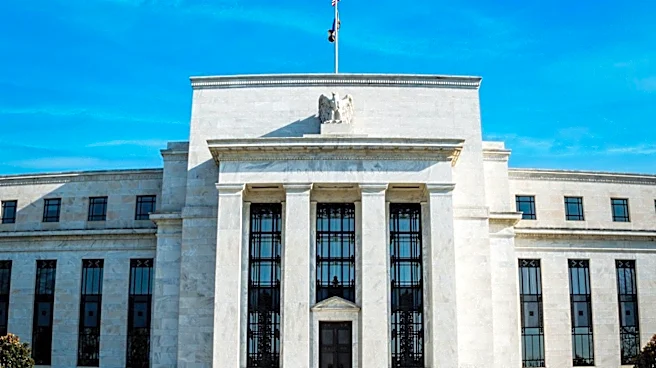
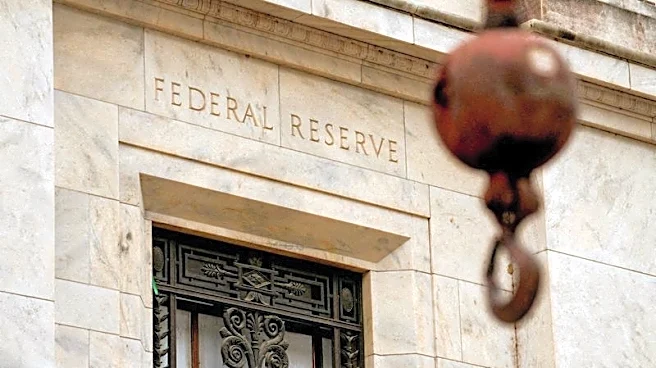
Federal Reserve officials are increasingly signaling a hawkish stance on monetary policy, indicating further interest rate hikes. This shift began with dissents from Lisa Cook and Beth Hammack on October
28, who advocated for a quarter-point hike when the Fed held rates at 3.75% to 4%. New York Fed President John Williams has also emphasized elevated inflation risks and the priority of price stability. Cook further warned on November 20 that delaying rate increases could put the Fed behind the curve. This hawkish sentiment has led J.P. Morgan economists to revise their forecasts, now expecting quarter-point increases in December, January, and March, which would push borrowing costs higher into 2027. Fed Governor Christopher Waller even suggested considering a half-point hike at the December 8-9 meeting, stating that a 25-basis-point hike could risk the Fed's credibility.
Why It's Important?
The Federal Reserve's increasingly hawkish signals are sending a troubling message to S&P 500 investors. Tighter monetary policy directly impacts stock valuations because rising interest rates make future earnings less valuable in today's money, reducing what investors are willing to pay for them. This also makes bonds a more attractive alternative investment. The S&P 500's forward price-to-earnings ratio, which started 2026 at 22, had already dropped to 17.7 by November 5, its lowest since November 2023, according to FactSet. While much of this initial drop was due to rising profit forecasts, the recent selloff has pushed the multiple even lower, with the Fed's stance being a significant factor. The current market is particularly sensitive due to the AI boom, which Goldman Sachs estimates has driven roughly half of S&P 500 earnings growth. Many AI companies rely on debt to fund data centers, meaning higher financing costs will negatively impact shareholders.
What's Next?
The market anticipates continued interest rate increases, with J.P. Morgan economists forecasting quarter-point hikes in December, January, and March. If these predictions materialize, borrowing costs will continue to climb well into 2027. Investors will closely monitor upcoming Federal Reserve meetings, particularly the December 8-9 meeting, for further indications of the pace and magnitude of future rate adjustments. The ongoing debate among Fed officials, with some advocating for more aggressive tightening, suggests that the path to price stability will likely involve sustained efforts to curb inflation through higher rates. This trajectory will continue to influence stock market valuations and corporate financing decisions, especially for debt-reliant sectors like AI.
Beyond the Headlines
The Federal Reserve's aggressive stance highlights a broader challenge in balancing inflation control with economic growth. The emphasis on price stability, even at the risk of impacting equity markets, underscores the Fed's commitment to its mandate. This approach could lead to a re-evaluation of investment strategies, shifting focus from growth stocks, particularly those heavily reliant on debt for expansion, towards more value-oriented or less interest-rate-sensitive assets. The potential for prolonged higher borrowing costs could also temper the rapid expansion seen in sectors like artificial intelligence, forcing companies to become more capital-efficient. This period may also test the resilience of the U.S. financial system, as the Fed simultaneously addresses inflation and monitors potential threats to financial stability.